
Natural Resources News
Maryland Fishing Report – September 30
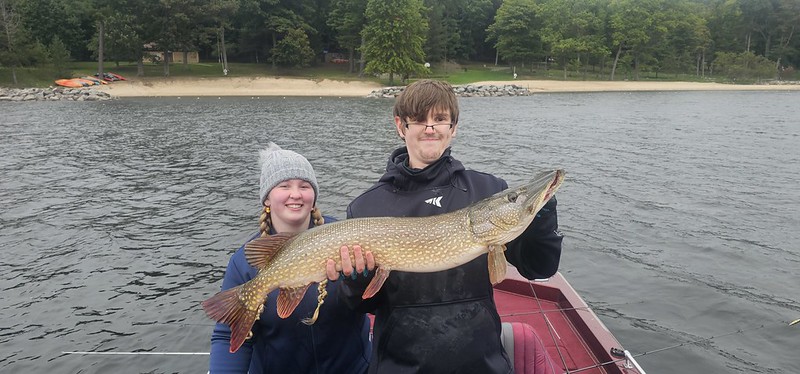
Harry Swauger enjoyed an exciting day of fishing on Deep Creek Lake when he caught this large northern pike. Photo courtesy of Harry Swauger
Maryland is slowly transitioning to fall, and cooler weather certainly makes it more inviting to enjoy the outdoors. Cooler water temperatures have fish becoming more active through the daytime hours.
Maryland Department of Natural Resources to Begin Fall Trout Stocking for 2026
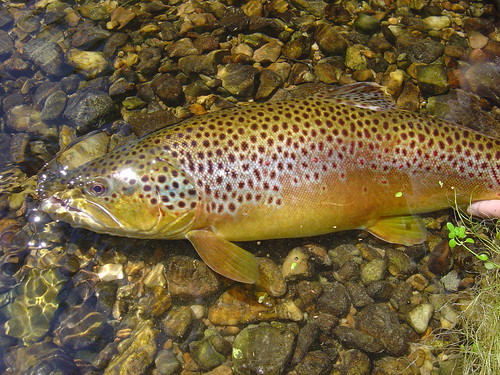
Brown trout. Maryland Department of Natural Resources photo
The Maryland Department of Natural Resources (DNR) will begin its annual fall trout stocking program the first full week in October. The program will bring thousands of hatchery-raised rainbow, brown, and golden rainbow trout to streams and impoundments across the state. This initiative provides recreational fishing opportunities for anglers of all ages and skill levels throughout the autumn months. Read more…
Maryland Department of Natural Resources Awards 35th FishMaryland Master Angler
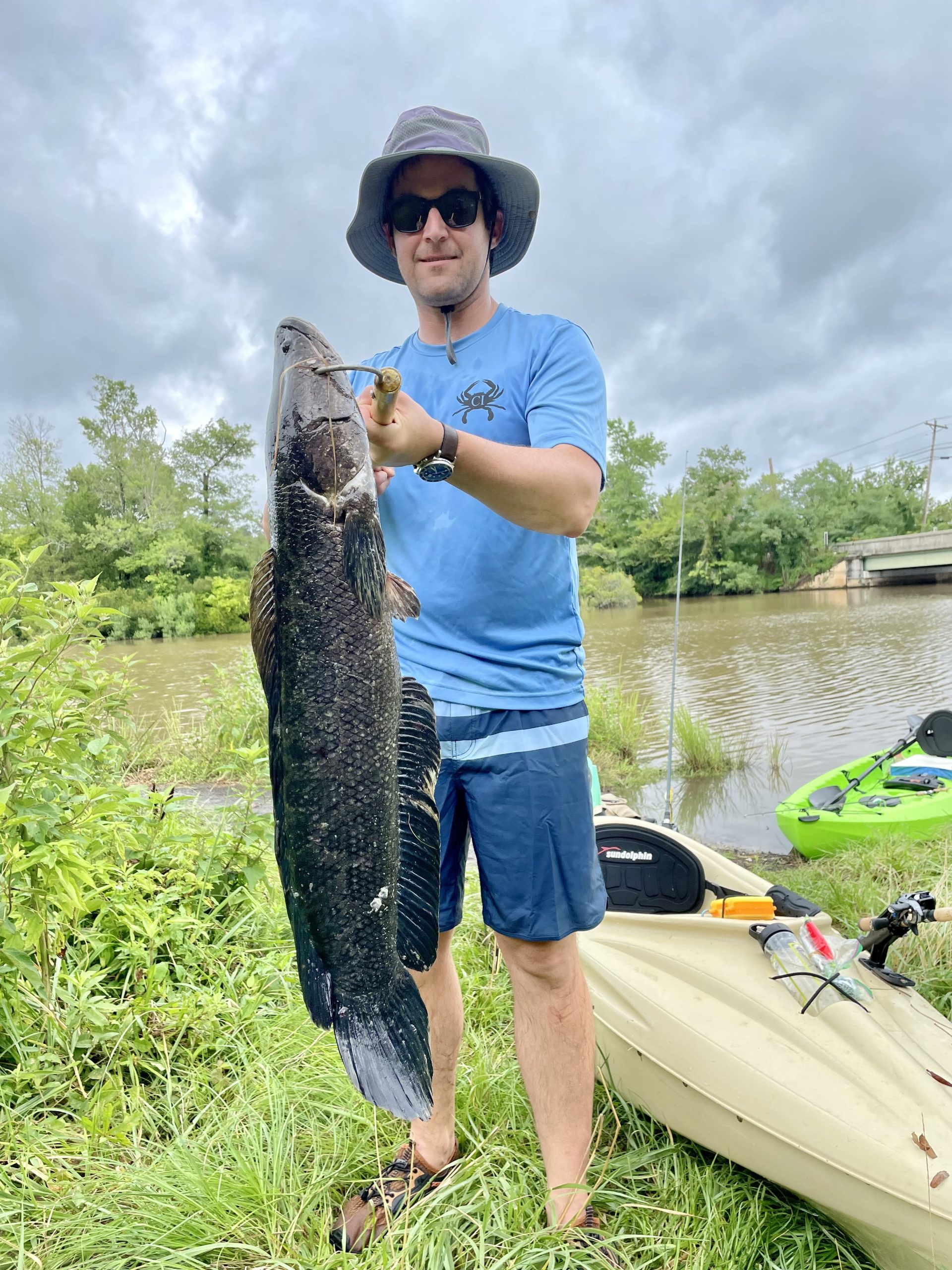
Jason Koontz holds a 31-inch Chesapeake Channa (northern snakehead), one of 10 species he caught to earn a Master Angler Milestone Award under the Maryland Department of Natural Resources’ FishMaryland program. Photo courtesy of Jason Koontz.
Jason Koontz of Frederick has earned a Master Angler Milestone Award under the Maryland Department of Natural Resources’ FishMaryland program. The award recognizes recreational anglers who catch 10 trophy-sized fish of different species in Maryland. Read more…
Black Bear Activity Increases in Maryland as they Prepare For Hibernation
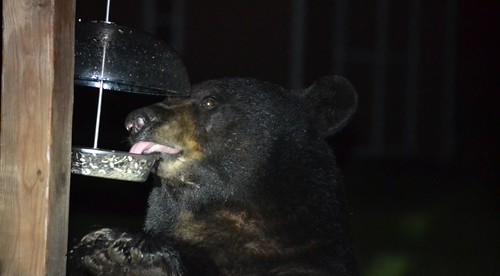
A black bear grabs a snack at Rocky Gap State Park. Photo by Ranger Sarah Milbourne.
The Maryland Department of Natural Resources reminds residents that black bears are beginning a period of increased feeding activity in preparation for winter hibernation.
As the leaves change and the weather cools, bears will travel across roads more frequently. They also can become more attracted to human-provided food sources and lose their natural fear of people, which can be dangerous for both people and bears. Read more…
An Open Letter to the Kingsville Community: DNR Is Committed to Preserving the Historic Jerusalem Mill Village
To the residents of Kingsville and surrounding communities,
 The Maryland Department of Natural Resources and the Maryland Park Service are committed to the historic preservation of the historic Jerusalem Mill Village and would like to provide clarity on DNR’s ongoing partnership with the nonprofit Friends of Jerusalem Mill.
First, DNR staff recognize the historic importance and community connections provided by the Jerusalem Mill Village. DNR’s primary goal is to ensure the village is maintained to the highest standards of historical preservation while being safe, welcoming, and accessible to the public. As one of Maryland’s finest preserved 18th-century industrial settlements, DNR is fully committed to protecting Jerusalem Mill’s cultural and historical integrity.
DNR and the state continue to provide resources to the preservation of Jerusalem Mill to ensure preservation projects move forward. For example, this year the Department advocated before the General Assembly to extend a $250,000 state grant dedicated to restoring the Jericho Road Stone Bank Barn at the site.
For decades, DNR has partnered with the nonprofit Friends of Jerusalem Mill to provide historical interpretation, public events, and educational tours at the village. Through this partnership, the Friends group also fundraises to help maintain and preserve the historic buildings at the site.
DNR deeply values the work and volunteer contributions that Friends of Jerusalem Mill provides.
DNR Announces Next Steps Toward Opening of Long-Awaited Wills Mountain State Park
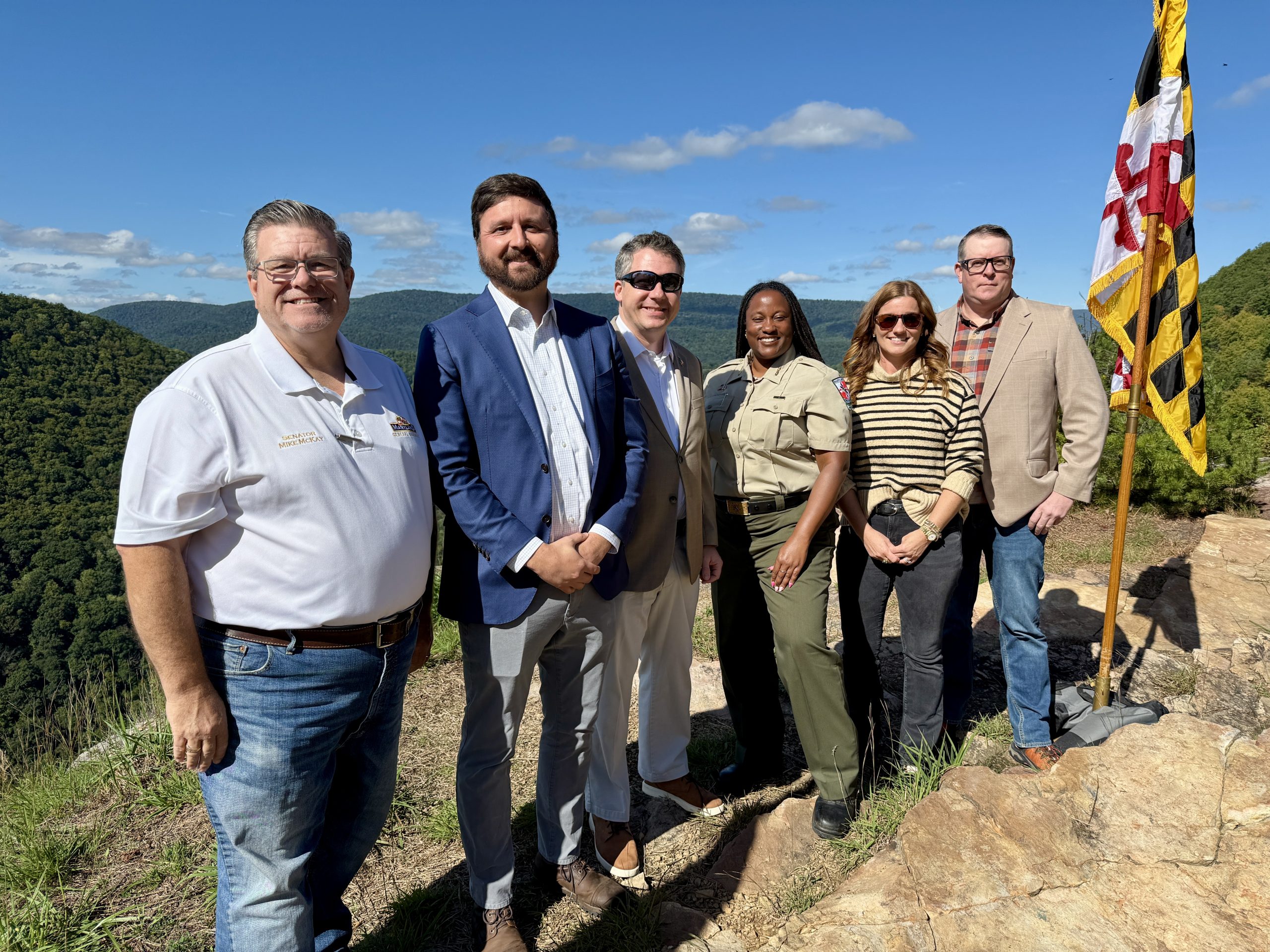
Maryland State Senator Mike McKay, DNR Secretary Josh Kurtz, DNR Capital Projects Director Eric Leudtke, Director of the Maryland Park Service Angela Crenshaw, Allegany Tourism Director Ashli Workman, and Frostburg University’s Jeff Simcoe at Wills Mountain State Park in Cumberland. Maryland DNR photo.
The Maryland Department of Natural Resources (DNR) announced grant funding through a partnership with Frostburg State University that advances the development and opening of Wills Mountain State Park in Allegany County.
The Appalachian Regional Commission (ARC), an economic development agency of the federal government and 13 state governments, recently approved a grant of $521,684 to Frostburg State University for the Wills Mountain State Park Comprehensive Planning Initiative project. With ARC’s investment, Frostburg State University, through its Frostburg Outdoor Recreation Economy Institute (FOREI), will work in partnership with DNR and the Maryland Park Service to complete the planning activities that will guide the development of Wills Mountain State Park for public access.
On Thursday, the department hosted a community gathering and stewardship celebration atop Wills Mountain in Cumberland to provide an update to local officials and other guests about the latest plans and funding for the park. The department also announced the purchase of an additional 195-acre forested property along the ridge and eastern slopes of Wills Mountain, which will be added to the park. Read more…
Maryland Fall Foliage Report – September 24, 2026

The big show-stopper this week is wildflowers. Look for colorful displays of aster and goldenrod this time of year – like this gorgeous spectrum of purple New England aster by the fire danger sign in Washington County.
Fall officially began Tuesday night with chilly temperatures to match. Leaves throughout Maryland remain green with hints of change and emerging colors in parts of the state.
The fall foliage outlook for 2026 is expected to be average across the State of Maryland, according to Southern Region Regional Forester Mark Muir. It will begin first in the westernmost part of the state and progress across the state to the Eastern Shore and southern Maryland.
“Weather has the biggest effect on foliage color and timing. Temperatures have been warmer than average this year with little rainfall in the summer months, and near normal or above rainfall in the spring and end of summer,” Muir said. “Temperature effects when the leaves begin to change, with a warmer than average start to fall which will push the timing of peak colors back slightly.”
The dryer months can create stress on trees, leading to muted or duller colors and earlier leaf drop. To achieve the best colors the ideal weather conditions are normal rainfall and periodic cold fronts. The chilly fall nights trigger deep color transitions and slow color change rather than a sudden uniform peak.
From now into November, Department of Natural Resources staff will provide weekly fall foliage reports to keep the public updated on Maryland’s autumn scene – both the changing colors in each region and fall festivities throughout the state.
Maryland Fishing Report – September 23

Joshua Campbell was fishing recently on an Ocean City party boat when he caught this huge summer flounder. Photo courtesy of Joshua Campbell
Maryland is feeling the effects of an offshore Nor’easter. Coastal areas will see some beach erosion, coastal flooding and river water levels will be elevated. This is our introduction to fall, but calmer and pleasant weather is in the forecast, offering a wonderful time to enjoy the outdoors.
DNR Begins Major Modernization and Maintenance Projects at Somers Cove Marina in Crisfield
Approximately $30 million project includes new boat ramp, piers, bulkhead, and tide gates for flood prevention at Maryland’s largest state-owned marina
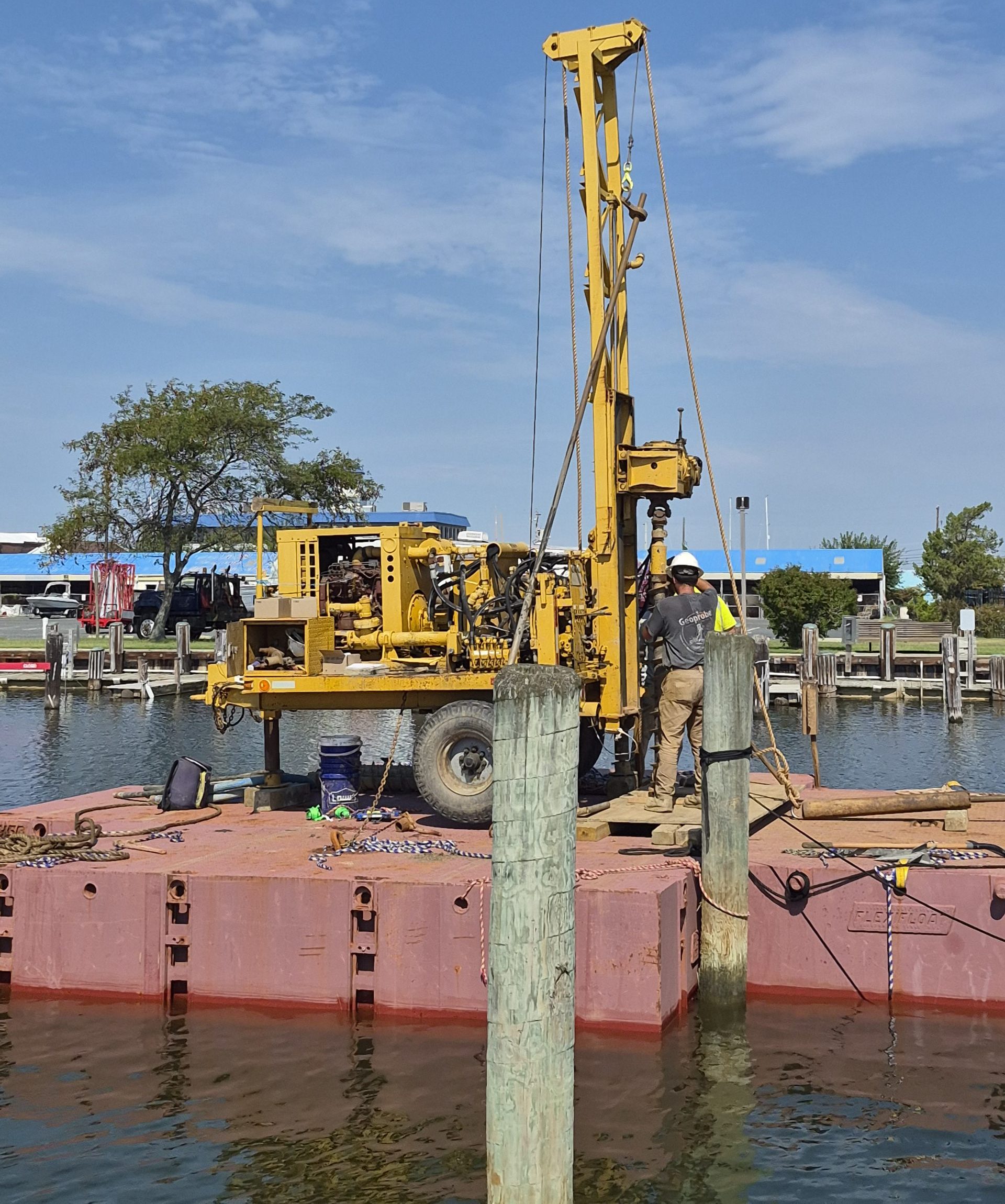
Crews began work at Somers Cove Marina in Crisfield in early September. Maryland Department of Natural Resources photo
The Maryland Departments of Natural Resources, in partnership with the Maryland Department of General Services and Maryland Department of Transportation, has begun work on long-planned, major upgrades to Somers Cove Marina in Crisfield.
Known as the “Gateway to the Chesapeake” for boaters throughout the eastern seaboard, Somers Cove is the state’s largest public marina. The $30 million project will provide enhanced service for Chesapeake Bay boaters as well as economic and flood prevention benefits for the community of Crisfield. The work is part of the Moore-Miller Administration’s efforts to invest in communities all across Maryland to improve their economic prospects and residents’ quality of life. Read more…
Trapping Bid Packets for 2026-2027 Season Now Available for Eastern Shore Public Lands
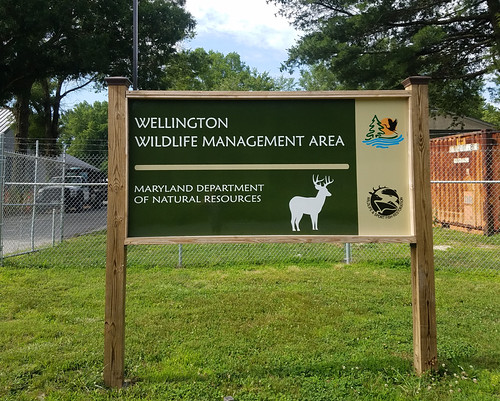
Bid packages for trapping privileges at multiple Eastern Shore properties can be picked up at LeCompte or Wellington wildlife management areas, depending on location. Maryland DNR photo.
The Maryland Department of Natural Resources (DNR) is currently accepting bids for the 2026-2027 trapping season at several Wildlife Management Areas and other public lands. Deadlines for submitting bid packages for any location is October 14. Read more…
Chesapeake Bay Monitoring Found Below Average Hypoxia in Early August and Near Average in Late August
 Data collected by the Maryland Department of Natural Resources and Old Dominion University in August 2026 showed that volumes of hypoxia—waters with less than 2 mg/l of oxygen— were much smaller than average in early August, and near average in late August for the Chesapeake Bay mainstem of Maryland and Virginia.
Hypoxia in early August was well below average, ranking as the 5th smallest mainstem hypoxic volume observed for that time period, and was preceded by the 8th smallest observed hypoxic volume in late July. Volumes increased in late August, however, to just above the long-term average.
Early and late August respectively had 0.23 and 0.25 cubic miles of anoxia—waters with less than 0.2 mg/l of oxygen, which was less than observed in July. Read more…
Maryland Natural Resources Police Report: Summer 2026
-

Maryland Natural Resources Police on vessel patrol in the Chesapeake Bay out of Sandy Point State Park. Maryland DNR photo.
The Maryland Natural Resources Police took action on alleged violations of criminal and natural resource laws from June through August of this year. During the summer months, individuals were charged for violations including illegal commercial crabbing and clamming operations, weapons charges, fishing violations, crimes on public lands, wildlife violations, and other offenses. Read more…
Natural Resources Careers Camp Gives Students a Hands-On Look at Conservation Careers
Registration for next year’s camp begins October 1, 2026

State Forester Anne Hairston-Strang, who attended the camp as a high school student, talks with campers during the 2026 Natural Resources Careers Camp. Photo by Sam Crane, Maryland Department of Natural Resources
Maryland’s 2026 Natural Resources Careers Camp (NRCC) took place from July 19–25 at the Hickory Environmental Education Center in Garrett County where campers learned directly from professionals through field exercises, demonstrations, and visits to working landscapes. Read more…
Maryland Fishing Report – September 16

FishMaryland Master Angler Luca Tucciarella was fishing in the upper Bay waters when he caught this huge Chesapeake Channa, aka northern snakehead. Photo by Vincent Tucciarella
Cooler weather is beginning to blanket Maryland, making for more comfortable temperatures.
The cooler nighttime temperatures will begin to lower water temperatures in the Chesapeake Bay and freshwater areas and stimulate fish to be more active.
Board of Public Works Approves $9.3 Million for Outdoor Facilities and Land Conservation in Baltimore City and 12 Counties
Board also approves Program Open Space Stateside funds for three land acquisitions
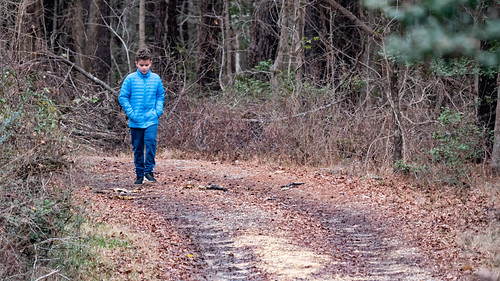
The Department of Natural Resources will add 15 acres to the Corcoran Environmental Study Area, a wooded area at Sandy Point State Park, with funds approved by the Board of Public Works. Maryland DNR photo.
The Board of Public Works today approved more than $9.3 million in grants from the Maryland Department of Natural Resources (DNR) to local governments and land trusts for outdoor facilities and land conservation in Baltimore City and Baltimore, Caroline, Carroll, Dorchester, Garrett, Harford, Montgomery, Prince George’s, Queen Anne’s, Talbot, Washington, and Worcester counties.
Nearly $3.3 million in Program Open Space – Local funding was approved for projects, including the replacement of the seawall bulkhead and boathouse at Piney Run Park in Carroll County, field improvements at Carroll County Sports Complex, and a new pavilion and picnic area at Melvin Miller Memorial Park in the Town of Hampstead.
Funds were also approved for playgrounds at Flying Point Park in Harford County and Casey Community Center in Gaithersburg. Montgomery County was also funded for a major renovation of Fox Chapel Neighborhood Park, including a playground, fitness equipment, sports courts, picnic shelters, walking loop, benches, improved parking, and signage. Read more…
Seneca Creek State Park Concludes Monitoring for Rabid Beavers, Reopens All Areas of Park

Maryland DNR photo
The Maryland Department of Natural Resources has reopened the areas of Seneca Creek State Park that had been closed following a beaver attack. DNR’s Wildlife and Heritage Service and Maryland Park Service concluded monitoring and have found no additional rabid beavers in the area.
On August 13, a beaver attacked and bit a 10-year-old camper swimming in Seneca Creek near Berryville Road, close to the Potomac River. Separately, a group that was canoeing reported a beaver attempting to charge one of their boats, which happened prior to the bite incident but wasn’t reported to park staff until afterward. The Park Service closed the area as wildlife teams searched for sick and aggressive animals. DNR staff found a deceased beaver on Aug. 17, which the Maryland Department of Health confirmed to be rabid, however DNR and health officials were unable to determine if this beaver is the one that attacked.
Concluding their search for other sick animals, DNR wildlife experts are now reasonably assured that Seneca Creek State Park is past the heightened risk following the attack. However, DNR advises the public to stay aware that rabies and other dangers related to wildlife interactions are always present. Read more…
Maryland DNR Announces 2026 Photo Contest Winners
The Maryland Department of Natural Resources has chosen the winners of the annual Maryland Natural Resource Photo Contest, with the grand prize, and first place in the spring category, going to Kyle Smith for his photo of a remarkable moment in nature – an Eastern Whip-poor-will on a branch while a squirrel sneaks up behind it.
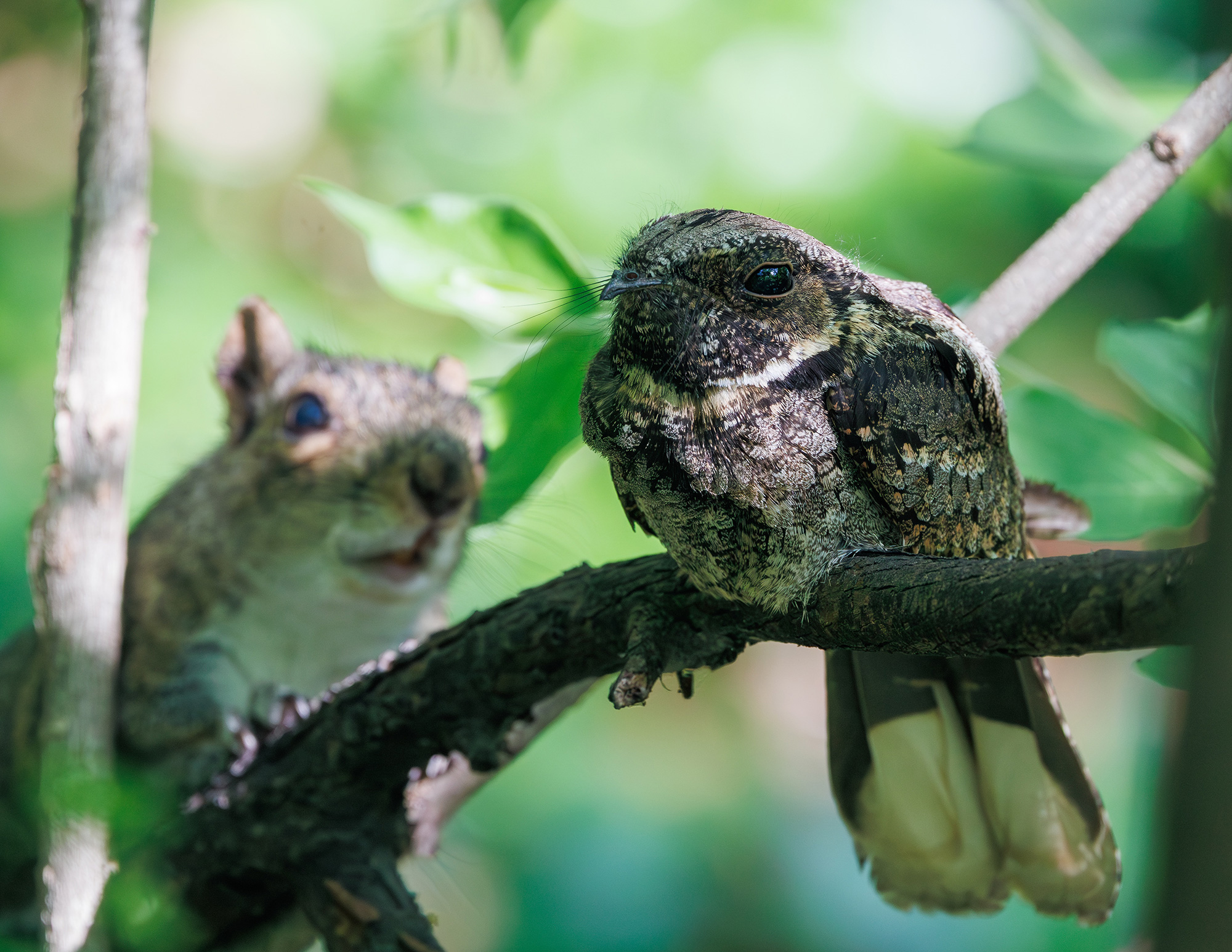 Kyle Smith – Right Behind You
“The squirrel kept inching closer, sniffing the whole time, until it was right next to the bird,” Smith wrote in his entry to the photo contest. This year’s contest received more than 1,000 photo submissions, which were judged by a panel of DNR wildlife and photography experts. Read more…
Maryland’s Early Teal Hunting Season Opens September 17

Green-winged teal, photo by Dean Newman, submitted to the 2018 Maryland DNR Photo Contest.
Maryland will open its fall teal-only hunting season Sept. 17-26 in the September Teal Hunting Zone. Shooting hours are one half-hour before sunrise until sunset, the daily bag limit is six teal (blue or green-winged), and the possession limit is 18 teal, or three times the daily bag limit.
Seasons and bag limits for all other migratory game birds can be found in the 2026-27 Maryland Guide to Hunting and Trapping. Read more…
New DNR Tool Helps Direct Better Marsh Restoration and Protection
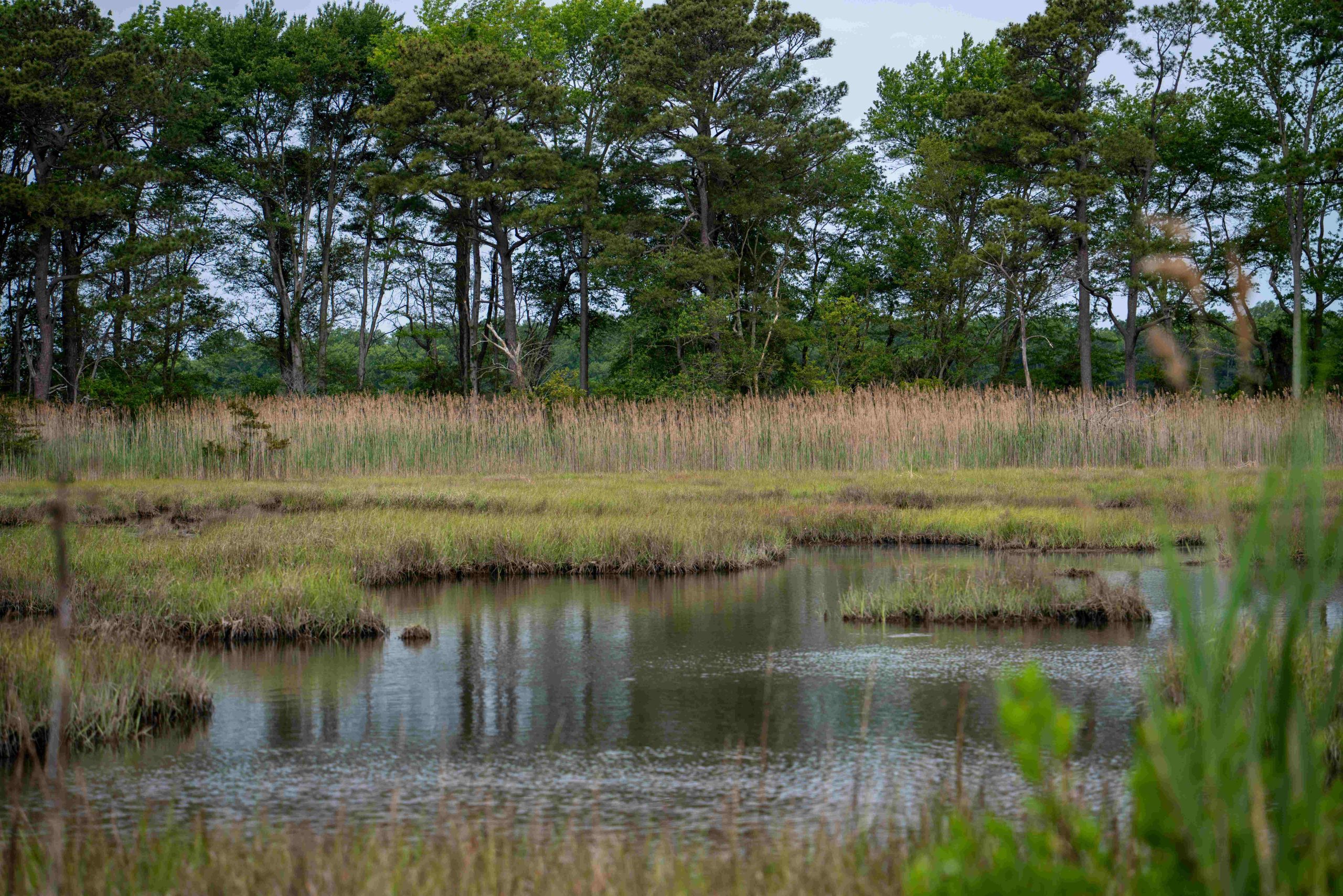
A vulnerable marsh in Worcester County. Photo by Dylan Taillie/Maryland DNR
The Maryland Department of Natural Resources released a new decision-making tool to help land managers and conservation organizations target restoration and protection of marshes in the state.
The new Marsh Resilience Portfolio is a feature on the department’s Maryland Coastal Atlas mapping tool that provides data on marsh areas. The portfolio lays out information about a marsh’s health as well as its benefits for protecting habitats and communities.
The information provided by this tool will better direct restoration efforts to marshes that can safeguard communities from flooding and other coastal risks over time. Read more…
Maryland Fishing Report – September 9

Kristin Lenox holds up a large sheepshead she caught at the Ocean City Inlet recently. Photo by Scott Lenox
Labor Day has come and gone. Most families have wrapped up their summer vacations, schools have started, and everyone is enjoying the cooler weather. September is a wonderful month to enjoy the outdoors and fish under less crowded conditions.
The Atlantic coastal states of Maine through Virginia have scheduled hearings to gather public input on Draft Addendum II to Amendment 3 to the Interstate Fishery Management Plan for Atlantic Menhaden. The Draft Addendum considers options to reduce the Chesapeake Bay Reduction Fishery Cap (Bay Cap) by up to 50% and distribute the cap more evenly throughout the fishing season. The options aim to alleviate a concentration of effort that may be affecting other fisheries within the Bay and other potential ecological impacts. A public hearing is scheduled in Annapolis on September 15, or you can participate in one of several virtual meetings and enter comments online.
Anglers pursuing striped bass since the season resumed are catching quite a few fish over the 24-inch maximum. Anglers should make every effort to release these fish while they remain in the water. Studies have shown that larger striped bass are more vulnerable to catch and release stress during warmer water conditions. The Maryland Department of Natural Resources website offers tips for safe catch-and-release fishing.
Maryland’s Chesapeake Bay Underwater Grasses Expanded Nearly 13% in 2025
Gains add more than 4,600 acres of critical Chesapeake Bay habitat

Photo by Brooke Landry, Maryland Department of Natural Resources
Underwater grass abundance increased in the Chesapeake Bay and its tidal tributaries last year. In Maryland’s portion of the Bay, underwater grass coverage expanded from 36,799 acres in 2024 to 41,419 acres in 2025, an increase of nearly 13% in a single year. Bay-wide, SAV acreage reached an estimated 89,385 acres – up 7% from 83,252 acres in 2024.
The 2025 acreage represents about 36% of Maryland’s 114,065-acre restoration target, demonstrating meaningful progress while underscoring the opportunity for continued recovery.
The annual underwater grass survey is conducted by the Virginia Institute of Marine Science (VIMS), which maps submerged aquatic vegetation, or SAV, throughout the Chesapeake Bay and its tidal tributaries annually. VIMS also produces a report for Virginia’s portion of the Bay. Read more…
DNR Announces Grant Money Available Again for Venison Donation Programs
Annual program provides funding to process donated deer
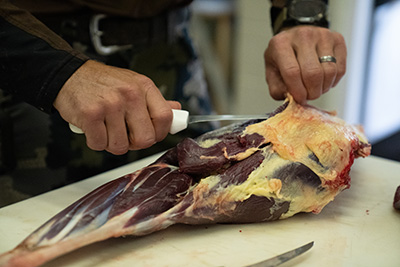
Maryland Department of Natural Resources photo.
The Maryland Department of Natural Resources is now accepting applications for its 2026 venison donation grant program. Grant money is available to organizations to assist with the direct costs of butchering and processing deer with the resulting venison being donated to programs who assist Marylanders in need.
A total of $25,000 will be awarded, and grants will be distributed on a first-come, first-served basis. Eligible grantees are county governments, municipal corporations, or any 501(c)3 nonprofit organization. Read more…
Black Bear Hunt Lottery Winners Selected for 2026 Season

Photo by Bob Geary, submitted to the 2018 Maryland Department of Natural Resources Photo Contest.
The Maryland Department of Natural Resources (DNR) has drawn the winning lottery entries for the 2026 Maryland Black Bear Hunt.
Lottery entrants were randomly selected to receive permits valid for Maryland’s six-day bear hunting season open from October 26-31, 2026, in Allegany, Frederick, Garrett, and Washington counties. Entrants can check the lottery results section of DNR’s black bear hunt webpage for their DNR ID number.
A total of 1,050 entries were selected between the two black bear hunt zones, including 950 for Black Bear Hunt Zone 1, and 100 for Black Bear Hunt Zone 2.
A total of 4,820 hunters applied for the lottery. Of the permits awarded, 52% went to Western Maryland residents, 38% to residents from other parts of Maryland, and 10% to non-residents. Read more…
Keep Maryland Beautiful Grant Program Accepting Funding Applications for Community Projects in 2027
 The Maryland Environmental Trust, in partnership with the Maryland Department of Transportation, Maryland Department of Agriculture, and the Chesapeake Bay Trust, is now accepting applications for this year’s Keep Maryland Beautiful Grants program. The deadline to apply is December 1, 2026. About $349,000 is available for this year’s grant round.
The Keep Maryland Beautiful Grants program awards annual grants to help volunteer groups, nonprofit organizations, communities, and local land trusts in Maryland support environmental education projects, community stewardship, and the protection of natural resources in urban and rural areas. This year’s grants include:
- Community stewardship grants for volunteer groups, nonprofits, local governments, and schools;
- Assistance, leadership, and capacity building grants for Maryland’s land trusts; and
- Grants for nonprofits to implement forestry projects on agricultural land.
Funding for the Keep Maryland Beautiful Grants is provided by the Maryland Environmental Trust, a unit of the Department of Natural Resources; the Department of Transportation; and the Department of Agriculture. Awards will be announced in March 2027. Read more…
Secretary’s Message: Maryland Hunters Answer the Call to Conserve Wildlife, Protect Farms and Forests

Deer browse heavily in fall to prepare for the winter; hunting is an essential part of keeping their population in line with appropriate resources, and protecting forests and farm crops. Maryland Department of Natural Resources photo.
Managing Maryland’s wildlife populations is a year-round, everyday job for the Department of Natural Resources. It’s one that requires specialized training, significant funding, and most importantly, tens of thousands of citizens who contribute to conservation—Maryland’s hunters.
Our migratory bird seasons – starting with mourning dove and early resident Canada goose – kick off the 2026-27 hunting season. Meanwhile, DNR continues its work to assure public access and responsible management of our natural resources.
Every species that is hunted in Maryland is monitored and surveyed to assure we are setting appropriate hunting seasons and bag limits. For some species whose population is threatened, we have found the need to limit harvest to protect the species. For others, like white-tailed deer, we are looking for more people to join the hunt to protect everything else. Read more…
Maryland Fishing Report – September 2

Vince Tucciarella was kayaking on the lower Susquehanna when he caught this impressive flathead catfish. Photo courtesy of Vince Tucciarella
Many families are making plans for the upcoming Labor Day weekend, and hopefully the outdoors and fishing will be part of the weekend’s festivities. Maryland waters are holding a bounty of fish and crabs so enjoy responsibly and safely.
The striped bass season has reopened, and anglers are free to pursue striped bass in the Chesapeake Bay and its tidal rivers. The slot size remains 19-24 inches to with a limit fish per day. The coastal striped bass fishery remains open with a 28-inch minimum size and one fish per day. Read more…
Board of Public Works Approves $9 Million for Recreation and Land Conservation in Four Counties
Board also approves Program Open Space Stateside funds for Washington County land acquisition

A group of backpackers hike into the woods in the South Mountain Recreational Complex in Washington County. The Board of Public Works approved the acquisition of 15 forested adjoining South Mountain State Park that will buffer the Appalachian Trail Corridor, protect water quality in the Antietam Creek watershed, provide habitat protection for migratory birds, and expand recreational opportunities for the public. Maryland DNR photo
The Board of Public Works today approved more than $9 million in grants from the Maryland Department of Natural Resources to local governments for indoor and outdoor recreation and land conservation in Anne Arundel, Montgomery, Prince George’s, and Worcester counties.
More than $8.3 million in Program Open Space – Local funding was approved for projects, including additional funds for the construction of the new Edgewater Recreation Center in Anne Arundel County, which will have both indoor and outdoor recreational facilities. Funds were also approved for improvements to sports courts, parking lot, roadway, utilities and lighting at the Rubini Athletic Complex in Wheaton Regional Park in Montgomery County. In addition, funds were approved to construct a new park at Anderson Corner in the City of Laurel in Prince George’s County. The 7-acre park will feature an inclusive playground, trails, courts, and a pavilion. Read more…
Maryland’s 2026-27 Archery Deer Hunting Season Opens September 11

Archery is the first deer hunting season each year, beginning in late summer and running intermittently into mid-winter. Photo by Curtis Harsh, submitted to the 2020 Maryland DNR Photo Contest.
The Maryland Department of Natural Resources will open the archery hunting season for white-tailed and sika deer on Sept. 11. The season runs through Jan. 31, 2027 with several breaks for muzzleloader and firearms season.
In addition, the seventh annual Primitive Deer Hunt Days from Feb. 1-3, 2027 offer archers using vertical longbows and vertical recurve bows a few more days afield.
Multiple Sundays are open to archery hunting in most counties, including on some public lands. Hunters should consult the 2026-2027 Maryland Guide to Hunting and Trapping for additional information on specific dates and closures in their region. Read more…
Maryland Migratory Game Bird Hunting Seasons Begin for 2026-2027
Mourning dove, early resident Canada goose seasons begin Sept. 1

Maryland Department of Natural Resources photo
The Maryland Department of Natural Resources has announced the following dates for the state’s 2026-2027 migratory game bird hunting seasons, which begins Sept. 1.
Bag limits, season dates, and shooting hours can be found in the 2026-2027 Maryland Guide to Hunting and Trapping. Read more…
Maryland Natural Resources Police Enrolls in CALEA Law Enforcement Accreditation Program

Maryland Department of Natural Resources photo.
The Maryland Natural Resources Police (NRP) has enrolled in the Commission on Accreditation for Law Enforcement Agencies‘ (CALEA) Law Enforcement Accreditation Program. The enrollment begins an approximately three-year process to evaluate and strengthen the agency’s policies, procedures, training, operations, and management practices.
Often described as the “international gold standard for public safety agencies,” CALEA accreditation is only achieved by about 5 percent of police agencies nationwide, or roughly 1,000 out of 18,000. Accreditation is a voluntary, standards-based process that helps law enforcement agencies boost organizational effectiveness, strengthen accountability, reduce risk, and enhance public trust. As part of the process, NRP will conduct a comprehensive review of its operations and demonstrate compliance with internationally recognized public safety standards.
Maryland Partners Explore Pathways to Expand Use of Local Wood

Cut timber is stacked at Cambium’s facility in Columbia. Photo by Sam Crane, Maryland Department of Natural Resources
Maryland’s forests produce substantially more wood than is harvested each year, but gaps in processing, marketing, and distribution can make it difficult to move that material into construction and consumer markets. Trees removed following storms, development, disease, or routine urban maintenance may also lack nearby processing options, limiting opportunities to recover their wood for beneficial use.
DNR is working with state agencies and the forest products industry to identify and address those barriers. This includes helping project planners understand which Maryland species and products may be suitable for a project, connecting potential buyers with producers and suppliers, and helping Maryland businesses understand and compete for state procurement opportunities.
Governor Wes Moore signed an executive order June 1 directing state agencies to increase the use of wood grown and harvested in Maryland in publicly funded construction projects when wood is a required, preferred, or appropriate building material. The order calls on state agencies to review procurement practices and identify opportunities to use more Maryland wood.
On Aug. 18, Maryland Department of Natural Resources and Maryland Department of Emergency Management officials, including DNR Sec. Josh Kurtz, had the opportunity to see how local innovators are reshaping the timber industry in Maryland. They joined forest products professionals and other partners for a tour of Cambium’s flagship wood-processing facility under construction in Columbia. The visit focused on opportunities to strengthen Maryland’s wood supply chain and increase the use of Maryland-grown wood in public projects. Read more…
Maryland Department of Natural Resources Seeks Farmers for Regenerative Agriculture Opportunity
Long-term agricultural leases prioritizing regenerative practices and traditions represent part of a new vision for state land

Photo by Penny Mohr, submitted to the 2019 Maryland DNR Photo Contest.
The Maryland Department of Natural Resources is opening a 111-acre agricultural property in Montgomery County to farmers using regenerative practices and traditions that improve soil health, the first step in an effort to expand land access while promoting sustainable agriculture in the state.
Regenerative practices and traditions consist of a variety of farming techniques, drawn from indigenous and traditional land stewardship, that help cycle nutrients in the soil, reduce erosion, restore biodiversity, enhance water quality, and reduce net carbon emissions. DNR is seeking farmers for a long-term lease in Seneca Creek State Park. Read more…
Somers Cove Marina Hosts National Hard Crab Derby, Boat Slips Available for Crisfield’s Labor Day Event

Somers Cove Marina in Crisfield is the largest publicly owned marina in Maryland. Department of Natural Resources photo.
The Maryland Department of Natural Resources invites all to Somers Cove Marina in Crisfield for the 79th annual National Hard Crab Derby on Labor Day Weekend, Sept. 3-6. This event, held by the Crisfield Chamber of Commerce and taking place on the state-owned marina, celebrates traditions of the Chesapeake Bay and Eastern Shore; and highlights Crisfield’s history as the “Crab Capital of the World.”
This unique crab-themed event includes crab races, boat docking, crab cooking and picking contests, artisans, live entertainment, pageants, a parade, fireworks, a carnival, and more.
The weekend culminates in a competitive boat docking event on Sunday, September 6. In this event, captains race toward a dock, turn sharply and reverse into a slip. Competitive boat docking was called in a recent Wall Street Journal article “the hottest sport you likely never heard of,” although in Maryland several of these events take place around the Chesapeake Bay every summer. Read more…
Maryland Fishing Report – August 26

Chaz Wheeler holds up a large Chesapeake Channa he caught near Edgewood, on the Bush River. Photo courtesy of Chaz Wheeler
Maryland anglers have been busy fishing for a variety of species this week. Chesapeake Channa is one of the fish that anglers have come to enjoy during the August striped bass closure. The Maryland striped bass closure will end soon, and anglers across the Chesapeake Bay will be able to fish for striped bass September 1.
Visitors Invited to the Department of Natural Resources’ Exhibits at the 2026 Maryland State Fair in Timonium
Exhibits Open Aug. 27–Aug. 30; Sept. 3-Sept. 7 (Labor Day); and Sept. 10-Sept. 13

Visitors talk with Maryland Department of Natural Resources staff at the 2025 Maryland State Fair. Photo by Rachael Pacella, Maryland DNR
Visitors to the Maryland State Fair can join the Maryland Department of Natural Resources as it celebrates the nation’s 250th birthday.
Fairgoers are invited to visit the exhibits located inside the Mosner Miller Building at the Timonium state fairgrounds to engage with field experts and learn more about fishing, hunting, wildlife, and recreational opportunities in Maryland’s state forests, parks, and other public lands.
Exhibits explore the history of the Maryland Forest Service, as well as “Red, White, Blue and YOU!” activities and displays from the Maryland Park Service. The Wildlife and Heritage Service will share information about how Maryland flora and fauna have changed during the past 250 years.
Natural Resources Police will be onsite to share information about safe hunting and boating, as well as recruitment. Wildlife Crimestoppers will share information about poaching prevention.
The building is air-conditioned, and with tons of activities for kids of all ages, it is a great place to get away from the heat or the rain. Read more…
Maryland Park Service Reopens Hunting Creek Lake at Cunningham Falls State Park after Removal of Rabid Beavers

Cunningham Falls State Park. Maryland DNR photo.
The Maryland Department of Natural Resources reopened water access at Hunting Creek Lake and surrounding portions of Cunningham Falls State Park in Thurmont today, after extensive monitoring found no evidence of rabid beavers.
Portions of the park closed following two beaver attacks at the lake – a 13-year-old was bitten while swimming on July 26 and a 19-year-old was bitten while fishing on August 5. Both beavers were dispatched; and both later tested positive for rabies. Since then, DNR’s Wildlife and Heritage Service and the Maryland Natural Resources Police worked with Maryland Park Service staff to confirm the area was safe to reopen.
Biologists conducting thermal surveys after sunset were not able to find additional beavers in the Hunting Creek Lake area. Additional monitoring methods including trail cameras, trapping, and sign surveys indicate that no beavers remain in the area. Further, there have been no staff observations of beavers around Hunting Creek Lake. Read more…
Savage Highlands State Park Opens, Providing Access to Thousands of Acres of Western Maryland Outdoors

Maryland Park Service Director Angela Crenshaw, Department of Natural Resources Sec. Josh Kurtz, Comptroller Brooke Lierman, and Maryland Senate President Bill Ferguson celebrated the dedication of Savage Highlands State Park with Maryland Park Service staff on Aug. 22.
UPDATED Sept. 2: The Maryland Department of Natural Resources has officially opened Savage Highlands State Park, which provides increased access to tens of thousands of acres of state forest and natural areas in Garrett County and the surrounding region.
Maryland’s newest state welcomed its first overnight reservation-holders the weekend of August 28 along with a steady stream of day-use visitors touring the new location and talking with staff. The park’s main lodge is open the public every day from 10 a.m. to 5 p.m. Reservations are being accepted for yurts and campsites through November 1.
Savage Highlands State Park provides family-friendly accommodations for rent and serves as a major access point to Western Maryland’s network of state parks, state forests, rivers, reservoirs, and mountain trails.
Maryland DNR Secretary Josh Kurtz and Maryland Park Service staff dedicated the new park during a ceremony Saturday, Aug. 21, featuring Comptroller Brooke E. Lierman and State Senate President William C. Ferguson.

Savage Highlands State Park provides accommodations and access to more than 50,000 acres of state forest. Maryland Department of Natural Resources photo.
Formerly a privately-owned luxury lodge, Savage Highlands State Park includes a large central lodge, 18 cabins, eight yurts, and approximately 5.75 miles of trails. The complex serves as a gateway to the surrounding 55,000-acre Savage River State Forest and the nearby network of year-round outdoor activities including hiking, mountain biking, fishing, skiing, swimming, paddling, and hunting.
Maryland DNR Secretary Josh Kurtz said Savage Highlands amounts to one of the department’s most significant new park openings in decades. When the property previously known as Savage River Lodge was available for sale, DNR pursued it with that vision in mind, and to protect the property from any commercial development that would be inconsistent with the natural features of the surrounding state forest. Read more…
Maryland Fishing Report – August 19

This young angler enjoyed fishing for Spanish mackerel with his family. Photo by Travis Long
Maryland anglers have a wide range of fishing opportunities this week from the freshwater areas to the brackish Chesapeake Bay and the salty Atlantic Ocean. In the Bay, recreational crabbing is very good and anglers are enjoying a wide variety of fishing.
The Department of Natural Resources (DNR) reminds Maryland recreational anglers that targeting striped bass in the Chesapeake Bay and its tidal tributaries is prohibited through August 31 as a conservation measure to protect this species.
Board of Public Works Approves $4.6 Million for Trails, Playgrounds, and Land Conservation in Eleven Counties
Board also approves funds to conserve forest for new Natural Environment Area in Rocky Gap State Park complex

Funding was approved for the Land Preservation Trust to acquire a 48-acre permanent conservation easement in the Piney Run Rural Legacy Area in Baltimore County. The easement will protect productive farmland and forestland, as well as stream buffers within the watershed for the Loch Raven Reservoir, a source of drinking water for the Baltimore Metropolitan Area. Maryland DNR photo.
The Board of Public Works today approved $4.6 million in grants from the Maryland Department of Natural Resources to local governments and a land trust for trails, playgrounds, and land conservation in Baltimore, Caroline, Charles, Dorchester, Montgomery, Prince George’s, St. Mary’s, Talbot, Washington, Wicomico and Worcester counties.
About $950,000 in Program Open Space – Local funding was approved for four projects, including the renovation of a one-mile trail at Wheaton Regional Park Trail in Montgomery County. The renovation will make the trail accessible for those with disabilities. In addition, Pleasant Valley Park in Washington County is funded for a new playground.
Also approved was $3.18 million for the Community Parks and Playgrounds program to fund 13 projects statewide: Read more…
Chesapeake Bay Monitoring Shows Continued Better Than Average Dissolved Oxygen Conditions in July

Data collected by the Maryland Department of Natural Resources and Old Dominion University in early and late July 2026 show lower-than-average volumes of hypoxia—waters with less than 2 mg/l of oxygen—in the Chesapeake Bay mainstem of Maryland and Virginia.
Hypoxia was slightly below average in early July, and decreased in late July, ranking as the 8th smallest mainstem hypoxic volume observed for that time period. Early and late July respectively had 0.30 and 0.39 cubic miles of anoxia—waters with less than 0.2 mg/l of oxygen. Read more…
Portion of Seneca Creek State Park in Montgomery County Temporarily Closed Following Beaver Attack
Deceased beaver found on Monday confirmed to have rabies; search for additional sick animals is ongoing
Maryland Department of Natural Resources photo
Updated Aug. 19: On August 13 at about 3:30 p.m., Seneca Creek State Park staff received a report of a beaver that attacked and bit a 10-year-old girl in a creek on park property.
On Aug. 17, Maryland Department of Natural Resources (DNR) staff found a deceased beaver that was sent to the Maryland Department of Health for testing, which confirmed on August 19 the beaver was rabid. DNR and health officials are unable to determine if this beaver is the one that attacked.
The incident occurred at a bend in Seneca Creek near Berryville Road, close to the Potomac River. This area, including about one mile of trail and river access points, will remain closed to visitors as wildlife teams continue to search for additional sick beavers or other animals. Access to the adjacent parking lot and the parking lot on Route 28 is restricted by fluorescent orange cones. Signs are posted notifying of the incident.
Other areas of the park, including the Lake Area off of Clopper Road in Gaithersburg, remain open.
Maryland Fishing Report – August 12

The Mitchell family was one of many winners of a fishing trip for blue catfish in the first-ever Reel in the Blues Bonanza, sponsored by the Maryland Department of Natural Resources. Jared Mitchell holds up one of the many blue catfish they caught on their trip. Photo by Marc Mitchell
August continues to provide a broad range of fishing opportunities for anglers during the striped bass closure.
The Maryland Department of Natural Resources (DNR) reminds Maryland recreational anglers that targeting striped bass in the Chesapeake Bay and its tidal tributaries is prohibited through August 1 through August 31 to protect the species. This month is an ideal time to fish for Maryland’s multitude of other species, especially Chesapeake Channa and blue catfish.
For anyone interested in chasing a Maryland state fishing record, there are steps anglers can take to increase their chances of hooking the largest fish of a given species and what to do if you think you have record-setting catch. Learn more from DNR’s online article on what it takes to land a Maryland record.
Governor Moore Announces Maryland Achieves Nearly All of 2025 Chesapeake Bay Restoration Goals, Sets Sights on 2040
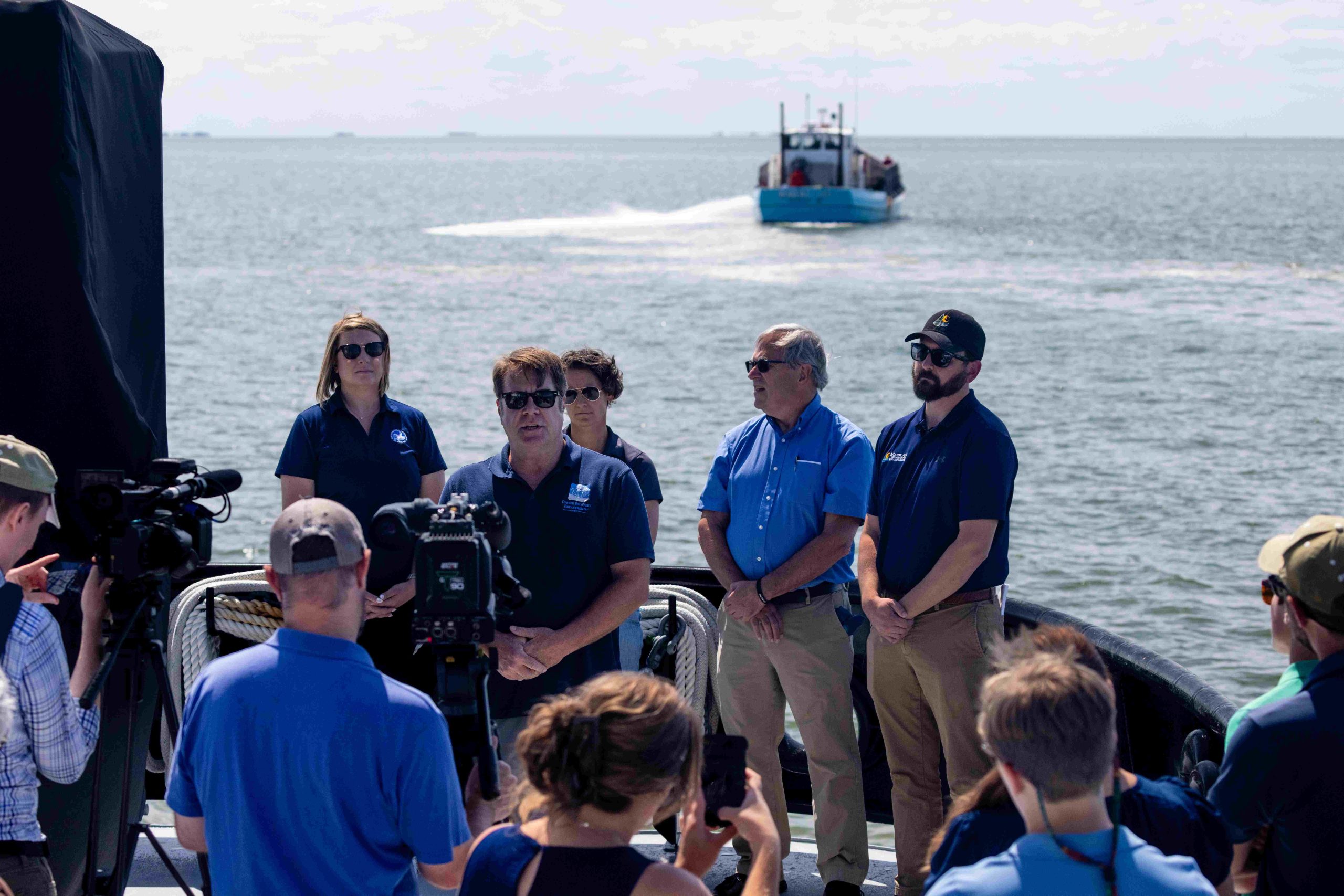
Maryland Department of Natural Resources officials and partners celebrate the completion of initial restoration at the Manokin River oyster sanctuary, marking a major milestone in Maryland’s Chesapeake Bay Watershed Agreement goals. From left to right: Chesapeake Bay Foundation Maryland Executive Director Allison Colden; Oyster Recovery Partnership Executive Director Ward Slacum; Angela Sowers, of the U.S. Army Corps of Engineers, Baltimore District; UMCES Horn Point Laboratory Director Mike Sieracki; and DNR Secretary Josh Kurtz. Photo by Will Parson/Chesapeake Bay Program
Governor Wes Moore today announced Maryland has successfully met or surpassed nearly all of its pollution reduction targets set under the 2014 Chesapeake Bay Watershed Agreement to improve water quality. Based on the most recent information from the Chesapeake Bay Program’s pollution model, Maryland achieved 100% of its sediment reduction goal, 100% of the phosphorus reduction goal and 99% of the nitrogen reduction goal from 2009 to 2025. The model was updated this year based on data from 2025.
“Preserving the Chesapeake Bay is crucial to the long-term success of our state’s economy, culture, and identity,” said Gov. Moore. “The Bay’s rivers and streams support our local environment, seafood, tourism, and recreational businesses, and our administration is committed to improving its water quality and protecting the Bay as a precious heirloom to pass down to future generations in a better condition than we received it.” Read more…
Natural Resources Police Promotes 38 Officers, Announces Leadership Updates
Lieutenant Colonel Brent Trautman named Deputy Superintendent; other officers honored for new leadership roles at ceremony in Arnold

Colonel Orlando Lilly, Major Christopher Morris, Lieutenant Colonel Brent Trautman, and Department of Natural Resources Secretary Josh Kurtz gather at Wednesday’s ceremony in Annapolis. Maryland DNR photo.
The Maryland Natural Resources Police held a promotional ceremony Wednesday evening where 38 officers were recognized for rising in ranks from corporal through lieutenant colonel at Anne Arundel Community College in Arnold.
The event began with the promotions of Lieutenant Colonel Brent Trautman and Major Christopher Morris who joined the executive command ranks. Lieutenant Colonel Trautman, a 29-year NRP veteran, was formally promoted to Deputy Superintendent and will serve as the second-in-command to NRP Superintendent Colonel Orlando D. Lilly. Major Morris begins his role as Assistant Superintendent and Commander of the Executive Services Bureau, where he will oversee strategic planning, accreditation, policy, and more. Read more…
DNR Closes Additional Areas of Cunningham Falls State Park Following Second Beaver Attack
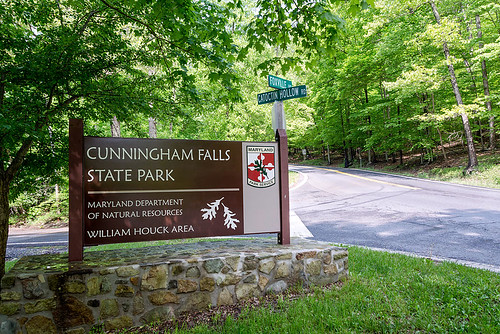
Update Aug. 24: Maryland Park Service Reopens Hunting Creek Lake at Cunningham Falls State Park after Removal of Rabid Beavers
Original release (revised Aug. 6): The Maryland Department of Natural Resources is closing additional areas of Cunningham Falls State Park around Hunting Creek Lake after a fisherman reported that he was bitten on the leg by a beaver in the South Beach Day Use area of the park at about 9:30 a.m. on Wednesday, August 5.
On Aug. 6, the Maryland Department of Health confirmed the second beaver collected from Cunningham Falls State Park had tested positive for the rabies virus.
The injured fisherman in today’s attack, a 19-year-old male, appeared to have sustained a bite to the ankle and transported himself to Meritus Medical Center in Hagerstown for treatment. He received treatment for rabies exposure and a tetanus shot, and Natural Resources Police followed up with him after treatment for an account of the incident.
Following the attack, NRP officers caught and euthanized the beaver, which is being delivered to the Frederick County Health Department. The Maryland Department of Health’s laboratory will conduct rabies testing and expects to have results available later this week.
This is the second incident of this nature at Cunningham Falls State Park within the past two weeks following a July 26 beaver attack on a 13-year-old swimmer. That beaver was caught, euthanized, and tested positive for rabies on July 27.
In response to the second incident, the Maryland Park Service has closed the Houck Day Use Area, the adjacent boat ramp, and Big Hunting Creek above the lake while the DNR Wildlife and Heritage Service continues to investigate a possible rabies outbreak within the local beaver population. Swimming, fishing, boating, and all water access are prohibited until the area can be confirmed safe for visitors. Other areas of the park, including the campground, remain open. Read more…
Maryland Fishing Report – August 5

Photo courtesy of Miss Susie Charters
Anglers are enjoying a wide variety of fishing opportunities this week from freshwater streams and ponds to the Chesapeake Bay and Atlantic Ocean.
The Department of Natural Resources (DNR) reminds Maryland recreational anglers that targeting striped bass in the Chesapeake Bay and its tidal tributaries is prohibited from August 1 through August 31 to protect the species. This month is an ideal time to fish for Maryland’s multitude of other species, especially Chesapeake Channa and blue catfish.
Anglers chosen in the lottery for free blue catfish fishing charters in DNR’s first-ever Reel in the Blues Bonanza are enjoying fun fishing adventures and reaping a harvest of blue catfish and taking home delicious fillets.
Board of Public Works Approves $6.38 Million for Tennis Courts, Trails, and Land Conservation in Five Maryland Counties
Funding approved for DNR’s Program Open Space Local, Local Parks and Playgrounds Infrastructure, Community Parks and Playgrounds and Rural Legacy programs

The Board of Public Works approved $1 million of Rural Legacy pto acquire a 141-acre permanent conservation easement in the Upper Patapsco Rural Legacy Area protects some of Carroll County’s most productive farmland. Maryland DNR photo
The Board of Public Works today approved more than $6.38 million in grants from the Maryland Department of Natural Resources to local governments for tennis courts, trails, and land conservation in Carroll, Frederick, Kent, Prince George’s, and Washington counties.
More than $3.8 million in Program Open Space – Local funding was approved for three recreation projects.
The largest fund award will be used for the construction of an indoor tennis facility with six courts at Westphalia Central Park in Prince George’s County. In addition, the town of Mount Airy in Frederick County will make improvements to two tennis courts at Village Gate Park with these funds, as well as funds from the Community Parks and Playgrounds program. The third project is the construction of trails and parking at the Washington County Regional Park.
Also approved was $930,000 from the Local Parks and Playgrounds Infrastructure Program to fund the acquisition of 1.55 acres of land for the Central Avenue Connector Trail in Capitol Heights, Prince George’s County. This is the start of a new 7-mile trail that will connect the District of Columbia and Largo Town Center. This program was funded in FY 2022 and FY 2023 to provide grant funds primarily to local governments for park and recreation projects.
About $576,000 of Community Parks and Playgrounds program funding was approved for three projects – a tennis court reconstruction at Village Gate Park in Mt. Airy, Frederick County, additions to Rock Hall Park (a dog park, restrooms and park lighting) in Kent County and a new pavilion at Shafer Park in Boonsboro, Washington County. Read more…
Secretary’s Message – There’s Plenty of Fish to Chase During the Dog Days of Summer While We Protect Striped Bass

Governor Wes Moore and Secretary Josh Kurtz promote fishing for Maryland’s invasive blue catfish during a 2024 event. Maryland DNR photo.
For the month of August, we are giving our striped bass in Maryland’s portion of the Chesapeake Bay a much-needed break. Heat stress is one of the major threats to the species and that stress is exacerbated during the late summer in the Bay when high water temperatures and low dissolved oxygen levels are more prevalent. To protect the younger, resident population of striped bass during this time, all striped bass fishing in Maryland is off limits through Aug. 31.
A summer closure has been part of our management strategy for striped bass since 2020, although the department shifted the closure to August. The goal is to give younger resident fish the chance to grow and eventually leave the Chesapeake Bay to join the spawning stock. These efforts follow years of poor striped bass spawning success being recorded in the Bay.
Scientists are still getting a handle on how to reverse this trend. Recent research has suggested that environmental factors – warmer, drier winters and decreased spring water flow rates – contribute to this decline. We can’t control those factors, but others we can attempt to reverse. Read more…
Waterway Users Urged to Boat Smart to Avoid Propeller Strikes, Other Risks on the Water

NRP patrol boats and fire and rescue boats respond to a vessel fire on the Potomac River in St. Mary’s County on August 30, 2025. Ignition of fuel vapors is the leading cause of vessel fires in Maryland. Maryland DNR photo.
To avoid serious propeller strike accidents and other preventable boating injuries, the Natural Resources Police is providing an overview of safety steps boaters and other waterway users should follow when spending time underway.
“Our top priority is ensuring all boaters make it home safely at the end of the day,” said Col. Orlando Lilly, NRP Superintendent. “We’ve seen a concerning number of boating injuries occur this season; these are accidents that can happen in an instant and can often be preventable through simple safety practices.” Read more…
Crossing to Freedom: Historic Casselman River Bridge Recognized for its Role in the Underground Railroad
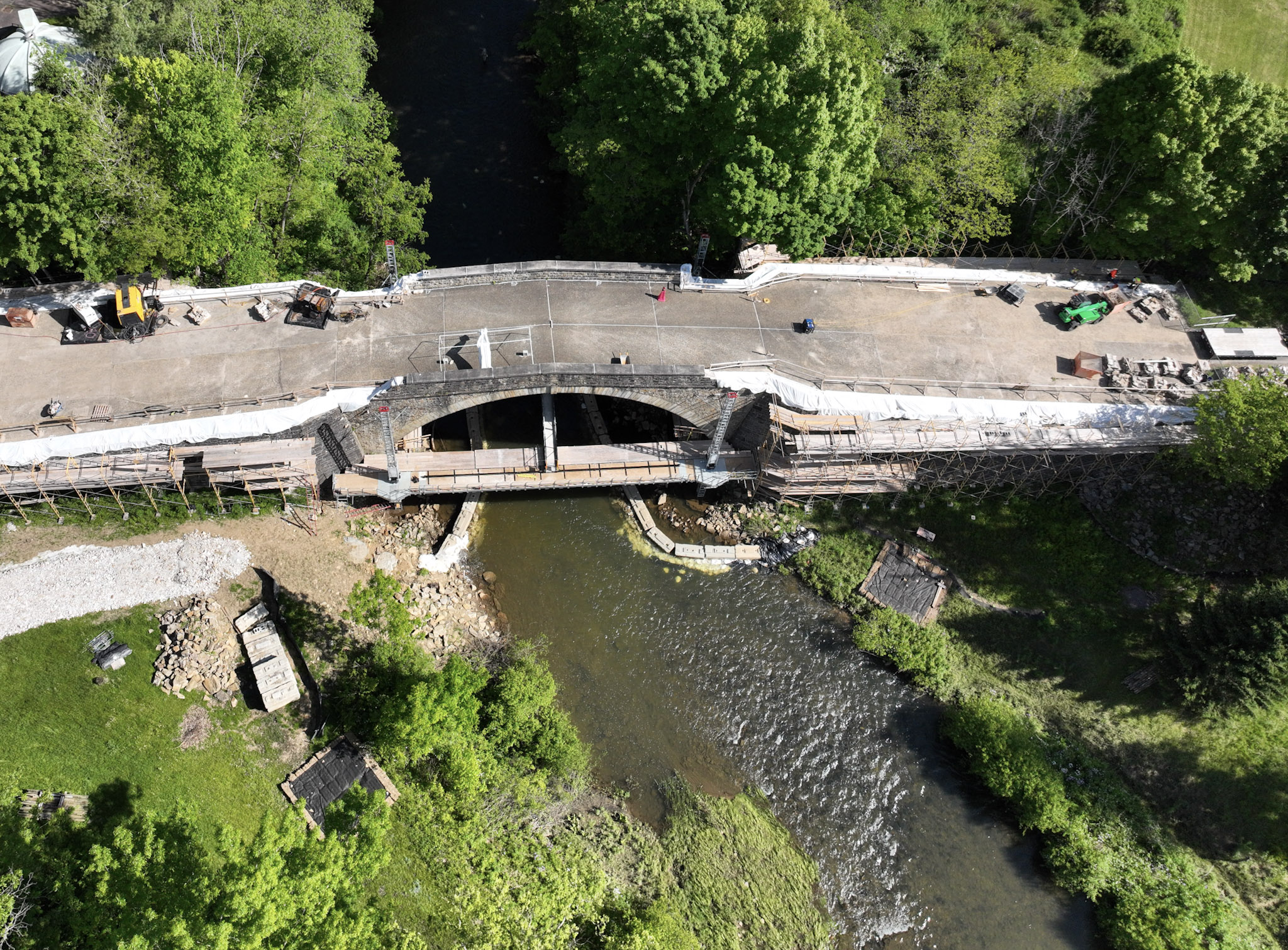
Casselman River Bridge, first opened in 1813, is currently undergoing renovations to be reopened to foot traffic. Maryland Department of Natural Resources photo.
Casselman River Bridge State Park in Garrett County recently joined the National Park Service’s Underground Railroad Network to Freedom, which honors and preserves the history of resistance to enslavement.
The landmark earned the designation thanks to its role in the emancipation of author, minister and abolitionist Josiah Henson.
When Henson crossed the bridge in 1828, it was about 15 years old, and at the time, the largest stone arch bridge in the fledgling nation. The Maryland Department of Natural Resources and Maryland Department of Transportation are now stabilizing and resurfacing the bridge to ensure another two centuries as a National Historic Landmark. Read more…