
Natural Resources News
Natural Resources Police Promotes 38 Officers, Announces Leadership Updates
Lieutenant Colonel Brent Trautman named Deputy Superintendent; other officers honored for new leadership roles at ceremony in Arnold

Colonel Orlando Lilly, Major Christopher Morris, Lieutenant Colonel Brent Trautman, and Department of Natural Resources Secretary Josh Kurtz gather at Wednesday’s ceremony in Annapolis. Maryland DNR photo.
The Maryland Natural Resources Police held a promotional ceremony Wednesday evening where 38 officers were recognized for rising in ranks from corporal through lieutenant colonel at Anne Arundel Community College in Arnold.
The event began with the promotions of Lieutenant Colonel Brent Trautman and Major Christopher Morris who joined the executive command ranks. Lieutenant Colonel Trautman, a 29-year NRP veteran, was formally promoted to Deputy Superintendent and will serve as the second-in-command to NRP Superintendent Colonel Orlando D. Lilly. Major Morris begins his role as Assistant Superintendent and Commander of the Executive Services Bureau, where he will oversee strategic planning, accreditation, policy, and more. Read more…
DNR Closes Additional Areas of Cunningham Falls State Park Following Second Beaver Attack
Update 4:25 p.m. Aug. 6: The Maryland Department of Health has confirmed the second beaver collected from Cunningham Falls State Park had tested positive for the rabies virus.
Original release: The Maryland Department of Natural Resources is closing additional areas of Cunningham Falls State Park around Hunting Creek Lake after a fisherman reported that he was bitten on the leg by a beaver in the South Beach Day Use area of the park at about 9:30 a.m. on Wednesday, August 5.
The injured fisherman in today’s attack, a 19-year-old male, appeared to have sustained a bite to the ankle and transported himself to Meritus Medical Center in Hagerstown for treatment. He received treatment for rabies exposure and a tetanus shot, and Natural Resources Police followed up with him after treatment for an account of the incident.
Following the attack, NRP officers caught and euthanized the beaver, which is being delivered to the Frederick County Health Department. The Maryland Department of Health’s laboratory will conduct rabies testing and expects to have results available later this week.
This is the second incident of this nature at Cunningham Falls State Park within the past two weeks following a July 26 beaver attack on a 13-year-old swimmer. That beaver was caught, euthanized, and tested positive for rabies on July 27.
In response to the second incident, the Maryland Park Service has closed the Houck Day Use Area, the adjacent boat ramp, and Big Hunting Creek above the lake while the DNR Wildlife and Heritage Service continues to investigate a possible rabies outbreak within the local beaver population. Swimming, fishing, boating, and all water access are prohibited until the area can be confirmed safe for visitors. Other areas of the park, including the campground, remain open. Read more…
Maryland Fishing Report – August 5

Photo courtesy of Miss Susie Charters
Anglers are enjoying a wide variety of fishing opportunities this week from freshwater streams and ponds to the Chesapeake Bay and Atlantic Ocean.
The Department of Natural Resources (DNR) reminds Maryland recreational anglers that targeting striped bass in the Chesapeake Bay and its tidal tributaries is prohibited from August 1 through August 31 to protect the species. This month is an ideal time to fish for Maryland’s multitude of other species, especially Chesapeake Channa and blue catfish.
Anglers chosen in the lottery for free blue catfish fishing charters in DNR’s first-ever Reel in the Blues Bonanza are enjoying fun fishing adventures and reaping a harvest of blue catfish and taking home delicious fillets.
Board of Public Works Approves $6.38 Million for Tennis Courts, Trails, and Land Conservation in Five Maryland Counties
Funding approved for DNR’s Program Open Space Local, Local Parks and Playgrounds Infrastructure, Community Parks and Playgrounds and Rural Legacy programs

The Board of Public Works approved $1 million of Rural Legacy pto acquire a 141-acre permanent conservation easement in the Upper Patapsco Rural Legacy Area protects some of Carroll County’s most productive farmland. Maryland DNR photo
The Board of Public Works today approved more than $6.38 million in grants from the Maryland Department of Natural Resources to local governments for tennis courts, trails, and land conservation in Carroll, Frederick, Kent, Prince George’s, and Washington counties.
More than $3.8 million in Program Open Space – Local funding was approved for three recreation projects.
The largest fund award will be used for the construction of an indoor tennis facility with six courts at Westphalia Central Park in Prince George’s County. In addition, the town of Mount Airy in Frederick County will make improvements to two tennis courts at Village Gate Park with these funds, as well as funds from the Community Parks and Playgrounds program. The third project is the construction of trails and parking at the Washington County Regional Park.
Also approved was $930,000 from the Local Parks and Playgrounds Infrastructure Program to fund the acquisition of 1.55 acres of land for the Central Avenue Connector Trail in Capitol Heights, Prince George’s County. This is the start of a new 7-mile trail that will connect the District of Columbia and Largo Town Center. This program was funded in FY 2022 and FY 2023 to provide grant funds primarily to local governments for park and recreation projects.
About $576,000 of Community Parks and Playgrounds program funding was approved for three projects – a tennis court reconstruction at Village Gate Park in Mt. Airy, Frederick County, additions to Rock Hall Park (a dog park, restrooms and park lighting) in Kent County and a new pavilion at Shafer Park in Boonsboro, Washington County. Read more…
Secretary’s Message – There’s Plenty of Fish to Chase During the Dog Days of Summer While We Protect Striped Bass

Governor Wes Moore and Secretary Josh Kurtz promote fishing for Maryland’s invasive blue catfish during a 2024 event. Maryland DNR photo.
For the month of August, we are giving our striped bass in Maryland’s portion of the Chesapeake Bay a much-needed break. Heat stress is one of the major threats to the species and that stress is exacerbated during the late summer in the Bay when high water temperatures and low dissolved oxygen levels are more prevalent. To protect the younger, resident population of striped bass during this time, all striped bass fishing in Maryland is off limits through Aug. 31.
A summer closure has been part of our management strategy for striped bass since 2020, although the department shifted the closure to August. The goal is to give younger resident fish the chance to grow and eventually leave the Chesapeake Bay to join the spawning stock. These efforts follow years of poor striped bass spawning success being recorded in the Bay.
Scientists are still getting a handle on how to reverse this trend. Recent research has suggested that environmental factors – warmer, drier winters and decreased spring water flow rates – contribute to this decline. We can’t control those factors, but others we can attempt to reverse. Read more…
Waterway Users Urged to Boat Smart to Avoid Propeller Strikes, Other Risks on the Water

NRP patrol boats and fire and rescue boats respond to a vessel fire on the Potomac River in St. Mary’s County on August 30, 2025. Ignition of fuel vapors is the leading cause of vessel fires in Maryland. Maryland DNR photo.
To avoid serious propeller strike accidents and other preventable boating injuries, the Natural Resources Police is providing an overview of safety steps boaters and other waterway users should follow when spending time underway.
“Our top priority is ensuring all boaters make it home safely at the end of the day,” said Col. Orlando Lilly, NRP Superintendent. “We’ve seen a concerning number of boating injuries occur this season; these are accidents that can happen in an instant and can often be preventable through simple safety practices.” Read more…
Crossing to Freedom: Historic Casselman River Bridge Recognized for its Role in the Underground Railroad
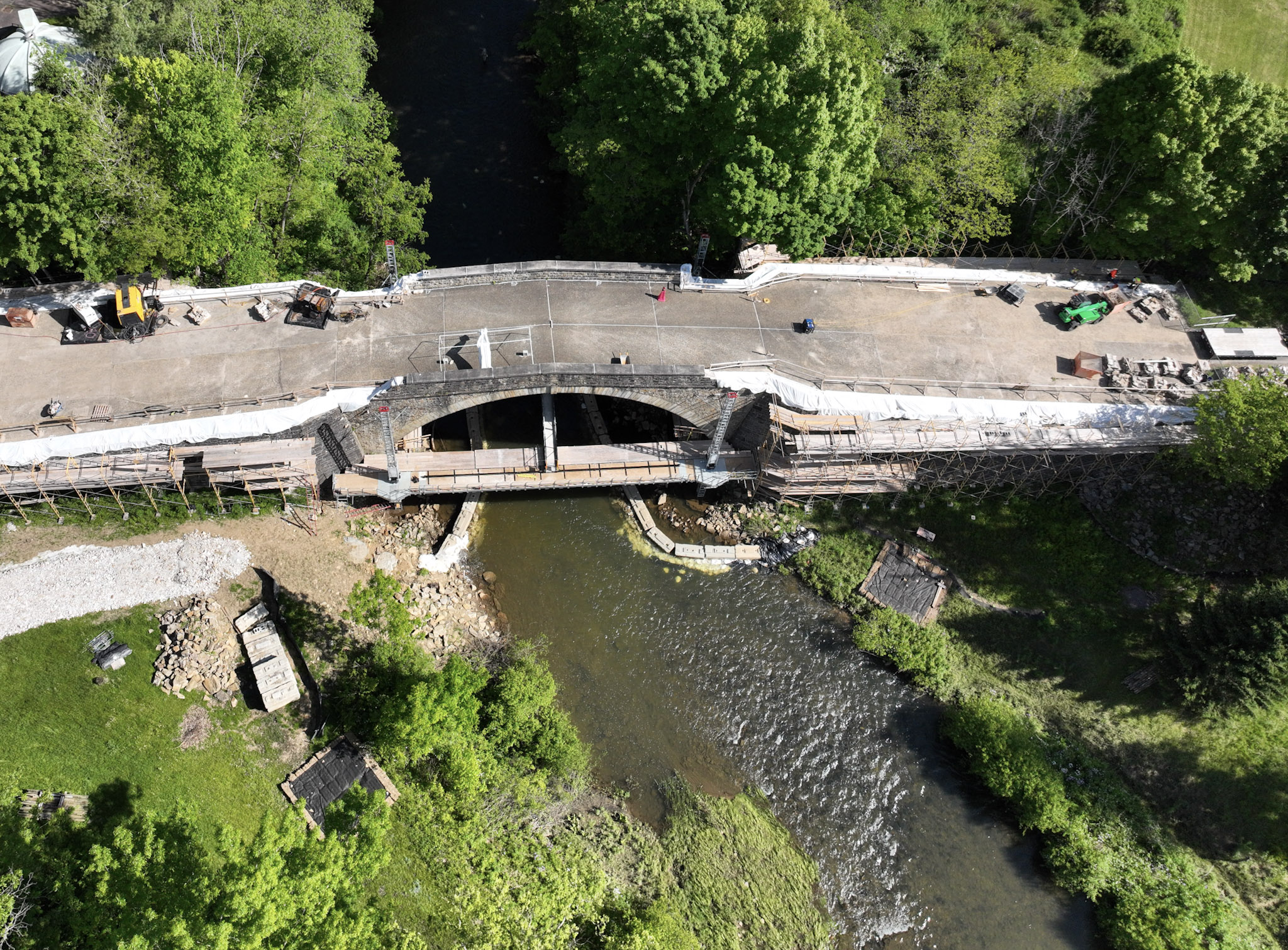
Casselman River Bridge, first opened in 1813, is currently undergoing renovations to be reopened to foot traffic. Maryland Department of Natural Resources photo.
Casselman River Bridge State Park in Garrett County recently joined the National Park Service’s Underground Railroad Network to Freedom, which honors and preserves the history of resistance to enslavement.
The landmark earned the designation thanks to its role in the emancipation of author, minister and abolitionist Josiah Henson.
When Henson crossed the bridge in 1828, it was about 15 years old, and at the time, the largest stone arch bridge in the fledgling nation. The Maryland Department of Natural Resources and Maryland Department of Transportation are now stabilizing and resurfacing the bridge to ensure another two centuries as a National Historic Landmark. Read more…
Eleven-year-old from Baltimore County Named 34th FishMaryland Master Angler

Angler Talan Scott Vrablic (right), along with his father Raymond Vrablic, caught and released an 18.75-inch hickory shad on the way to Talan’s FishMaryland Master Angler award. Photo by Raymond Vrablic.
Talan Scott Vrabic of Rosedale has earned a Master Angler Milestone Award under the Maryland Department of Natural Resources’ FishMaryland program. The award recognizes recreational anglers who catch ten trophy-sized fish of different species in Maryland.
Vrabic is the fifth youth angler (under age 16) and one of two eleven-year-olds to secure the award. Vrabic and his father, Raymond Vrablic, are an inseparable fishing team, and Vrabic has been accompanying his dad on fishing trips since he was 5 months old. Today, they fish together throughout Maryland.
His father has physical disabilities and is not able to walk, which can make fishing trips challenging for the pair. Vrabic said that surmounting those difficulties made fishing together even more special. Read more…
Natural Resources Police Joining National Night Out in Maryland Neighborhoods on Aug. 4

NRP officers join forces with the community at a 2025 National Night Out event in Oakland, where a patrol vehicle was fingerpainted by attending children. Maryland DNR photo.
Maryland Natural Resources Police officers will visit communities throughout Maryland on Tuesday, Aug. 4 in support of National Night Out, an annual community-building campaign promoting partnerships between the police and the neighborhoods they serve.
The National Night Out campaign was established in 1984 and has grown to include more than a million community members in all 50 states. Maryland’s community events include block parties, festivals, parades, cookouts, and public safety demonstrations.
Waterfowl Hunting Impoundments Available at Deal Island and Fairmount Wildlife Management Areas for 2026-27 Season

Photo by Lori Bramble, submitted to the 2017 Maryland DNR Photo Contest.
The Maryland Department of Natural Resources has posted the annual schedule and process for waterfowl hunting at impoundments in the Deal Island and Fairmount Wildlife Management Areas. The program aims to reduce hunter crowding and maintain the quality of waterfowl hunting opportunities during Maryland’s regular duck season.
At both wildlife management areas’ impoundments, hunting is allowed in three segments and only on the following days during the regular duck season: opening day and Saturdays during the October segment; opening day, Saturdays, and the Friday following Thanksgiving during the November segment; and opening day and Saturdays during the December-January portion, with Wednesdays added after January 1.
Hunters must have a permit to hunt on all open days during the regular duck season at the Deal Island impoundment. As in the past, a permit is required to hunt at the Fairmount impoundments on the opening day of each segment of the regular duck season. All the impoundments will continue to be open without permits on Youth, Veteran and Military Waterfowl Hunting Days – Nov. 7, 2026 and Feb. 6, 2027 – and during the September resident goose season. The Fairmount impoundments will continue to be open during the September teal season without permits, but the Deal Island impoundment will be closed for the September teal season. Read more…
Maryland Fishing Report – July 29

Master Angler Lucy Moore caught this large Chesapeake Channa, aka snakehead, recently in the lower Susquehanna River. Photo by Nick Perez
Families across Maryland are enjoying the outdoors together this summer and fishing is always a major part of spending time with children. Many youngsters will catch their first fish, and we hope fishing will be a big part of their lives in the future.
Beginning Saturday August 1, the Maryland Chesapeake Bay striped bass season will close through August 31 for conservation reasons. It will reopen on September 1. The tidal Potomac is also closed as of July 7 and will not reopen until August 21. The striped bass season along the coastal waters of Maryland will remain open. During this time we encourage anglers to explore the multitude of other species in our state.
One hundred lucky people were randomly selected to win a free blue catfish charter/guided experience this August, in our first-ever Reel in the Blues Bonanza. The winners have been notified by email. Even those who did not win this year can participate in the effort to remove invasive blue catfish from Maryland waters. Visit the blue catfish page on the DNR website to learn fishing tips, find a charter or guide to book your own trip, or buy blue catfish in restaurants or to make at home.
New Executive Order Promotes Use of Maryland-Grown Wood in Public Construction Projects

Josh Kurtz, Maryland Department of Natural Resources Secretary, speaks June 24 at the Logger Appreciation Dinner in Vienna, hosted by the Maryland Forests Association to recognize the vital role Maryland’s logging professionals play in managing our forests and supporting rural economies.
Governor Wes Moore signed an executive order June 1 directing state agencies to increase the use of Maryland-grown and harvested wood in publicly funded construction projects when wood is a required, preferred, or appropriate building material. The order is intended to strengthen local markets that support sustainable forestry, rural jobs, and the long-term conservation of Maryland’s working forests.
The executive order directs the Maryland Department of General Services, in coordination with the Departments of Agriculture, Commerce, and Natural Resources, to review procurement practices and identify opportunities to increase the use of Maryland-grown wood in state construction projects.
Maryland Department of Natural Resources Secretary Josh Kurtz said the executive order builds on existing efforts within the department to prioritize locally sourced wood products while creating new opportunities for Maryland’s forest industry.
In June, Secretary Kurtz addressed the annual Logger Appreciation Dinner, a yearly celebration hosted by the Maryland Forests Association. Kurtz noted that increasing the use of Maryland-grown wood can help address multiple statewide priorities, including housing needs, economic development, and forest conservation. Read more…
Anne Arundel County’s Forked Creek Yacht Club Certified as Maryland Clean Marina
Facility’s efforts improve local water quality and help restore the Chesapeake Bay

Forked Creek Yacht Club board members Steve Scott and Greg Jones hold their Clean Marina Award. The Anne Arundel County marina was certified for the program in July 2026. Maryland DNR photo
The Maryland Department of Natural Resources has certified Forked Creek Yacht Club in Severna Park as the newest Maryland Clean Marina Partner.
The department awards this designation to marine facilities that comply with all applicable regulatory requirements and voluntarily adopt a significant portion of recommended best practices in the Maryland Clean Marina Guidebook. There are now 131 certified Clean Marinas in Maryland, representing about 25% of the marinas in the state. Read more…
Maryland’s Summer Closure of Chesapeake Bay Striped Bass Fishing Begins August 1
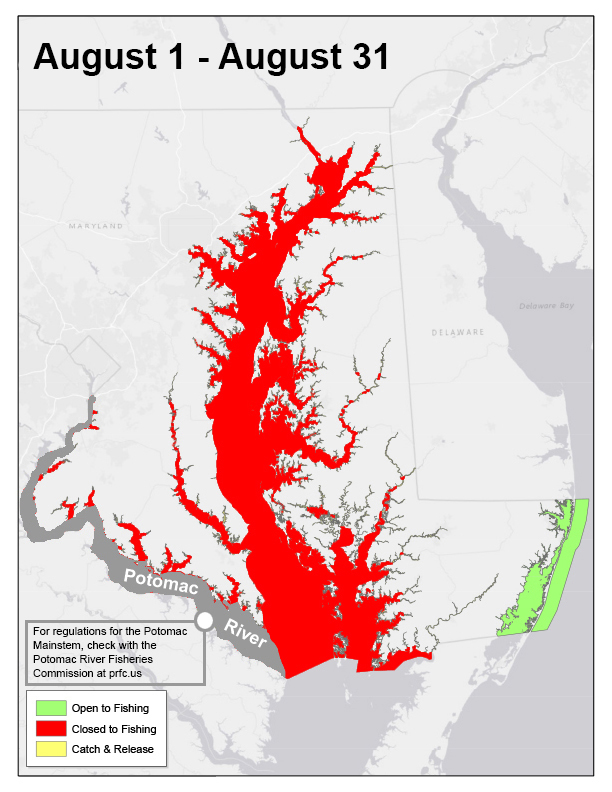
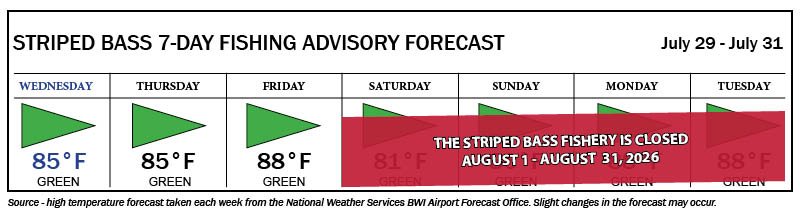
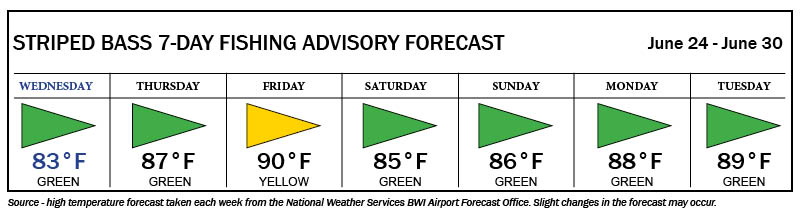
During August, all targeting of striped bass is off-limits in the Chesapeake Bay and tidal tributaries. Anglers are encouraged to target Maryland’s many other species during this time.
The Department of Natural Resources (DNR) reminds Maryland recreational anglers that targeting striped bass in the Chesapeake Bay and its tidal tributaries is prohibited from August 1 through August 31.
The striped bass targeting closure, shifted to August for the 2026 season, was put in place to protect the younger, resident striped bass population when hot water and air temperatures in mid-summer make fish more vulnerable to dying after being caught and released.
During the closure, DNR officials encourage anglers to pursue other fish, such as invasive blue catfish and Chesapeake Channa, also known as snakehead, by using different fishing methods than those used for striped bass. These invasive species have no bag or size limits and their harvest contributes to a healthier ecosystem in the Bay.
Recent research has suggested that environmental factors are contributing to poor striped bass spawning success. The summer closure offers important protection for Maryland’s state fish. First implemented in 2020, it aims to support the resident stock of striped bass and decrease overall mortality in Chesapeake Bay. Read more…
Maryland Fishing Report – July 22

Lilliana Andrew went fishing with her grandad and caught her first fish, a spot. Photo by Brittany Andrew
The summer season is in full swing, and it’s a wonderful time to take the family for visits or take short trips together close to home. Be sure to take our youngest aspiring anglers fishing and start them out with plenty of action.
As a reminder, the Chesapeake Bay recreational striped bass fishery is open to harvest through July 31 and then closed the entire month of August, reopening Sept. 1. This is to help protect our iconic species from the stress of being targeted during times of high temperatures and low oxygen levels.
During the remaining striped bass season, anglers should check the forecast and the Click Before You Cast before setting out. 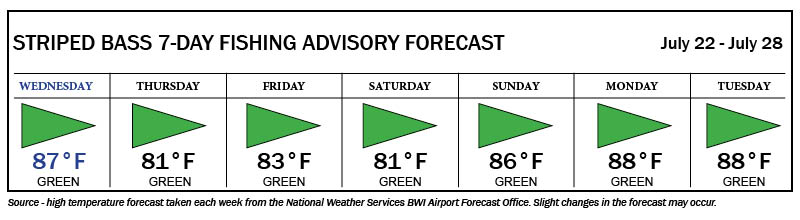
Board of Public Works Approves $1.46 Million for Pickleball Courts, Skate Park, and Land Conservation in Six Maryland Counties
Funding approved for DNR’s Program Open Space Local, Community Parks and Playgrounds, and Rural Legacy programs

In the Mountain Ridge Rural Legacy Area, Allegany County will acquire a conservation easement on a 239-acre forest containing more than a mile of stream buffers. Mountain Ridge includes exemplary plant and wildlife habitat—an important migration corridor and perhaps the most significant golden eagle flyway in the state. Maryland DNR photo.
The Board of Public Works today approved $1.46 million in grants from the Maryland Department of Natural Resources to local governments for pickleball courts, a skate park, and land conservation in Allegany, Carroll, Cecil, Garrett, Talbot, and Washington counties. Read more…
Maryland Dedicates Wetipquin Creek State Park, Historic Landscape to Become First State Park in Wicomico County

Wetipquin Creek State Park in Wicimico County includes the house and grounds of the historic Long Hill house, the creek for which the park is named, and more than 400 acres of marsh and forest showcasing the Delmarva Peninsula’s natural features. Maryland Department of Natural Resources photo
The Maryland Department of Natural Resources offered local officials and special guests a preview of Wetipquin Creek State Park on Tuesday, as the state celebrated the acquisition of the 445-acre property that will become Wicomico County’s first state park.
The Maryland Park Service named this newest park in honor of the creek that flows through it and empties into the Nanticoke River.
Wetipquin Creek State Park, currently in the planning phase, will conserve and foster an appreciation of the natural resources of the Delmarva Peninsula. The property contains the historic and architecturally significant house known as Long Hill, which dates back to the mid-18th century and was listed on the National Register of Historic Places in 1974. Read more…
Greenspace Equity Program Proposes $7 Million in Grants for Fiscal Year 2027

Parks, trails, and other public green spaces are eligible for funding. Maryland Department of Natural Resources photo
Governor Wes Moore’s FY 2027 budget includes $7 million for Maryland’s Greenspace Equity Program, supporting 15 projects across nine counties and Baltimore City. This program supports the creation, preservation, and improvement of public green spaces, enhancing the public health and community livability in overburdened and underserved communities.
Selected projects for FY 2027 include two acquisitions of land for new parks, and the development of new trails, community gardens, playgrounds, and other public green spaces. The Department consulted with the Greenspace Equity Advisory Board on the administration of the program.
Under the Greenspace Equity legislation, areas are defined as overburdened if environmental health measures show they are affected by pollution sources at higher levels than other areas, and underserved based on income levels and other key indicators. The grants will be presented to the Board of Public Works for final approval. Any budgeted funds that are not allocated to specific projects will be awarded in future grant rounds. Read more…
Governor Moore Announces Maryland Waterway Improvement Fund Provides $20 Million in Capital Grants for Public Boating Access, Navigable Waterways, and Safety

Choptank Marina and Boat Ramp in Preston recently showcased several upgrades completed with money from the Waterway Improvement Fund. Photo by Mickey Pullen, courtesy of Caroline County Recreation and Parks.
Governor Moore today announced the Maryland Department of Natural Resources will provide $13 million in Waterway Improvement Fund allocations and $7 million in General Obligation Bond funding toward 24 public boating projects throughout Maryland in Fiscal Year 2027, which began July 1.
The grants provided to partners will support new and improved public boating access facilities, dredging of navigable public waterways, boating-safety-related vessels, and other important infrastructure and initiatives.
“Boating is an integral aspect of Maryland’s cultural identity that supports our seafood and tourism economies,” said Gov. Moore. “These major investments provide resources to strengthen our boating infrastructure, expand recreational access, and ensure the longevity of our waterways for Marylanders to enjoy the Chesapeake Bay for generations to come.” Read more…
Maryland Fishing Report – July 15

Angler Rodney Hamm caught a 32.5-inch Chesapeake Channa in the Sassafras River in June. Photo courtesy of Rodney Hamm.
The summer heat is on, but there is plenty of great fishing to be had throughout Maryland. Make sure your fishing license is up to date!
As a reminder, under new regulations the Chesapeake Bay recreational striped bass fishery is open to harvest through July 31 and then closed the entire month of August, reopening Sept. 1. During the remaining striped bass season, anglers should check the forecast conditions and fish with caution to protect our iconic species from the stress of being targeted during times of high temperatures and low oxygen levels. Once anglers catch their daily limit (one fish per person per day, at least 19 inches and cannot exceed 24 inches), they should cease targeting striped bass and focus on other species, to limit the amount that are caught and released. If a striped bass isn’t a keeper, it should be released in the water without ever being removed.
Tips for safe catch and release are on the Maryland Department of Natural Resources website.
This is a great time to pursue the multiple other species in Maryland waters – particularly blue catfish found in almost every tidal river, and the challenging Chesapeake Channa, or northern snakehead, which is very active in warm temperatures.
Regional reports for the Chesapeake Bay, freshwater fishing areas, and the Atlantic and coastal bays will return later this month.

Maryland Black Bear Hunt Lottery Applications Open for 2026 Season
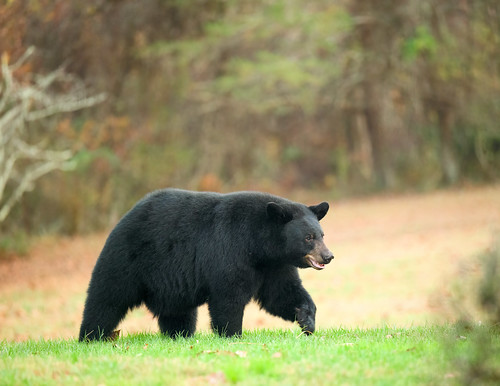
Photo by by Mitch Adolph, submitted to the 2023 Maryland DNR Photo Contest.
The Maryland Department of Natural Resources’ black bear hunt lottery will be open from July 15 through August 31. Entry is required to participate in the 2026 Maryland bear hunting season from October 26 – 31 in all of Allegany, Frederick, Garrett and Washington counties.
The bear hunt is an important part of managing Maryland’s expanding bear population by helping to reduce conflicts between humans and bears such as collisions with vehicles and property damage.
Hunters can check the DNR black bear hunt website on September 3 to see if they were selected. Applicants of the lottery who are not selected receive one preference point for each year that they enter the lottery but are not selected. Each preference point represents one chance in the next bear permit lottery the hunter enters. Anyone who is not seeking a permit this year, but may in the future, can purchase a preference point for $15 without entering the 2026 lottery. Read more…
Maryland Accepting Requests to Fund Watershed Restoration, Community Flood Planning, Beneficial Use, and Environmental Education
Maryland DNR Grants Gateway open for Fiscal Year 2028 funding

A newly constructed living shoreline on Tilghman Island protects a tidal wetland and adjacent community from coastal flood impacts. Maryland DNR photo by Maggie Cavey.
The Maryland Department of Natural Resources’ Grants Gateway opens July 15, 2026 for applications from local governments and organizations for Fiscal Year 2028.
Through this process, DNR connects Maryland communities with funding opportunities for projects and programs that improve water quality in local waterways, increase communities’ resilience to storms and changing conditions, strengthen local economies, develop environmental stewards, and increase beneficial use of dredged material.
The department’s Grants Gateway solicitation provides a streamlined hub for multiple funding sources–enabling prospective applicants to find the program that meets their needs. Read more…
Maryland Awards $11.2 Million from Whole Watershed Program to Advance Environmental Restoration
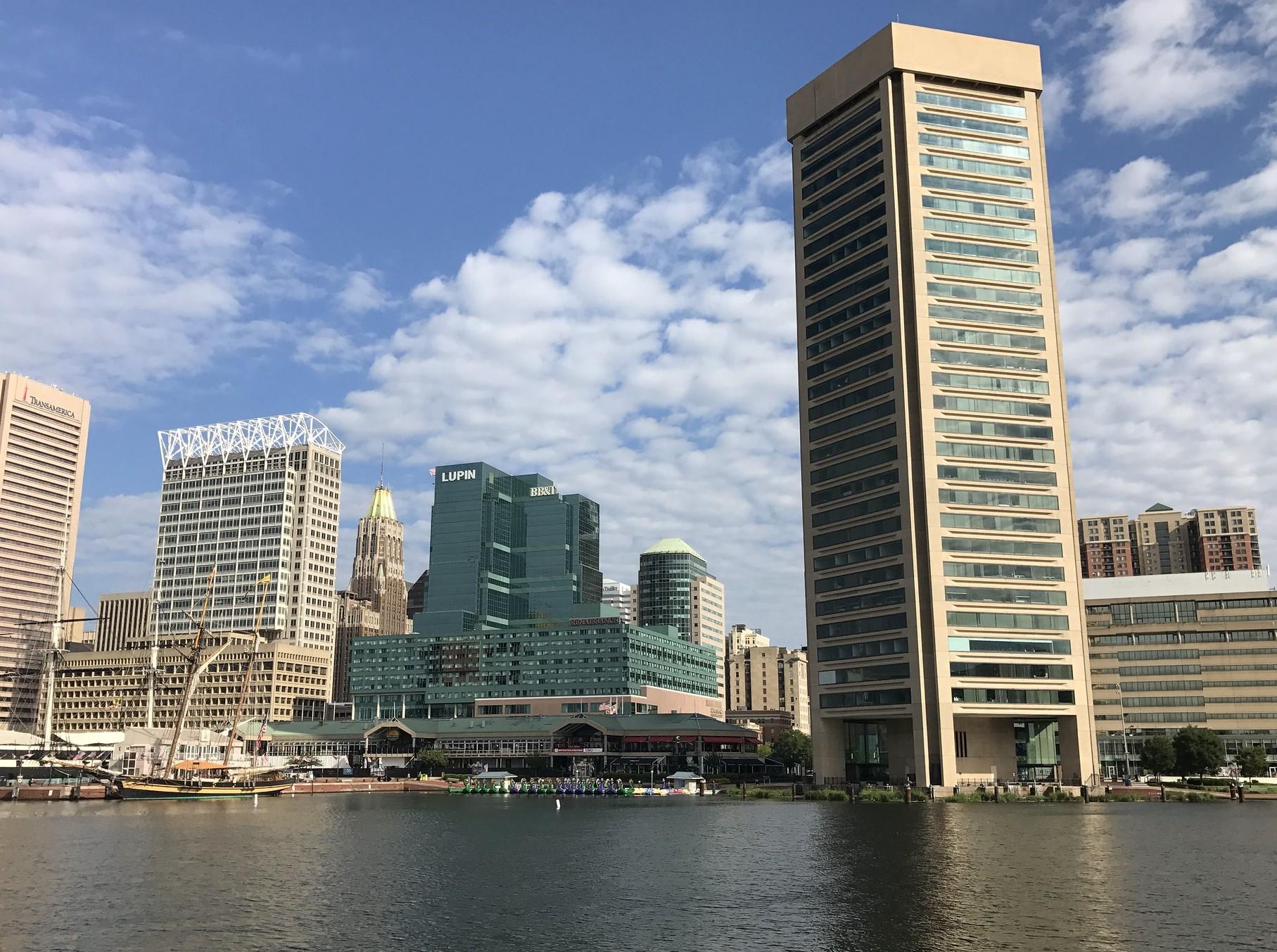
The Baltimore Harbor is one of five selected watersheds in the Whole Watershed Program. DNR photo
The Maryland Department of Natural Resources is awarding $11.2 million in grants from the Whole Watershed Fund to accelerate restoration efforts in five key watersheds across the state. Established by the Whole Watershed Act, this second year of the five-year program supports 30 projects in Antietam Creek, Baltimore Harbor, Newport Bay, the Severn River, and the Upper Choptank River, including three agricultural areas, and two cross-state collaborative areas.
Each watershed will receive $2 million in project funding and $250,000 for watershed monitoring funding. Projects will help improve water quality, enhance habitat, and engage communities throughout Maryland. Read more…
Native Animal Profile: Crayfish

A biologist holds up a crayfish found in the Patapsco River. Maryland Department of Natural Resources photo
Most of us who have played in shallow water or let our children play in Maryland streams and ponds vividly recall an encounter with a crayfish. It’s usually hiding under a rock, hurriedly scampering along a sandy stream bottom, shooting quickly backwards away from disturbance, or angrily shaking small claws at us as we pluck it out of the water. This creek critter is uniquely charismatic and still quite common despite the increase in threats to its survival. Whether you call it crayfish, crawfish, mudbug, crawdad, freshwater lobster, or another of many common nicknames, this humble crustacean is often seen but not often fully appreciated. Read more…
No Place Like Home: DIY Wildlife Houses for Home Habitats, Gardeners, and Kids
By Katy Gorsuch
If you’re anything like me, you spent much more time as a kid carefully constructing homes for rolly pollies (aka isopods) than you did playing sports. And there’s no reason that should stop! Below are a selection of houses you can build for our wildlife neighbors, each with a difficulty rating based on the time and materials needed to put them together (Note: if you need to change the size, you can use the same scale).
Toad Abode

Entry submitted to Maryland DNR’s 2020 “Create Your Own State Park” program.
Rating: Easy, 1 out of 5 Slugs
Materials: a flower pot or a bowl or some rocks or an old birdhouse (or anything else that works where you are and with what you have)
A home for a toad, or a “toad abode” is one of the simplest wildlife homes you can put together! The goal is to create a spot that is cool, shaded, and on the ground, in whatever form that takes. If this is going to go in a sunny spot in your space, choose materials that don’t heat up much, like ceramic, or tuck the house back underneath bushes or shrubs. Read more…
Natural Heritage Program Spotlight: The SWAP!

Cover of the 2025-2035 Maryland State Wildlife Action Plan, which has been completed for review by the federal government.
The tagline of the 1990s television show Captain Planet told kids weekly, “the power is yours!” Just like the adventures those cartoon characters faced every week, Maryland’s State Wildlife Action Plan (SWAP) is a real-life Planeteer challenge: How should we as Maryland citizens work collaboratively to protect rare species and keep abundant wildlife from becoming rare in the future? Natural Heritage Program staff and community stakeholders across the state have been working tirelessly to tackle this challenge. We are proud to share that a final draft is complete!
Every ten years, all fifty states and the District of Columbia are required to update their SWAP. The plan is meant to serve as a non-regulatory guiding document for conservation efforts concerning the state’s Species of Greatest Conservation Need – including all shapes and sizes of wild animals and plants – and the habitats where we find them. The last SWAP cycle was completed in 2015. The updated SWAP was due and submitted to the federal government on May 1, 2026. Compliance is necessary for states to access State Wildlife Grant (SWG) funding, which funds a large chunk of non-game species conservation work nationwide. According to the US Fish and Wildlife Service, these funds are used “for improving public and private lands, ensuring the availability of sufficient habitat for species, and providing quality recreational experiences for outdoor enthusiasts of all kinds.” Examples of funded efforts include research, fish and wildlife surveys, species restoration, habitat management, and monitoring. States must also match 25-35% of those funds, and for Maryland that funding often comes from the Chesapeake Bay and Endangered Species Fund. Anyone can donate to it on their tax return each year. Read more…
Moon Mythology and Maryland Wildlife: Summer Moons
By Katy Gorsuch

Assateague at Night by Rick Dove, DNR Photo Contest 2020. The next full moon after this photo was taken would have been the full Buck Moon, on July 5th in 2020.
Continuing our exploration of the diverse and wonderful ecology of Maryland, we turn to the warm summer full moons and all they represent!
As with winter and spring moons, summer full moons have folk names often in alignment with animals responding to the changing seasons, or locally important events. Recorded in English as far back as 1722, indigenous peoples named the full moons, although some are more recently derived.
Full moon names varied widely depending on geographic location and language family amongst Native Americans. For example, in some locations one full moon might be named “Goose Moon,” while in another location the same time period could be the “Cold Moon.” The practice of naming moons this way doesn’t seem to have been historically universal, and in the centuries since moon names were first recorded by colonists, misinformation has proliferated. For our purposes, we use supposed Algonquian full moon names as a starting point to explore Maryland’s unique wildlife, and how the seasons change! Read more…
NRP Responds To Maritime Emergencies, Conducts Hundreds Of Vessel Stops Independence Day Weekend
Officers responded to multiple weather-related water rescues and cited boaters for violations during Operation Dry Water.

Natural Resources Police officers conduct patrols on NRP’s newest boat, the 31-foot Harry L. George, alongside firefighting and rescue vessels. Maryland DNR photo.
The Maryland Natural Resources Police (NRP) investigated 11 reportable boating accidents, conducted hundreds of vessel stops, and made five alcohol related arrests during its annual Operation Dry Water “saturation patrol” campaign from July 3 to July 5.
Statistically this time is the busiest and most dangerous boating holiday. No boating fatalities were recorded in Maryland on Independence Day weekend. Read more…
Chesapeake Bay Monitoring Shows Dissolved Oxygen Conditions Best on Record in Early Part of Season
Drought contributes to low hypoxia in early part of season
 Data collected by the Maryland Department of Natural Resources and Old Dominion University show lower than average volumes of hypoxia—waters with less than 2 mg/l of oxygen—in the Chesapeake Bay mainstem of Maryland and Virginia from May to late June 2026.
No hypoxia was observed in May, one of ten years with no monitored hypoxia in May during the past 42 years. Early June had the lowest hypoxic volume ever measured for the time period with less than a tenth of a cubic mile. Late June hypoxia rose to just under one cubic mile, but was still below the historical average. May and early June had no anoxia – waters with less than 0.2 mg/l of oxygen – while 0.05 cubic miles were observed in late June. Read more…
Maryland Fishing Report – July 8
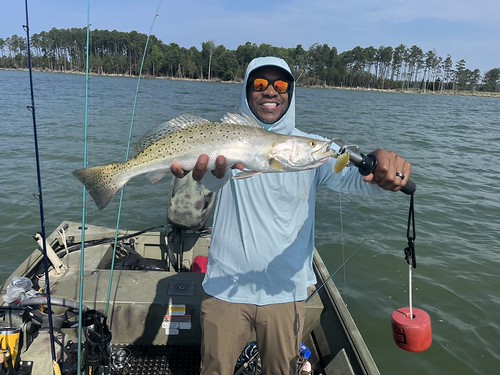
Rustin Moore holds a beautiful speckled trout he caught recently in the lower Bay. Photo courtesy of Rustin Moore
Milder temperatures are welcoming anglers to enjoy fishing across Maryland from the freshwater areas to the Chesapeake Bay and Atlantic waters. There is a wide variety of adventures waiting for anglers to explore.
The Maryland Department of Natural Resources (DNR) reminds anglers that water and air temperatures are elevated, and caution needs to be taken when fishing for striped bass.
Once anglers catch their daily limit, they should cease targeting striped bass and focus on other species, to limit the amount that are caught and released. If a striped bass isn’t a keeper, it should be released in the water without ever being removed.
Tips for safe catch and release are on the DNR website.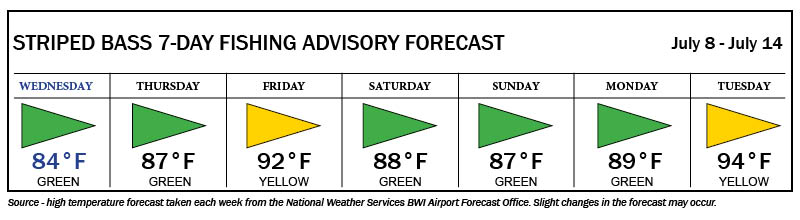
Ocean City Angler Sets New Maryland State Record for False Albacore
Atlantic Division record broken for the third time in one year

Cooper Clark next to his state record false albacore being weighed on a certified scale at Sunset Marina, Ocean City. Photo courtesy of Cooper Clark.
The Maryland Department of Natural Resources has officially recognized Cooper Clark of Ocean City as the new state record holder for false albacore (Euthynnus alletteratus) in the Atlantic Division. Clark’s 28.2-pound catch surpasses the previous record of 26.0 pounds that was set in July 2025, just eight days after the record fell for the first time in 30 years.
Clark caught the false albacore on July 3, 2026, at the “Jackspot,” a commonly fished area 20-30 nautical miles off Ocean City near the 20-fathom line. Read more…
Preventing Tick Bites Like The Pros – Advice from the Maryland Department of Natural Resources Field Staff

Ixodes scapularis (blacklegged tick). Photo Courtesy of Centers for Disease Control and Prevention
Visitors to Maryland’s parks and public lands should take steps to prevent tick bites and treat tick bites quickly to protect themselves from Lyme disease, Alpha-gal syndrome and other tick-borne illnesses.
Tick prevention is especially important if you are hiking through the woods or in a meadow or field, as ticks wait on grass and leaves, and attach when a host brushes past. Ticks can’t jump, can’t fly, and they don’t fall out of trees, according to the University of Maryland Extension.
Avoiding tick bites and reacting to them quickly is the best way to prevent tick illness. Ticks are found throughout Maryland, and are active in the spring, summer and fall, though tick bites are possible year-round. Anyone spending time outside should stay vigilant.
Department of Natural Resources staff often work outdoors in remote areas, and have shared their best tips for reducing exposure to tick-related illnesses.
Following these pro tips can help everyone stay vigilant and protect themselves outdoors. Read more…
Waterfowl Blind Site Licensing Process Begins for 2026-2027
Online lottery, virtual appointments available to secure waterfowl hunting locations

Maryland Department of Natural Resources photo
The Maryland Department of Natural Resources (DNR) is offering an online process for Maryland hunters to apply for a 2026-2027 waterfowl offshore blind site license. Hunters and riparian landowners may enter the annual lottery for the opening days of waterfowl blind site licensing from July 15 through July 28 using the Department’s online licensing portal, MD Outdoors.
Preview maps containing information of licensed shorelines and blind sites placed by riparian landowners can be viewed online. Read more…
Secretary’s Message: The Story of America Can Be Followed on Maryland’s Trails

Maryland Department of Natural Resources Secretary Josh Kurtz and Maryland Park Service Director Angela Crenshaw meet with descendants of former enslaved workers of the Colonial-era Catoctin Furnace. A re-discovered cemetery where these skilled workers were buried lies within Cunningham Falls State Park. Maryland DNR photo.
The primary mission of the Maryland Department of Natural Resources is to protect our natural environment, but as stewards of a half million acres of property, DNR is also custodian of our state’s rich history.
Almost every Maryland State Park contains some historic feature that came along with the property, but some allow you to literally trace the footsteps of Maryland’s many contributions to the American story.
A good place to start is St. Clement’s Island State Park in the Potomac River off the shore of Colton’s Point in St. Mary’s County. This island is where the Ark and the Dove landed with Maryland’s first English settlers on March 25, 1634. Just like those first settlers, you can only reach the island by boat Read more…
Living Fossils and Symbols of Resilience: DNR Scientists Monitor Horseshoe Crabs After Population Recovery in the Region
A recent study found that horseshoe crabs have bounced back since population declines in 1990s
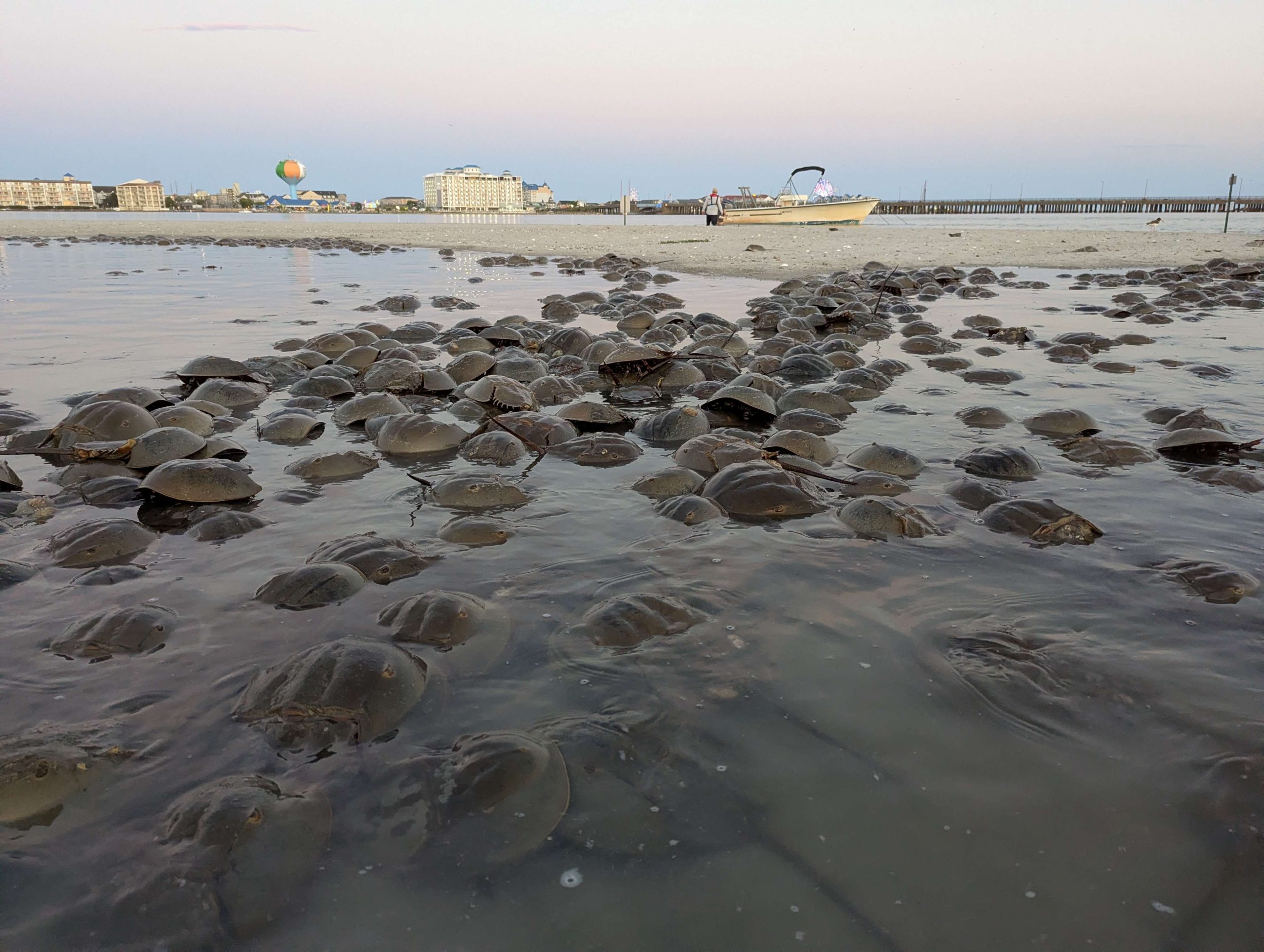
Dozens of horseshoe crabs gather in the Ocean City inlet during the high tide of the June new moon. Photo by Joe Zimmermann/DNR
Under the vibrant lights of the Ocean City boardwalk Ferris wheel and Slingshot ride, prehistoric animals scuttled onto the shore of a quiet beach by the thousands.
While the setting has changed, horseshoe crabs and their close relatives have been making this same journey to the world’s coastlines for hundreds of millions of years, through mass extinctions and the shift of continents, in what is considered the oldest wildlife migration on the planet. On spawning days that occur from May to July, these ancient arthropods return to beaches in Maryland and along the East Coast in search of mates.
“The horseshoe crabs are on,” Steve Doctor, a Maryland Department of Natural Resources fisheries biologist, said on a June spawning night. “It’s ‘Jurassic Park’ out there.” Read more…
Living History Takes Root Across Maryland with Liberty Tree Project

The Worcester County Liberty Tree was dedicated near the Calvin B. Taylor House Museum on April 25, 2026. These trees are being dedicated at historic sites and community gathering places across Maryland. Photo by Sam Crane, Maryland Department of Natural Resources.
As Maryland commemorates the 250th anniversary of the United States, communities across the state are becoming home to a unique piece of living history.
Liberty Trees served as important gathering places during the years leading up to the American Revolution. Across the thirteen colonies, groups such as the Sons of Liberty met beneath their branches to discuss rights, self-government and the future of the colonies.
Maryland’s original Liberty Tree, a tulip poplar located near what is now St. John’s College in Annapolis, became one of the state’s most significant historic landmarks. Citizens and community leaders gathered beneath its branches during the unrest surrounding the Stamp Act of 1765, making it a symbol of civic life and Maryland’s role in the nation’s founding.
This year, through the Maryland Liberty Tree Project, a genetically identical descendant of Maryland’s original Liberty Tree is being planted in each of the state’s 23 counties and Baltimore City. With most of the plantings now complete, Marylanders are invited to visit these trees and experience firsthand a living connection to the state’s past. Read more…
Maryland Fishing Report – July 1

This happy angler pulled in a keeper-sized striped bass that was destined for the dinner table. Photo by Travis Long
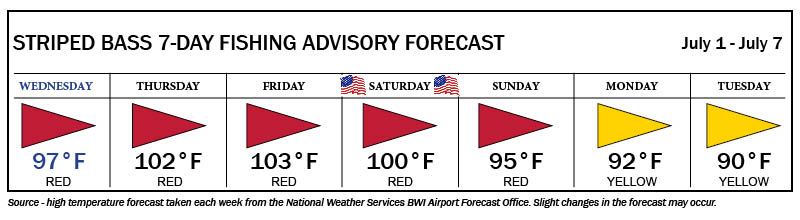
This weekend marks the 250th anniversary of the United States and family gatherings, vacations, and fishing with family and friends will be a large part of the celebration. July 4 is a license-free fishing day throughout Maryland, so if you have a friend or relative who doesn’t currently fish, take them out with you.
Board of Public Works Approves $1.18 Million for Sports Fields, Recreational Courts, and Playgrounds in Six Maryland Counties
Funding approved for DNR’s Program Open Space, Local Parks and Playgrounds Infrastructure, and Community Parks and Playgrounds programs

The Department of Natural Resources helps Maryland communities access funds for playgrounds, sports facilities, parks, and other outdoor access points. Maryland DNR photo.
The Board of Public Works today approved more than $1.18 million in grants from the Maryland Department of Natural Resources to local governments for sports fields and courts and playgrounds in Allegany, Calvert, Dorchester, Frederick, Garrett, and Washington counties. Read more…
Maryland State Trails Open to Pedal-Assist E-Bikes Limited to 20 mph

Maryland Department of Natural Resources photo
The Maryland Department of Natural Resources has approved new regulations to allow some pedal-assist e-bikes on multi-use trails on public lands across the state.
Under the new regulations, Class 1 pedal-assist e-bikes — those that provide motorized assistance up to 20 miles per hour — are cleared for use on public lands. The approved regulation was published in the Maryland Register in May and is now in effect.
The change is meant to welcome new user groups to public trails in state parks and boost options for those with mobility issues, while maintaining trail safety and environmental protections. Read more…
NRP’s Operation Dry Water Takes Aim at Boating Under the Influence During Independence Day Weekend
Boaters should expect to see more police on the water and increased vessel safety checks to prioritize the safety of boaters who spend the holiday afloat.

NRP will conduct high-visibility patrols, safety checks and enhanced enforcement efforts statewide this holiday weekend. Maryland DNR photo.
This Independence Day weekend, the Maryland Natural Resources Police (NRP) will increase boating enforcement patrols and target impaired boaters across the state during one of the busiest boating weekends of the summer.
Participating in Operation Dry Water for the 18th year, NRP will conduct high-visibility patrols and enhanced enforcement efforts statewide to remove impaired boat operators from Maryland’s waterways during the three-day campaign, July 3–5. Read more…
Maryland DNR Offers Special Edition MD250 Hard Card for Sale in Honor of America’s 250th Birthday
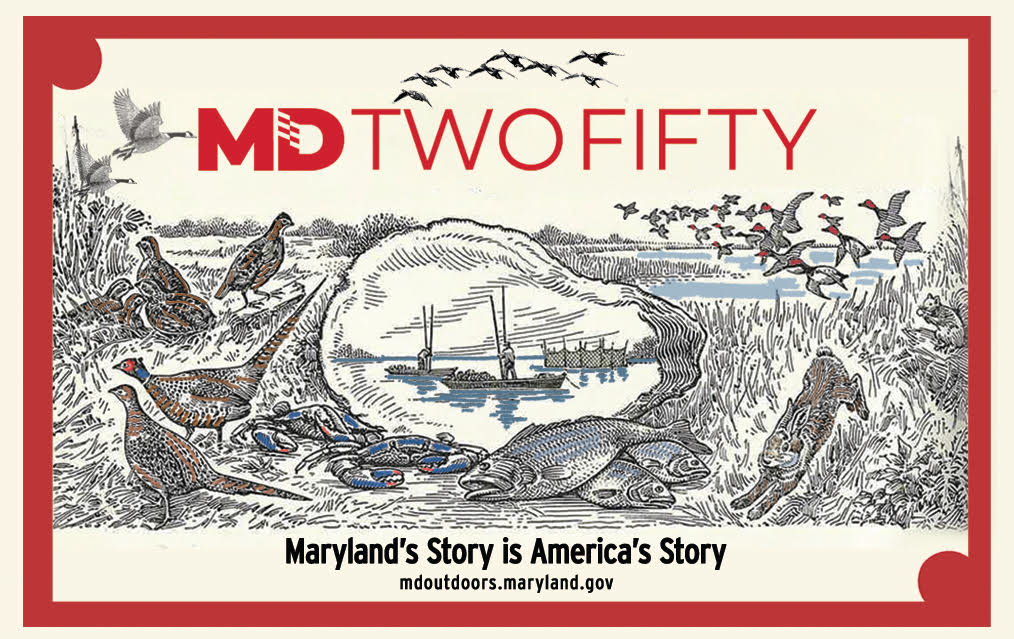 This year the Maryland Department of Natural Resources is offering a new, special edition hard card for fishing, hunting, and boating licenses that honors the state’s wildlife and outdoor history in honor of the United States’ 250th birthday. The new card is available for license holders to purchase on the MD Outdoors licensing website.
The artwork on the card features a landscape of marshes and fields filled with pheasants, flying geese, ducks, striped bass, blue crabs, a squirrel, and a rabbit. In the center is the outline of an oyster with an image of working watermen.
The image is a relic of Maryland’s past. It served as the frontispiece for the Maryland Conservationist magazine between 1924 and 1947. Maryland Conservationist was the official magazine of Maryland Conservation Department’s Game Division, a predecessor of today’s Maryland Department of Natural Resources. Read more…
Maryland Announces New Regional Forestry Board Structure, Seeks Local Volunteers
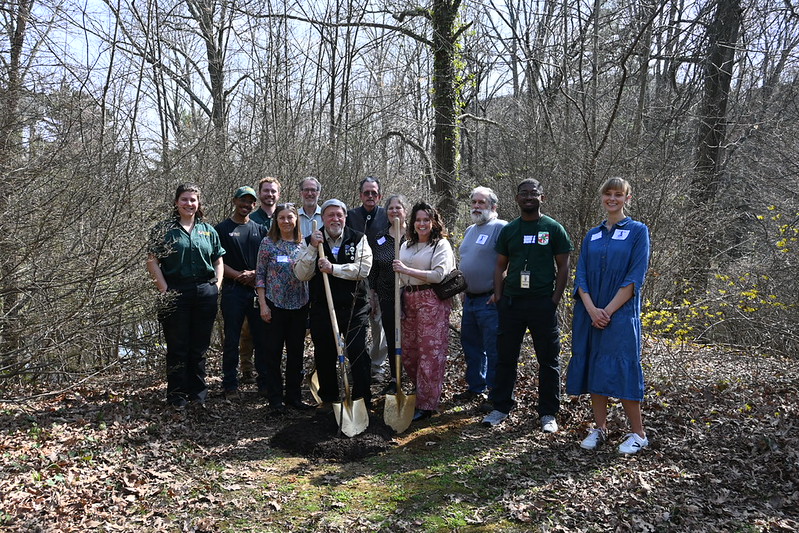
Members of the Forestry Board plant tulip poplars in Tawes Garden after the March state-wide meeting. Photo by Sam Crane/DNR
The Department of Natural Resources and the Maryland Forestry Foundation are inviting Marylanders to join their local Forestry Boards following a statewide update to Maryland’s longstanding Forestry Board network.
Originally established under state law in 1943, Maryland’s Forestry Boards have helped connect communities to forest stewardship for more than 80 years. In spring 2026, DNR updated the Forest Conservancy District Board structure by organizing districts regionally rather than by county. The new regional structure strengthens coordination across shared landscapes and watersheds while preserving county Forestry Boards as the primary local connection for volunteers, landowners, and communities. Read more…
Celebrate America 250 at Maryland State Parks with Fun Events Planned All Weekend
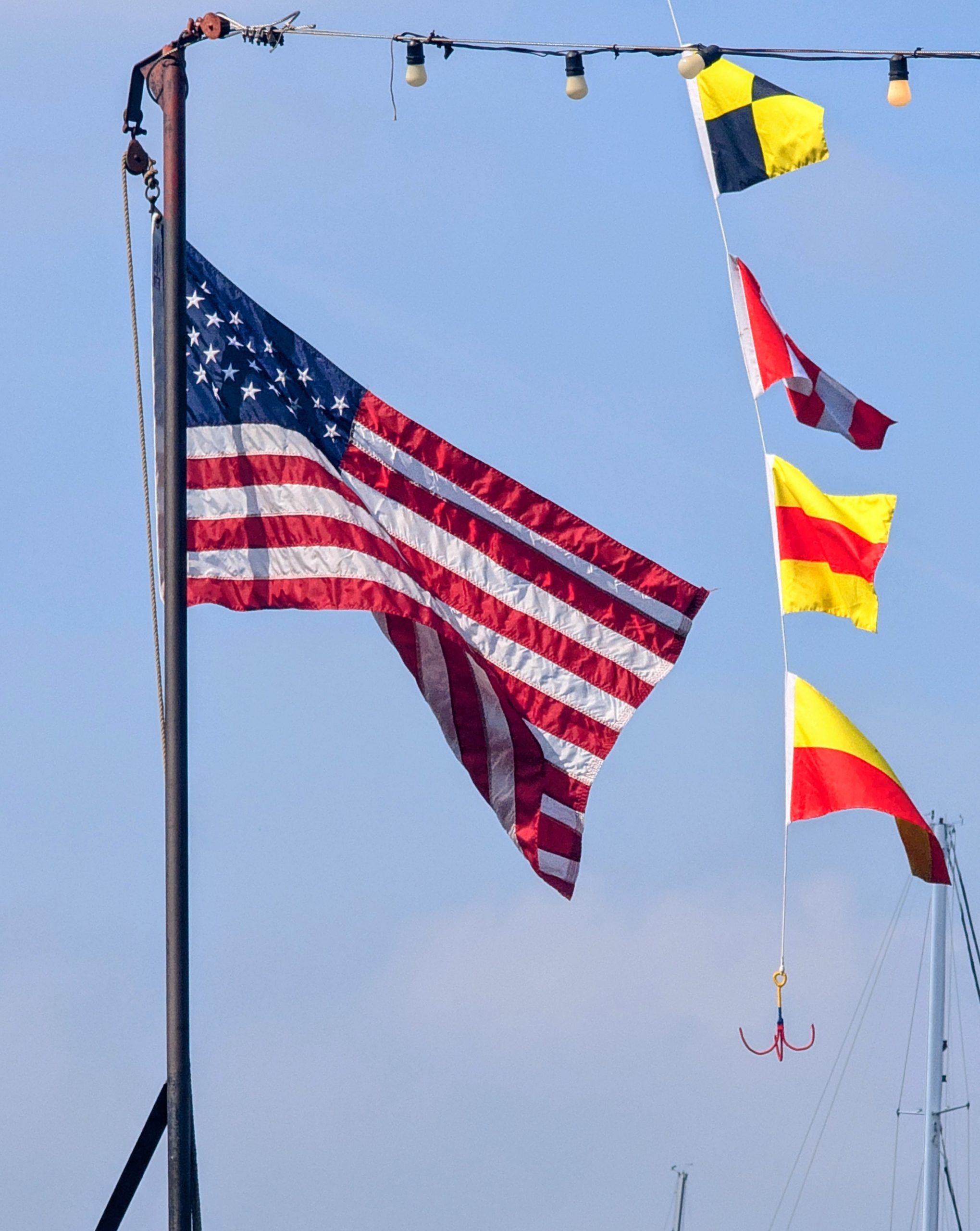 Maryland parks are hosting a variety of special events during the week of July 4 to mark the nation’s 250th birthday celebration, including a tree planting, bike parade, historical reenactments, and kids crafts.
With parks open on Independence Day, Marylanders can start a new tradition by hiking, learn more about our nation’s history by visiting park exhibits, or have a patriotic picnic.
July 4 is a license-free fishing day. Any individual may catch and possess finfish for recreational purposes in any tidal and nontidal waters of Maryland. All anglers must follow current regulations, including size and catch limits found in the department’s fishing and crabbing guide.
Additional Maryland State Parks Requiring Day-Use Reservations; New Entrance Technology Starting This Weekend

Day-use reservations are now required on weekends and holidays at Gunpowder Falls (Hammerman Area), Greenbrier State Park, Point Lookout State Park, Newtowne Neck State Park, North Point State Park, Rocks State Park’s Kilgore Falls area, Rocky Gap State Park, Sandy Point Park, and Swallow Falls State Park through Labor Day.
The Maryland Department of Natural Resources continues to expand its reservation and park entrance system to prevent long entrance lines, traffic backups, and unexpected capacity closures on busy weekends and holidays.
Beginning June 26, Fair Hill Natural Resource Management Area is implementing a QR code-based payment system, in which visitors scan a QR code on signage to pay their day-use fee online. An honor box will remain in place for those who need to pay cash. Reservations are not required at Fair Hill.
Maryland Department of Natural Resources Gives Young Largemouth Bass a Head Start
Tidal Bass Program increases recreational opportunities through stocking efforts
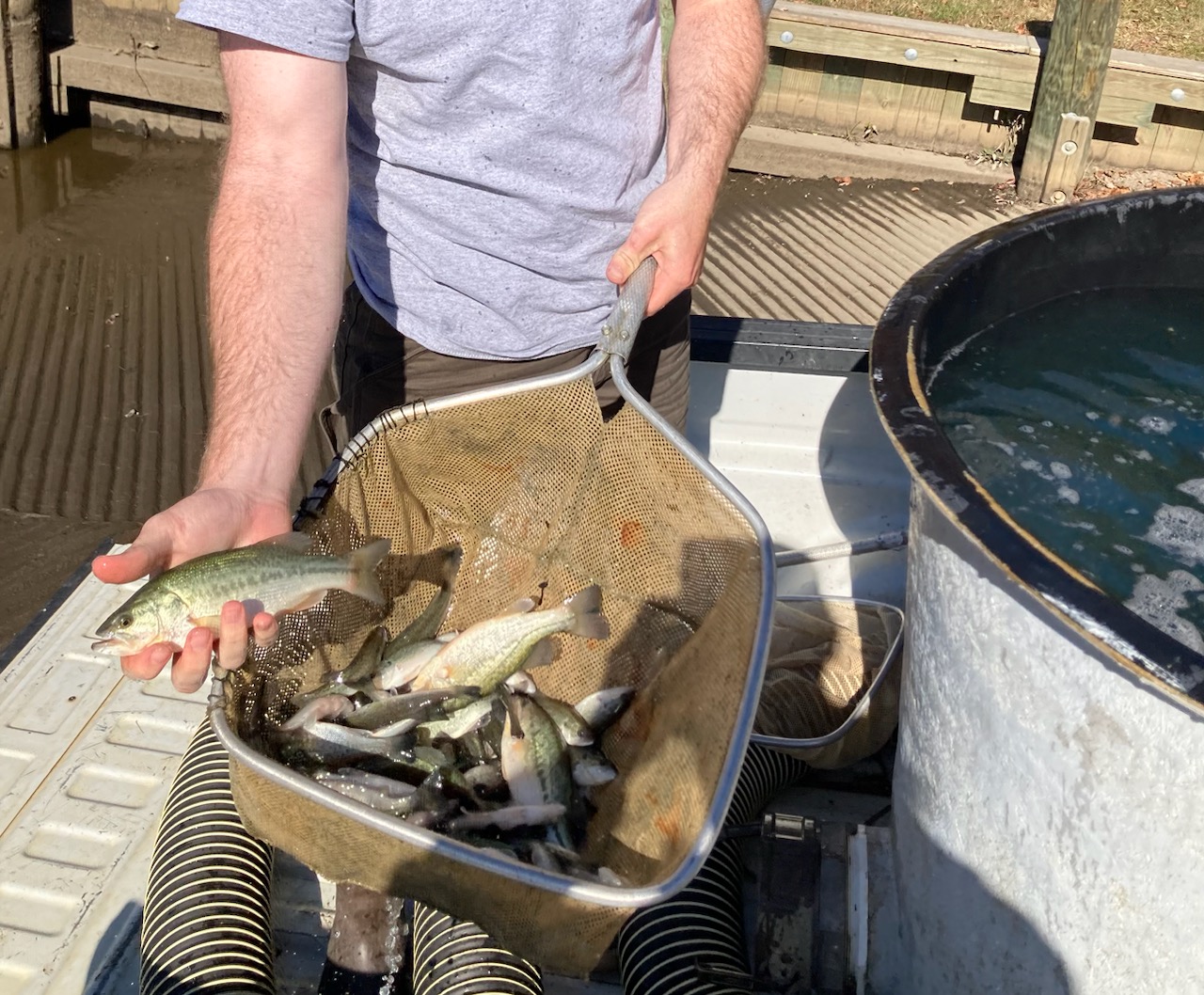
Each spring, Department of Natural Resources biologists collect largemouth bass from the Potomac River to spawn at the Joseph Manning Hatchery at Cedarville State Forest. Maryland DNR photo
Since the early 1980s, the Maryland Department of Natural Resources (DNR) has stocked more than six million largemouth bass in tidal rivers. This initiative aims to supplement established populations and enhance opportunities for Maryland anglers.
Tidal bass fishing is important to Maryland recreationally and economically, as each year DNR permits more than 400 tournaments for anglers to pursue black bass (the genus to which largemouth bass belong).
The stocking effort is an ongoing, year-long effort that is paid for by state fishing license fees.
The process begins each April with the collection of broodstock, followed by the release of young fish at different life stages into tidal rivers from May through early November. Read more…
Maryland Fishing Report – June 24
It is summertime in Maryland and families are enjoying vacations now that school is out and the Maryland outdoors invites anglers of all ages to enjoy fishing together.

Young Ella Hoenke gets some help holding on to a large red drum for a quick picture that she caught and released at Assateague Island. Photo by Kurt Hoenke
Maryland Department of Natural Resources’ New Giveaway Offers Chance to Win Free Blue Catfish Charter Fishing Trip
‘Reel in the Blues Bonanza’ is now open for entries
 The Maryland Department of Natural Resources (DNR) is giving away 100 free Chesapeake Bay blue catfish charter or guided fishing trips valued at up to $1,500 each. The trips will harvest blue catfish, an invasive fish in the Chesapeake Bay watershed.
From June 24 through July 13, anyone 18 or older can enter using a simple online form (limit one entry per person) for a chance to win a premier summer or fall fishing experience to catch these invasive predators.
DNR will randomly draw 100 winners from all entries. Winners will be responsible for contacting a participating captain or guide to coordinate their free trip. A winner may bring up to the number of guests allowed by the capacity of their chosen charter. The free trip includes fees for charter and mate tips. Read more…
Maryland Conservation Corps Class of 2025-26 Graduates 17 Members

Graduates, mentors, and crew leads attend the 2026 Maryland Conservation Corps Graduation Ceremony at Sandy Point State Park. Photo by Rachael Pacella/Maryland Department of Natural Resources
The Maryland Department of Natural Resources honored 17 members of the 2025-26 Maryland Conservation Corps (MCC) during their graduation program at Sandy Point State Park. The June 23 ceremony capped the members’ completion of 9.5 months of job training, conservation work, and stewardship with the Maryland Park Service.
The Maryland Conservation Corps began in 1984, and a decade later became one of the first programs funded by AmeriCorps. Following a sudden budget cut to AmeriCorps by the federal government in 2025, MCC has operated in partnership with the Department of Service and Civic Innovation Maryland Corps/Service Year Option. Read more…
Maryland Communities Can Access New Federal Funding Opportunities for Parks and Recreation Grants

Developing outdoor recreation space in urban and underserved areas can be supported by the Outdoor Recreation Legacy Partnership Program. Maryland DNR photo.
The National Park Service recently announced new grants for parkland acquisition and development of recreational amenities for which Maryland counties, municipalities, and state agencies may apply through the Maryland Department of Natural Resources.
The Outdoor Recreation Legacy Partnership Program provides 50/50 matching grants for park projects in urban areas with a population of 25,000 or more, with a preference for projects in low-income communities. Grants range from $300,000 to $15,000,000 and project applications are due to the state by September 1, 2026. Read more…
Roots for Resilience Initiative Grants $4.5 Million for Living Shoreline Projects, Protecting Bay Communities and Habitats
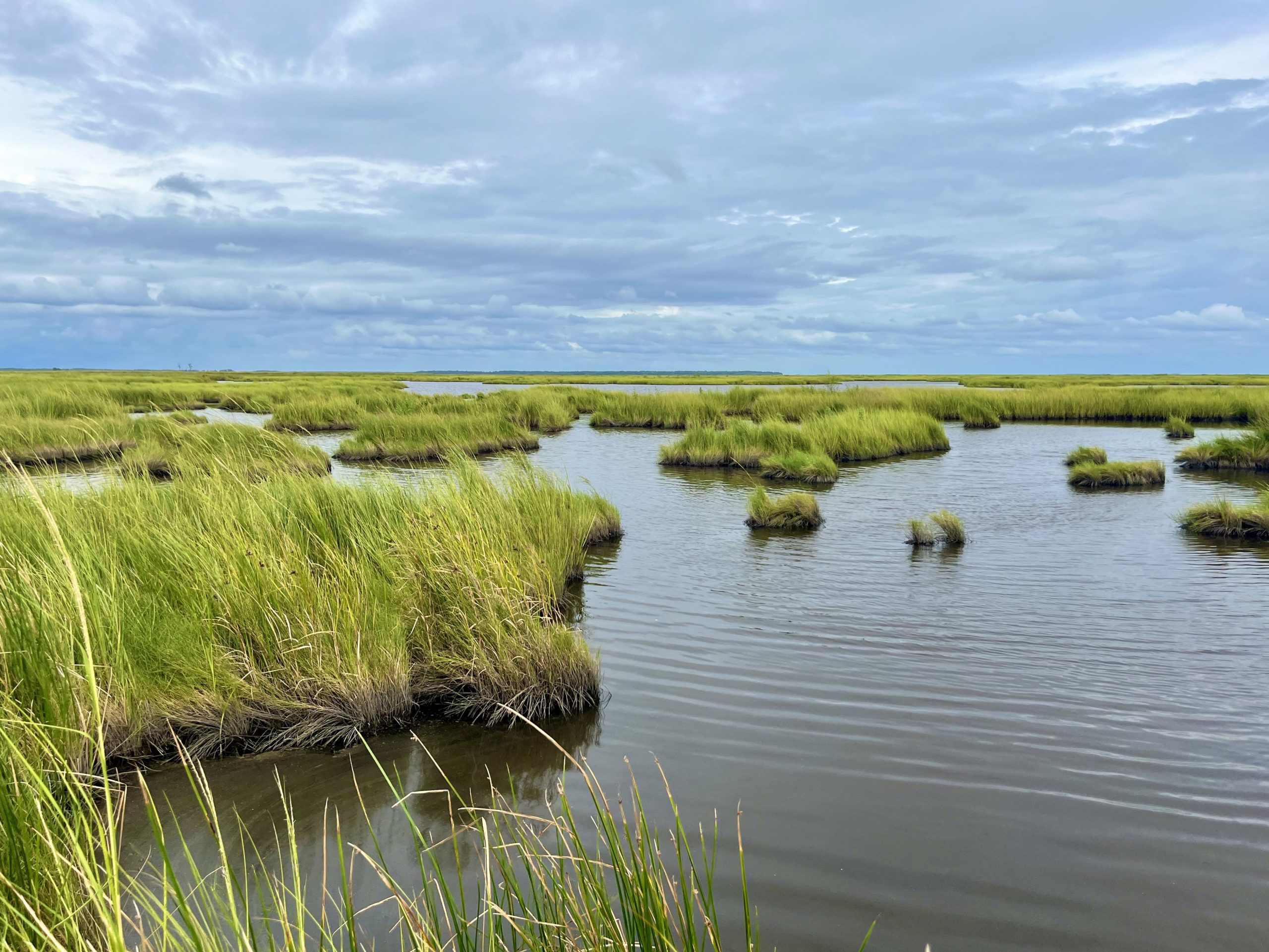
A low marsh in Dorchester County. DNR photo
Roots for Resilience, a Maryland Department of Natural Resources initiative to support climate adaptation on the Eastern Shore, has approved seven grants totaling more than $4.5 million to protect large areas of healthy saltmarsh habitat.
These living shoreline projects will protect coastal areas and islands from shoreline erosion, providing a buffer for local communities and securing habitat for migratory birds like the saltmarsh sparrow and other sensitive wildlife species. The awarded projects include work that will specifically protect an important roadway and an outdoor space to support veterans.
The construction of these living shorelines will contribute to the Roots for Resilience goal of protecting 400 acres of high-quality marsh habitat by 2029.
A living shoreline uses nature-based erosion control techniques, such as marsh plantings, coir logs, sills, and breakwaters, to stabilize shorelines while maintaining natural coastal processes to ensure future resilience. These approaches reduce erosion and flooding, protect infrastructure, lower long-term costs, support working waterfronts, and strengthen coastal adaptation to sea level rise.
“These projects are ideally suited for the Roots for Resilience initiative, designed for the vulnerable communities of the Eastern Shore,” DNR Secretary Josh Kurtz said. “The shared goals of protecting people and habitats are vitally connected. These living shoreline projects demonstrate how solutions work best when we work with nature to benefit local communities.” Read more…