
Natural Resources News
Record Number of Black Bears Harvested During 2015 Maryland Hunt
95 Bears Exceeds 2013 Record
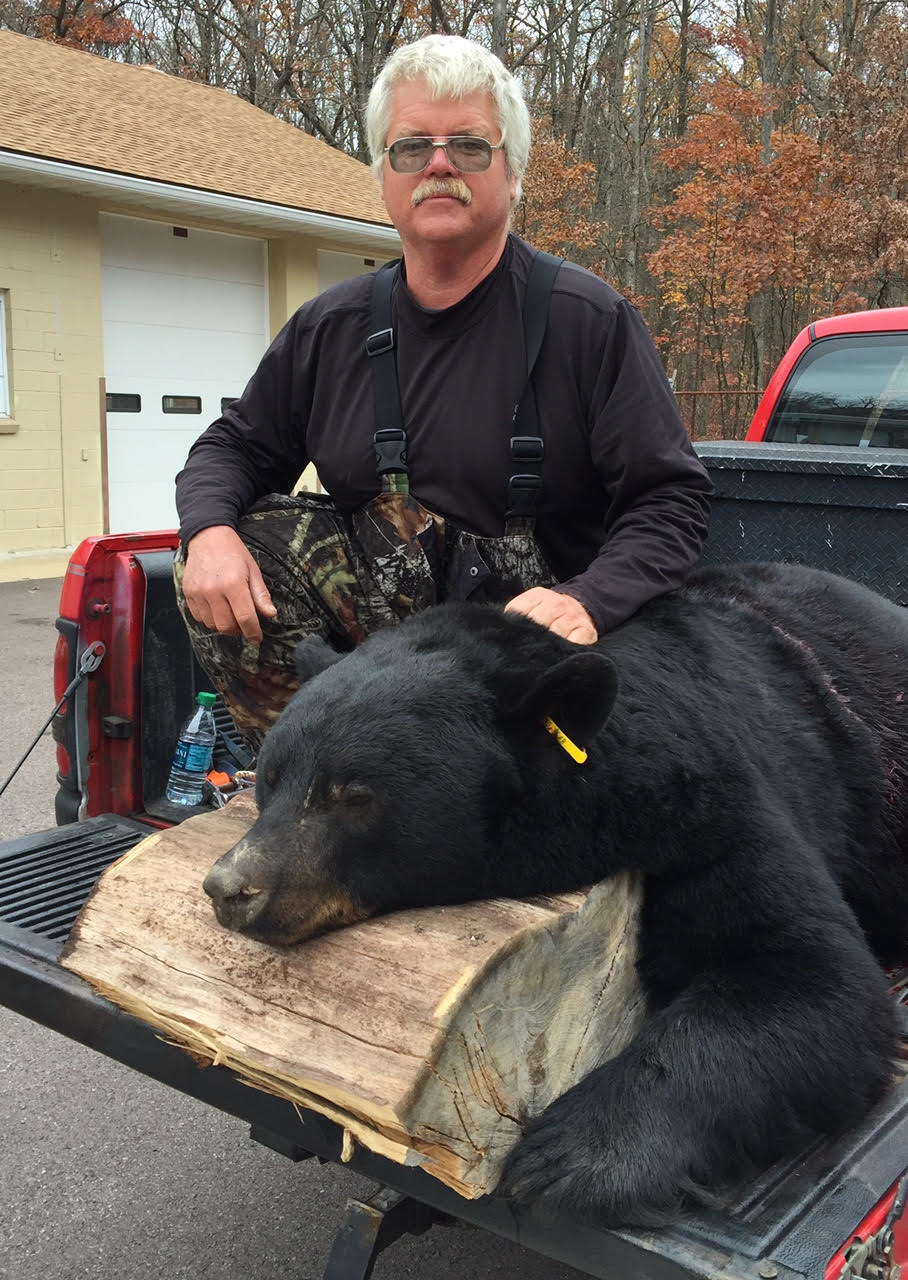
Ronald Oberender of Toddville harvested the largest bear of the season.
The 2015 Maryland Black Bear Hunting Season came to a close on Oct. 29, with a record 95 bears harvested and reported into mandatory check-in stations across Garrett and Allegany counties. The harvest total is one more than the previous record of 94 set in 2013. Ronald Oberender of Toddville took the largest bear of the season, a 520-pound male. Read more…
Maryland on track to meet 2020 climate goal
Maryland on track to meet 2020 climate goal
Department of the Environment reports steady progress, emerging opportunities
Maryland is on pace to meet the greenhouse gas emissions reductions required under State law while benefiting from billions of dollars in economic growth, but continued progress will be needed to minimize the effects of climate change while continuing to create jobs, a new Maryland Department of the Environment report states.
Natural Resources Police Blotter
 Three hunters were charged Wednesday with bear poaching on state land in Garrett County and another hunter was charged in Allegany County by Maryland Natural Resources Police officers. Read more…
Fall Turkey Season to Open in Western Maryland
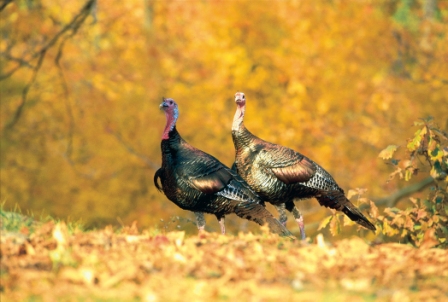 Maryland’s Fall Turkey Hunting Season will open Oct. 31 and continue through Nov. 7, 2015 in Allegany, Garrett and Washington counties with a bag limit of one turkey per hunter.
Two Youth Waterfowl Hunting Days Announced
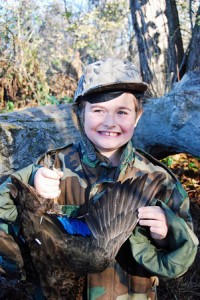 Young Maryland hunters can hone their skills with the help of an experienced adult during two Youth Waterfowl Hunt Days on Nov. 7, 2015 and Feb. 6, 2016. On those days, hunters 15 years of age or younger may hunt ducks, geese, mergansers and coots on public and private land when aided by a qualifying adult.
All junior hunters and their adult mentors must possess a Maryland hunting license. Youth waterfowl hunters must purchase a Maryland Migratory Game Bird Stamp, but do not need to purchase a federal duck stamp if under 16 years of age.
Natural Resources Police Blotter

Trees covered in peanut butter to attract bears
The Maryland Natural Resources Police charged nine men in Garrett and Allegany counties with illegal bear and deer hunting in separate incidents. Read more…
The Department of Natural Resources Announces New Members to the Deep Creek Lake Policy and Review Board
The Maryland Department of Natural Resources today announced the four new members of the Deep Creek Lake Policy and Review Board. Deep Creek Lake residents Robert Kelly and Marta Shroyer will serve on the board as Garrett County appointees, and Greg Snook and James Bailey will serve as at-large members. Snook will also serve as the new board chairperson.
Natural Resources Police Blotter
 Maryland Natural Resources Police officers charged men in Frederick County yesterday with violations of state forestry and hunting laws.
John Wade Dyer, 36, of Culpepper, Va., was issued two citations for operating a tree expert business without a license and soliciting business without a license (false advertising). He also was ordered to cease-and-desist operations.
Maryland pursues new tools, greater teamwork for faster, better restoration of Chesapeake Bay
Maryland is developing a nutrient trading policy to accelerate the restoration of the Chesapeake Bay while reducing costs to local governments and citizens and boosting private sector jobs, the Maryland Departments of the Environment and Agriculture announced today.
Cecil County Curatorship Opportunity
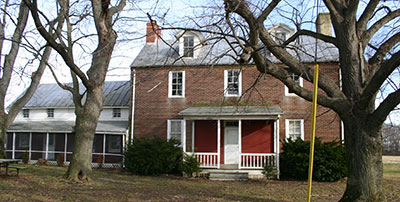 All those interested in becoming curators of the historic Old Bohemia Tennant House in Cecil County are invited to join the Maryland Department of Natural Resources for an open house. Come tour the house and grounds between 10:30 a.m. to 3 p.m. on Saturday, Nov. 7 and learn more abut this historic property and Maryland’s Curatorship Program.
The Old Bohemia Tennant House is available for restoration under the Department’s Resident-Curatorship Program, which matches up historic properties with people interested in restoring, maintaining and periodically sharing them with the public in return for the right to lifetime tenancy.
Upper Marlboro Sportsman Sets New Maryland Snakehead Record
 The Maryland Department of Natural Resources has confirmed that Michael Meade of Upper Marlboro, Maryland set a new state sport fish record with a 17.49-pound northern snakehead while fishing with bow and arrow along the marshes of Mattawoman Creek.
“It was about 10:30 at night when I brought it onboard, and it was the biggest snakehead I had ever seen,” Meade said. “When I got home, I stepped on a bathroom scale with the fish, and it was over 17 pounds. So, I put it in a bucket of ice water and went looking for a certified scale.”
The next day in Marbury, Gray Brothers Market Store Manager Stacy Long confirmed the weight on a Maryland Department of Agriculture-certified digital scale. Natural Resources Fisheries Biologist Mary Groves subsequently confirmed the species, making the record official.
Undammed: Bishopville Project a Success
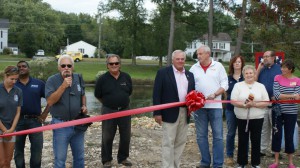
A four-foot high sheet metal dam has been replaced with 635 linear feet of re-established stable stream channel and wetland habitat. The Bishopville Pond Dam removal project, which spanned a decade, cost $1.5 million — with over half funded by the Maryland Department of Natural Resources (DNR) through the Chesapeake & Atlantic Coastal Bays Trust Fund.
Early Muzzleloader Deer Season Opens in Maryland on October 22
 The first segment of Maryland’s muzzleloader deer season opens Oct. 22, and serves as one of several deer hunting opportunities that help manage populations, and provide hunters with food and recreation.
The early muzzleloader season runs from Oct. 22-24 in Deer Management Regions A and B, which comprise the entire state with the exception of Baltimore City. Region A consists of Garrett, Allegany and western Washington counties (private land codes 250 & 251), and Region B is the rest of the state.
Maryland Online Tree Nursery Now Accepting Orders
 The Maryland Department of Natural Resources is now accepting tree seedling orders through the John S. Ayton State Forest Tree Nursery for larger plantings on private lands. There are more than 50 tree species available to meet a variety of aesthetic and environmental needs.
NRP Blotter
 The Maryland Natural Resources Police charged men in two counties with violations of fish and game laws. Read more…
Frederick County Shotgun Deer Hunting Zone has Changed
Effective immediately, the shotgun-only deer hunting area in Frederick County has been rezoned. The change was made at the request of Frederick County officials in cooperation with the Maryland Farm Bureau to incorporate the city and surrounding suburbs, and to give deer hunters the option to use rifles in the rural sections of the county. Read more…
Maryland Motorists: Stay Alert as Deer Activity Increases
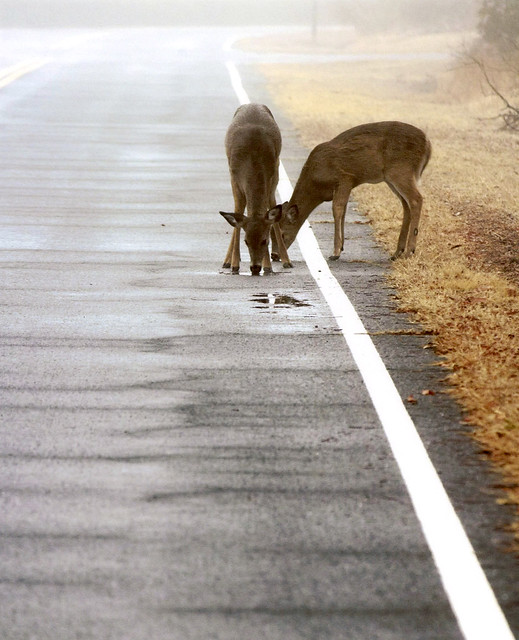
Photo by Tim Ward
Cooling temperatures, colorful leaves and unpredictable deer ─ all surefire signs that fall is upon us. The Maryland Department of Natural Resources (DNR) urges motorists to be alert for deer and other wildlife as these animals seek food and search for mates. Read more…
Black Bear Activity Increases in the Fall
Residents Reminded to take Precautions
 Black bears are beginning a period of increased feeding activity in preparation for winter hibernation. During this time, bears may become more attracted to human-provided food sources and lose their natural fear of people, which can lead to dangerous encounters.
Read more…
Joanne Throwe Named Department of Natural Resources Deputy Secretary
 Maryland Department of Natural Resources Secretary (DNR) Mark Belton today announced the appointment of Joanne Throwe as deputy secretary. In this role, Throwe will manage the day-to-day operations and execute the direction and vision of DNR. Read more…
NRP Mourns Passing of K-9 Bear
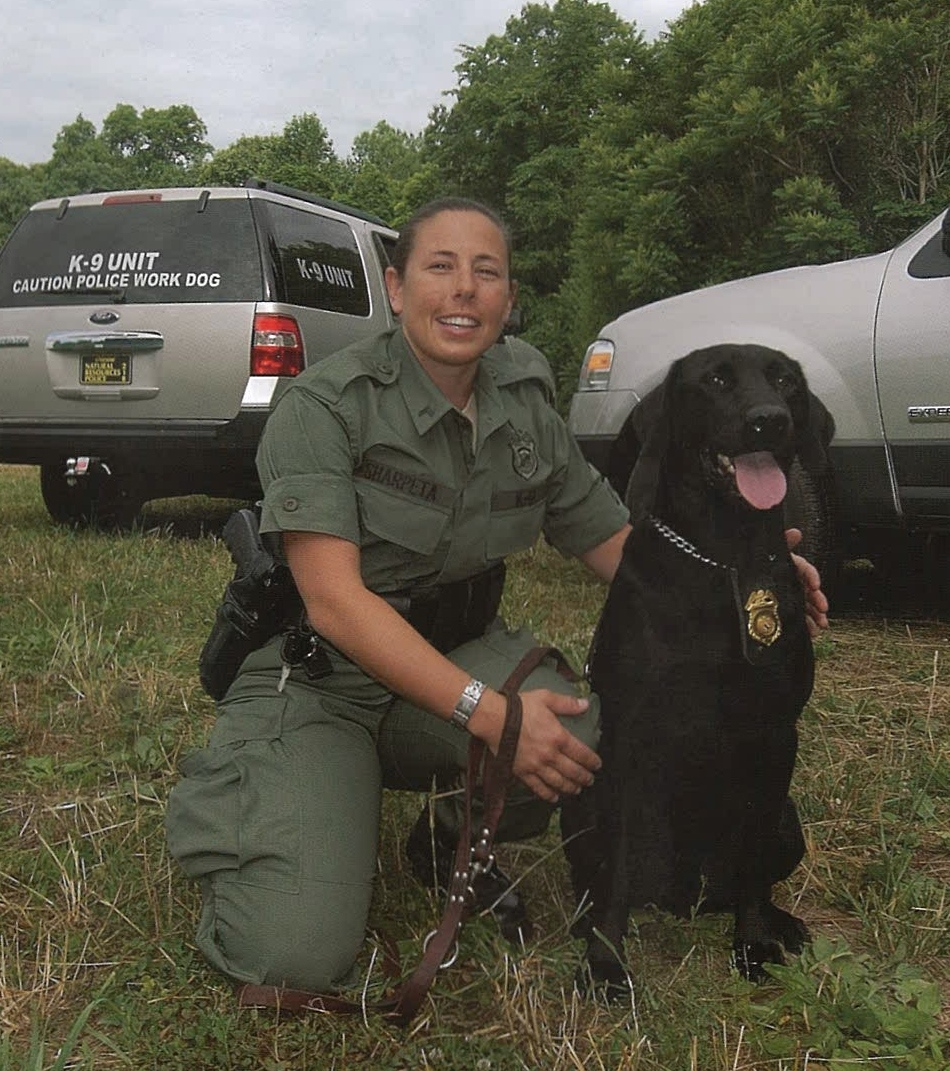 The Maryland Natural Resources Police (NRP) mourns the death last weekend of K-9 Bear, assigned to the Central Region.
Born on Nov. 5, 2004, Bear was purchased as a hunting dog. But when the owner realized he did not have time to train the black Lab, he donated it to Delaware Fish and Game.
Maryland Striped Bass Juvenile Index is Eighth Highest on Record
American Shad, White Perch, Herring Reproduction Strong
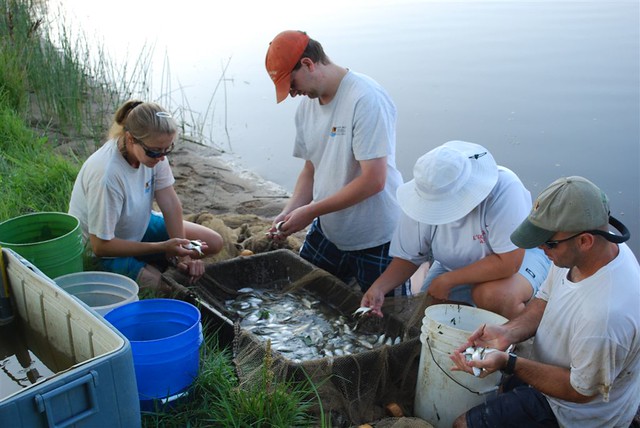
The Maryland Department of Natural Resources (DNR) announced today that the 2015 striped bass juvenile index is the eighth highest on record. The survey, a measure of spawning success, found an average of 24.2 juvenile fish per sample, approximately double the long-term average of 11.9. Read more…
NRP Investigating Fatal Hunting Accident
Maryland Natural Resources Police investigators are continuing to gather evidence in a fatal hunting accident late Saturday afternoon in Queen Anne’s County. Read more…
NRP Recovers Body of Florida Man in Back Creek

Maryland Natural Resources Police (NRP) officers recovered the body of a man Tuesday morning in Back Creek. Read more…
DNR Awards Grants to 37 Volunteer Fire Departments
Funding to Aid Rural Maryland Communities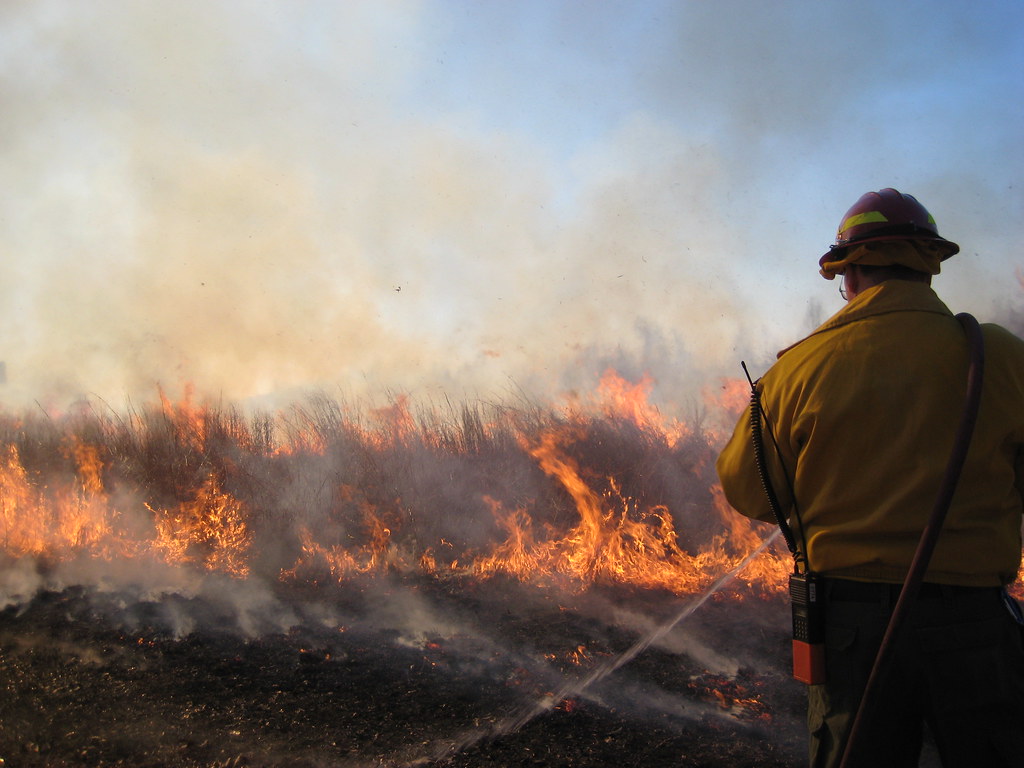
The Maryland Department of Natural Resources (DNR) awarded Volunteer Fire Assistance program grants, totaling $88,612, to 37 volunteer fire departments in 15 counties. The funding will help fire crews better prepare for and respond to wildfires in rural areas and communities.
Fall Trout Stocking Begins in Maryland
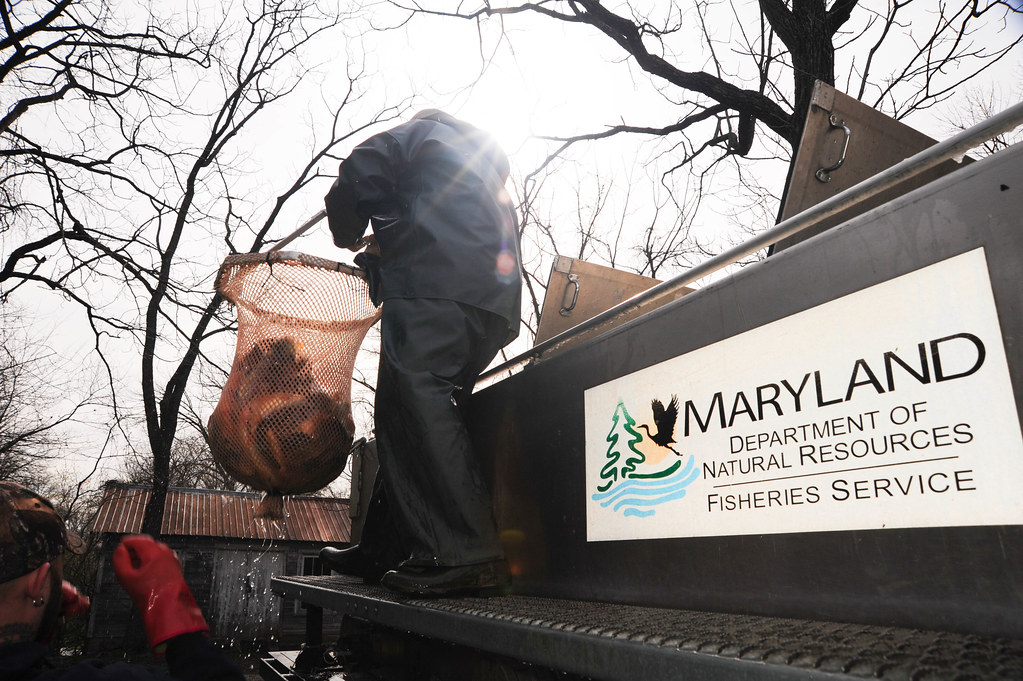 The Maryland Department of Natural Resources (DNR) kicked off the fall trout stocking season last week, releasing roughly 3,500 rainbow trout in Western Maryland.
“When and where we stock is largely dependent on weather conditions, water flow and temperatures,” DNR Inland Fisheries Manager Tony Prochaska said. “If the weather cooperates, we will release about 25,000 trout by the end of October.” Read more…
Eastern Shore WMAs Reopen to Waterfowl Hunting
Several Eastern Shore Wildlife Management Areas (WMAs) ─ or portions of these areas ─ that were temporarily closed to waterfowl hunting have reopened. Read more…
Mallows Bay-Potomac River Headed Toward National Marine Sanctuary Status
First Designation in Maryland; First in Chesapeake Bay
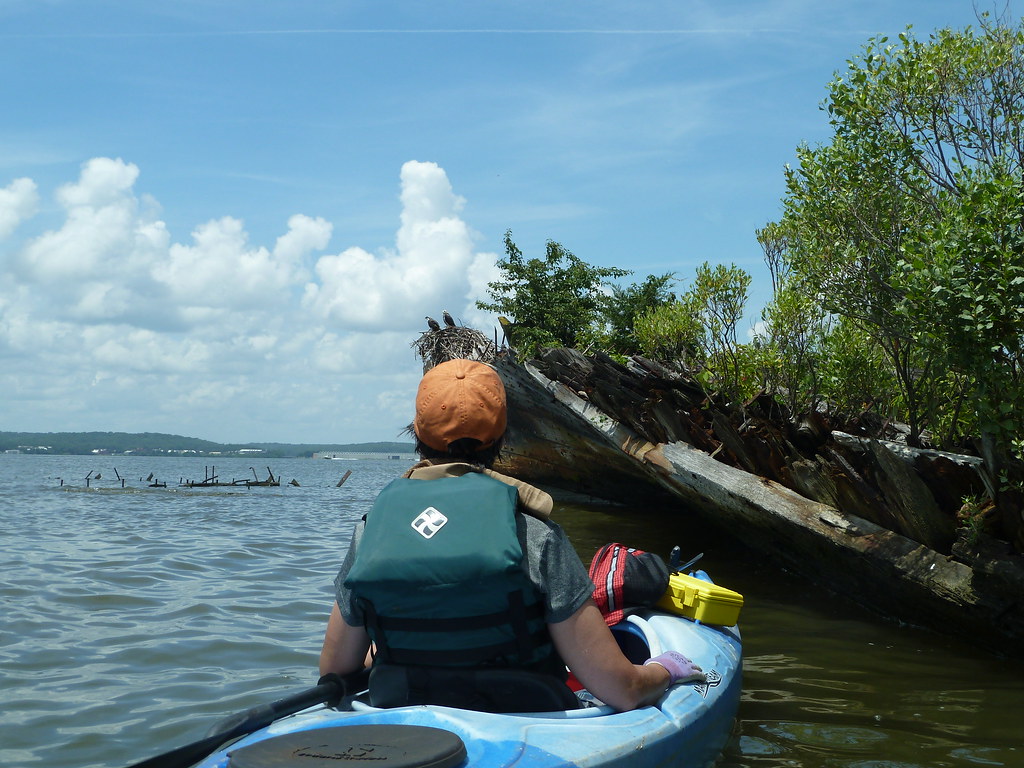
Photo by Daryl Byrd
In a first for the state of Maryland, the National Oceanic and Atmospheric Administration (NOAA) today declared its intent to designate Mallows Bay in Charles County as a National Marine Sanctuary, and is seeking public input on how the site should best be used and managed. Read more…
NRP Arrests Pair for Numerous Baltimore-Area Thefts
 A man and woman suspected of numerous Baltimore area thefts—including taking a warning sign about leaving valuables in plain sight—have been arrested by the Maryland Natural Resources Police. Read more…
Oyster Harvest Season Opens Today in Maryland
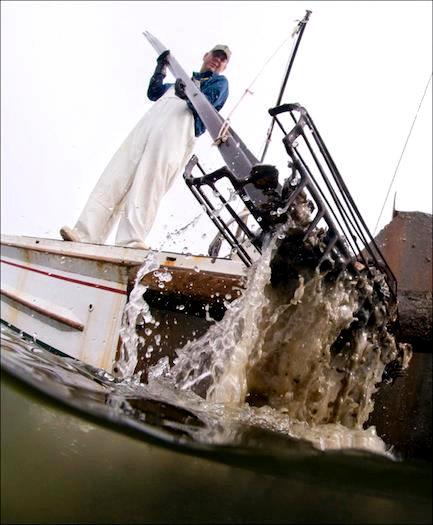
Hand tonging for oysters in Broad Creek. Photo by Jay Fleming
The 2015-2016 oyster harvest season kicks off today in Maryland. The six-month season runs from Oct. 1 through March 31. Read more…
Living Shorelines, Healthier Waters
 A recent study, funded by NOAA, found that the bay’s hardened shoreline (using rocks and walls to slow erosion) could be hindering estuary recovery following decades of pollution, as well as depriving fish, crabs and terrapins of habitat. Enter living shorelines, a concept that has existed for decades, but continues to evolve.
With progress top of mind, representatives from across DNR recently visited two living shoreline projects in Anne Arundel County, a Severn River project completed this summer and a 15-year old South River undertaking.
NRP Blotter
A St. Mary’s County man was charged Thursday with multiple violations of blue crab regulations by the Maryland Natural Resources Police. Read more…
NRP Blotter
Maryland Natural Resources Police officers charged a Frederick County man with a hunting violation and a Washington County man with illegal dumping. Read more…
DNR to Host Junior Hunter Field Day in Hagerstown
 Youth ages 8 to 16 with an interest in hunting, shooting sports and wildlife management are invited to participate in a FREE Junior Hunter Field Day event from 9 a.m. to 3 p.m. on Saturday, Oct. 10 at the North American Rod and Gun Club, 12108 Belvedere Rd, Hagerstown. Read more…
Four St. Mary’s County Men Charged with Striped Bass Poaching
 Four Lexington Park men were charged with poaching after a Maryland Natural Resources Police officer caught them with 42 undersized striped bass.
Francisco Morales Vallardes, 51, Douglas Francisco Morales, 34, Roberto Jesus Mejia Lopez, 33, and Oscar Saul Mejia Lopez, 35, were each charged with exceeding the daily catch limit of two striped bass and possession of undersized striped bass. Read more…
DNR Accepting Bids for Trapping in Somerset and Worcester Counties

The Maryland Department of Natural Resources is accepting bids for the 2015-2016 trapping season for Wildlife Management Areas (WMA) in Somerset and Worcester Counties, as well as Hickory Point Natural Area, Janes Island State Park and Johnson WMA. Read more…
NRP to Participate in 10th National Prescription Drug Take-Back Day
 Maryland Natural Resources Police offices will participate in the 10th National Prescription Drug Take-Back Day this Saturday, 10 a.m. to 2 p.m. Residents can drop off unwanted, unneeded or expired prescription drugs for safe and proper disposal. Read more…
NRP Blotter
Frederick County
A Frederick County man was charged Saturday with illegal hunting in a state park by the Maryland Natural Resources Police.
Rodney Warren Winstead, 49, of Jefferson, received a citation for maintaining a baited area in a state park, a violation that carries a maximum fine of $1,500. He is scheduled to appear in Frederick District Court on Nov. 4. Read more…
Exploring the Patuxent: Creating environmental leaders
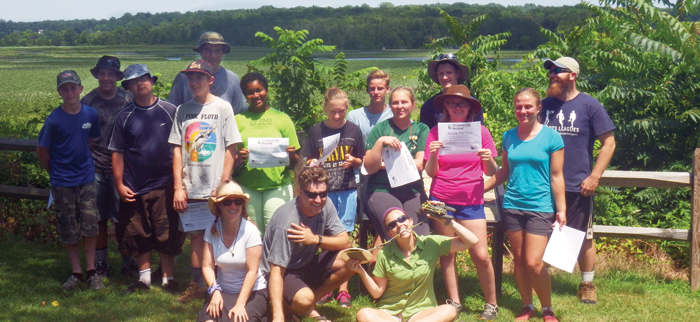
Group shot at the end of the week
For the past five years, we at the Maryland Department of Natural Resources Jug Bay Wetlands Sanctuary and Patuxent River Park have hosted a high school camping and canoeing experience.
With the hope of meeting a need for leadership-focused environmental youth, we created two, week-long paddle boat trips for high school students. Our goal: to give them a chance to become immersed in the ecology and magic of the Patuxent River. Participants gain strong teamwork skills while spending a week away from home.
Monday icebreakers
Paddling towards independence
As the staff on the trip, we view ourselves as facilitators rather than supervisors, and try to give participants as many peer-to-peer leadership opportunities as possible.
They are challenged daily by paddling with new partners, navigating down river, cooking meals, setting up camp and building fires.
The trip also provides environmental education and critical thinking skills. Throughout the week, teens perform a series of water quality tests to evaluate the health of the Patuxent. They compare results from site to site, form conclusions on the effects of land use and discuss how community actions can have a positive impact on the watershed.
Local leaders, naturalists, archeologists and ecologists educate the group about run-off, nutrient levels and invasive species. They teach teens about their role in the ecosystem and introduce them to a variety of environmental career possibilities.
Tuesday’s paddle
Highlights of the week
Monday consists of introductions and icebreakers. Throughout the day, we challenge the group to think about what makes a good leader. We analyze our personalities and role models before heading out on the water for safety training.
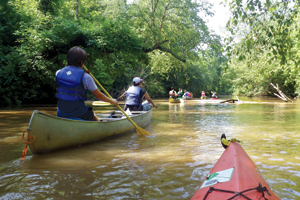
Tuesday begins our overnight camping. We start the day with an 8.5-mile paddle from the riparian forest zone and end in the tidal marsh.
Wednesday brings Patuxent River Park staff who introduce campers to the natural history of the river via pontoon boats, as well as the historic importance of Mount Calvert, which has artifacts from American Indians and the War of 1812. Then it’s off to our next site on Mattoponi Creek, which provides beautiful marsh views of the sunset.
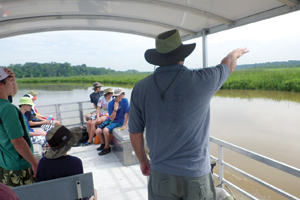
Wednesday’s lesson
Thursday morning starts with a stewardship project: the clipping of invasive Purple Loosestrife flowers. To restore diversity, the plants must be removed or managed by cutting the seed-heads.
After lunch, we journey to our final stop, Nottingham Farm, home of the Patuxent Riverkeeper headquarters, where we learn about.
Accomplished alumni
While some teens come to camp with a strong passion for the environment, others may just be looking for a week of adventure. Either way, by week’s end, everyone has discoveries to share—some may be personal, others scientific or environmental. We are always excited to know that the teens really were listening and are beaming from ear to ear as they recognize the group’s growth.
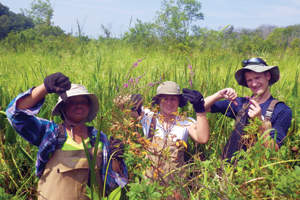
Thursday’s invasive removal
“We get reacquainted with our habitat,” says Nishant Carr, a camper. “We get to know the environment around us better and see that it needs our attention. We learn first-hand that we need to do more to help protect it and that helps inspire us.”
Our alumni have used their knowledge on water quality to help them gain STEM credits. They have referenced the trip to attain internships. In addition to achieving higher levels of self confidence, they have been inspired to become local scientific volunteers and National Honor Society participants.
Even a teen who has never paddled before can’t beat a week in a tent, listening to frogs and hanging out with newfound friends. Click here to apply for one of next year’s paddles or to watch our video.
Article by Trystan Sill—Chesapeake Bay National Estuarine Research Reserve education specialist.
Appears in Vol. 18, No. 4 of the Maryland Natural Resource magazine, fall 2015.

Maryland’s Chesapeake Bay National Estuarine Research Reserve: Connecting people to science for 30 years
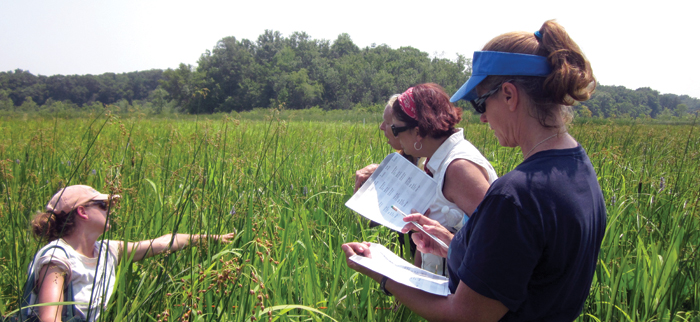
Educators’ workshop at Jug Bay; department photos
This year marks the 30th anniversary of several interesting American events: the release of the movies The Goonies and Back to the Future, the launch of CNN’s Larry King Live, and the first registered .com, for example.
Here at the Department of Natural Resources, we are celebrating the 30th anniversary of the introduction of the Chesapeake Bay National Estuarine Research Reserve program in Maryland (CBNERR-MD). The program—a federal, state, and local partnership—protects more than 6,000 acres at three natural areas to use as living classrooms and laboratories.
Jug Bay
The National Oceanic and Atmospheric Administration (NOAA) designated Maryland’s first CBNERR-MD site in 1985. Monie Bay in Somerset County was chosen to represent the Middle Bay environment of the Eastern Shore. In 1990, DNR decided to add two other sites: Jug Bay in Prince George’s and Anne Arundel counties and Otter Point Creek in Harford County. The sites represent a western shore tributary and an upper bay system, respectively.
At each location, at any given time, you may find teachers making connections to land use and water quality through the collection and analysis of data; high schoolers becoming stewards of the environment through invasive species service projects; volunteers tracking habitat changes by conducting fish and bird surveys; and local governments incorporating climate considerations into long-range planning through hands-on technical assistance and peer-to-peer sharing.
By studying Maryland’s estuaries, program staff seek to empower people to make better decisions regarding the health of the water and land around them. The program contributes to a vision of a healthy, productive and resilient Chesapeake Bay by conducting and integrating research into education, training and stewardship.
A national network
CBNERR-MD is one of 28 research reserves across the country, and is among just a handful of others comprised of multiple sites.
Frank Dawson, who was acting manager of CBNERR-MD at the time of designation provides some insight: “The vision of the Reserve program in Maryland was to have multiple sites that reflect the diversity of the estuarine systems of the Chesapeake Bay, allow us to monitor change, research pressing issues, and provide opportunities for hands-on educational experiences.”
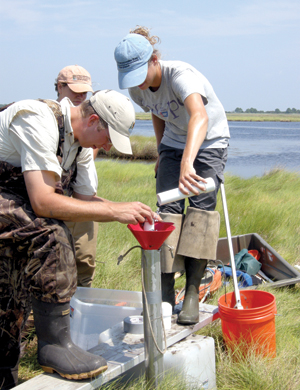
Water logger installation at Monie Bay
Each reserve participates in what is called the System Wide Monitoring Program or SWMP (pronounced swamp). Since all Reserves collect the same type of data—habitat information, water quality and weather—SWMP paints a picture of what is happening nationally as well as locally. Results can be used individually or in conjunction with other research projects to understand how the environment is changing.
SWMP technician John Zimmerelli values the data to “understand stressors to the system—climate, storms and pollution, and subsidence—and to monitor, track and understand trends over time as well as on a daily basis.”
Mark Trice, DNR Program Chief of Water and Informatics values data afforded on a real-time basis.
“The program has been a stalwart source of information, providing an unbroken record to evaluate water quality conditions, along with other important data,” he explains.
The reserve program is also home to a number of research projects, conducted by staff and visiting scientists on topics including how vegetation reacts to increased flooding or the effectiveness of marsh restoration.
Through the eyes of a volunteer
Bryon Bodt is one of Otter Point’s most seasoned volunteers, having worked with the Reserve since the site’s designation.
“I knew Otter Point Creek when it was nothing,” he comments. “I’ve enjoyed being a part of the Estuary Center as it has evolved to provide access to the public and unique educational experiences for all ages.”
Bodt can often be found out on the creek collecting water quality samples or participating in bi-monthly fish surveys.
When asked why he loves getting out in the field, he responds, “The data helps us understand the health of the creek and how trends such as land use are affecting plants and animals that inhabit the area.”
“Every time I go out on the water with Bryon he teaches me something new. He knows more about Otter Point Creek than anyone else I know,” says Amanda Garzio-Hadzick, a full-time stewardship and research assistant with CBNERR-MD.
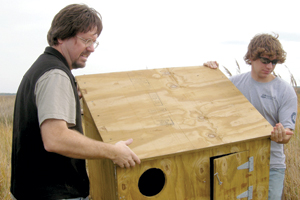
Barn Owl box installation at Monie Bay
The citizen science connection
Kriste Garman, director of the Anita C. Leight Estuary Center at Otter Point Creek, views the Reserve as an asset to their programming.
“The Estuary Center is unique among nature centers due to our affiliation with CBNERR-MD,” she adds. “Their focus on research and monitoring becomes our focus, and because of that we have a rich offering of citizen science opportunities that give our volunteers the chance to indulge their inner scientist and immerse themselves in a topic.”
CBNERR-MD has prided itself on connecting people to science for the last 30 years and will continue to do so for many years to come. For anyone interested in visiting these special places, the fall is a wonderful time to explore.
Article by Jennifer Raulin—CBNERR-MD manager.
Appears in Vol. 18, No. 4 of the Maryland Natural Resource magazine, fall 2015.

Inside Academy: A photo essay
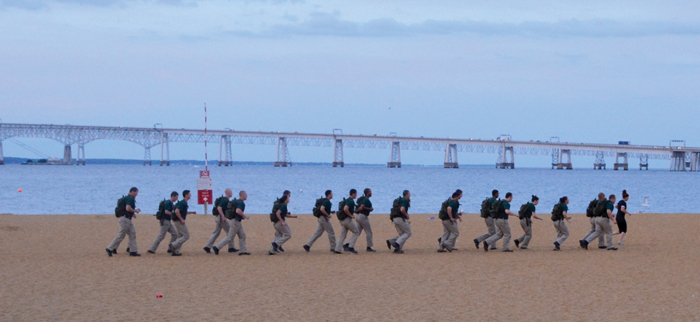
A balance of classroom and field work over seven months turns civilians into Natural Resource Police officers
From the time they clip a black-and-white “recruit” nameplate to their tan shirts until the moment the gold badge of a Maryland Natural Resources Police officer is pinned to their dress uniform, the 22 members of Basic Recruit Class 57 will have their minds and muscles tested as never before.
This year’s class of four women and 18 men were selected from several hundred applicants after passing a battery of tests, a series of interviews and a background check. They hail from cities and towns across Maryland, Delaware and New Jersey. Six candidates come from the recently revived cadet program, which serves as an introduction to not only the law enforcement agency but also to the other units within the Department of Natural Resources. Read more…
Rising Tides: Watermen rebound from crab disaster
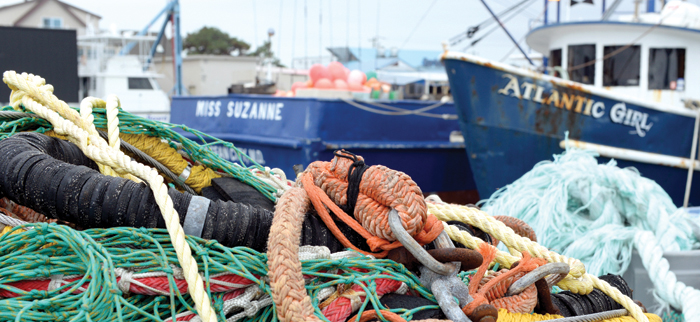
Workboats
In 2008, a deadly combination of pollution, habitat loss, lack of prey and overabundance of predators depleted the Chesapeake Bay’s blue crab population. The U.S. Department of Commerce declared the fishery a state of disaster.
Maryland watermen were down on their luck and the economy was hit hard, prompting the state to request $30 million in grant funding from the National Ocean and Atmospheric Administration (NOAA) National Marine Fisheries Service.
With the goal of providing economic relief to crabbers and preventing future fishery disasters, NOAA granted funding to the Maryland Department of Natural Resources.
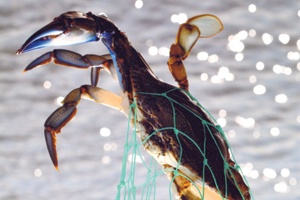
Crab in net; by Ray Jubela
Effects hit home
Crabbers and other watermen were forced to find new work. Many started leading heritage tours to earn a living. Captain Russell Dize, a sixth generation waterman, proved his resilience and resourcefulness by starting one such business, Let’s Go Crabbing.
“When I retired—I’d been in the seafood business, crabbing for 35 years—I wanted something to do,” he says.
For $450, Dize takes a party of six on a four-hour crabbing expedition, allowing the people to keep their haul. If no crabs are caught, Dize promises them a bushel.
“I thought I’d start doing a crabbing charter and show people how to do it,” he says. “You meet a lot of good people doing this.”
The Riley Kat—named for Dize’s granddaughter—sets sail twice a day, seven days a week to go trotline crabbing.
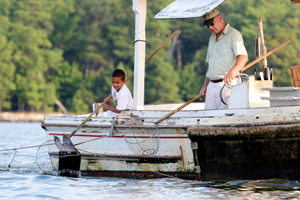
Trot lining for crabs; department photo
Building something new
Captain Mike Vlahovich, or just “Mike V” as some call him, founded the Coastal Heritage Alliance (CHA), an organization that played a prominent role in training watermen to lead heritage tours.
Part of the Waterman’s Heritage Tourism Training Program, CHA joined the Chesapeake Conservancy, the Maryland Waterman’s Association and the Chesapeake Bay Maritime Museum to train more than 100 watermen.
Preserving the culture is crucial to Vlahovich, who grew up fishing salmon in Alaska’s Puget Sound. “I was a salmon fisherman, and that was my heritage,” he explains. “That’s why I was concerned about watermen heritage, because I saw my own vanish. I want to use my experience and my passion to help these communities preserve their way of life.”
Vlahovich believes that educating others about the value of watermen is key to preserving their culture.
“Somehow I wanted to create a venue where I could teach the public about the working waterfront fishing culture, because people aren’t really exposed to it,” he says. “But I did find that I liked it. You couldn’t reach thousands of people but you could touch a few people and teach them the value of watermen.”
Vlahovich was quick to apply for funding, though he jokes that, “I did not grow to be as fond of tourism—it’s really unusual that I’m a part of this.” But, he adds, “For a lot of reasons, it was right down my alley. So I applied for it, and my experience fit pretty well.”
He continues, “When I heard about this opportunity, I started to see the value of interpreting the heritage directly to the people. So I saw it as a valuable way to impact cultural understanding. We did it with a mission of moving museum professional skills to the communities, where I thought they could do the most good.”
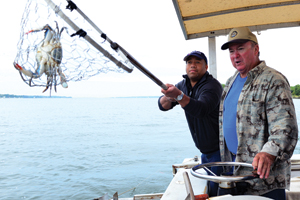
Trot lining for crabs; department photo
Learning a new trade
Vlahovich and CHA provided a five-day training course to interested watermen. Three days were spent in a classroom teaching the ins and outs of running a business, with aspects like marketing and customer service. Guest speakers and businesses were also brought in to help.
“Five days won’t make a waterman a heritage tour guide, but it planted the seeds,” he says.
On the fourth day, watermen were put on the water for trial runs of their tours. They had to determine costs, equipment, stories and everything else that goes into the tour. On the final day, watermen had to find guests and take them out on a tour.
“I think the main thing was teaching them the thematic tour element,” says Vlahovich. “They have a story to tell. Get them to realize the importance of telling that story to the public.”
Now, watermen are leading a variety of tours, including crabbing expeditions, kayak trips, oyster boat dredging, historic trips down the Patuxent River and, of course, the ever-popular skipjack charters.
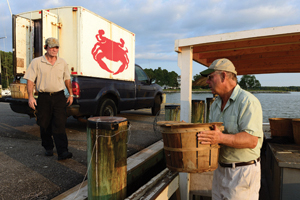
Captain Bunky Chance; department photo
Recovery and success
Vlahovich says the program was a great success, and watermen groups in other states including Louisiana and Massachusetts have reached out for advice.
Tourism—sharing the heritage with the public—is the direction the industry is moving, according to Vlahovich. Blue crab fisheries are recovering, but leading cultural tours is a great way for watermen to supplement their income.
Even if blue crab population faces another crisis, Maryland’s watermen are better prepared and trained to succeed.
“Tourism is the way this is going,” he says. “If these watermen communities are going to survive, they have to become proactive.”
As more watermen find success giving tours, more will start giving them.
“It’s a hope, a radical hope that these encounters can preserve this culture,” he says. “It’s an iconic lifestyle that speaks to the heritage of the bay.”
Article by Brad Kroner—summer communications intern.
Appears in Vol. 18, No. 4 of the Maryland Natural Resource magazine, fall 2015.

Celebrating 50 Years of Memories: Assateague State Park

Modern-day Assateague; by Stephen Badger
Each year, more than one million visitors cross the Verrazano Bridge to the narrow strip of barrier island known as Assateague State Park.

Ponies on the beach; by Sandra Sulivan
There they join a myriad of wildlife, including the island’s famous wild horses and elusive sika deer. Birds abound throughout the year in the marshes and on the beaches. Just offshore in the Atlantic Ocean swim dolphins, sea turtles, sharks and a whole host of other aquatic dwellers. The scenic Sinepuxent Bay provides habitat for diamondback terrapins, blue crabs, clams and mussels.
Nature thrives here, but it might not have been that way without the efforts of a determined group of citizens, a responsive government and a timely reminder from Mother Nature that such places can be very fragile and unstable.
Becoming a state park: an historical perspective
Assateague State Park was established following a long process that began in the 1930s, when the National Park Service recommended that barrier reefs and other coastal resources throughout the nation be protected for recreational use. In 1940, the Maryland State Planning Commission suggested establishing a state park on the island, emphasizing the importance of preserving the natural state of such sensitive areas.

Kids in a lifeguard chair in the 1970s; department photo
Meanwhile, development was creeping in. During the 1950s, the Ocean Beach Corporation sold hundreds of residential lots. Design plans called for commercial development and a causeway from the mainland, mirroring Ocean City.
But not everyone was happy to see development coming. Local citizens like Mr. William E. Green—known as Assateague’s unofficial senator—dedicated their energy to preserving the land for public use. Beginning in 1955 and every year thereafter until his death in the early 1960s, Green journeyed to Annapolis when the General Assembly convened and laid copies of a petition showing community support for preservation on every legislator’s desk.
Then came the Great March Storm of 1962, which destroyed 30 of houses already built on Assateague and damaged the remaining 18. The storm provided the final impetus behind state and federal efforts to make the island a publicly owned resource in its entirety. Assateague Island National Seashore was designated by Congress that year to protect the island in the states of Virginia and Maryland.

Families camping in the 1960s; department photo
Assateague State Park’s master development plan was completed in 1964. Later that year, the Maryland State Roads Commission completed the gateway to Assateague—the Verrazano Bridge. Construction of the park began soon thereafter, opening to the public in 1965. Over the next seven years, improvements were gradually added, including a bathhouse and concession building, a large parking area, campground loops and shower buildings.
Over time, more facilities were built to accommodate the park’s increasing popularity—additional campsites with a youth group camping area, modern restrooms, a nature center and permanent ranger station.
Then and Now
No one is better suited to talk about the early years than Carmella Baum, a visitor to Assateague who has been coming with her family every summer for the past 50 years. She recalled their first year camping when there were no paved parking areas or roads across the bridge, nor any buildings or facilities. Campers would set-up in a circle just behind the dune.
“The ranger would come around every evening and collect the $2 per night it cost for your campsite,” Baum remembers. She recalls the endless beaches, abundant bayberry and blackberry bushes where her five children would explore, and “the ponies that would come right up to you just like they do today.”

Carmella Baum
She talks about the original group of campers getting to know one another and becoming friends, returning year after year to spend their vacation time together. Many of their children, grandchildren and great-grandchildren still make Assateague State Park their annual family holiday.
Today, just like in 1965, families come to enjoy the tranquility, the ocean waves and the salt air; to make a connection to this place that holds so much beauty and diverse life. To think of how different the island would look had the development continued conjures up a completely different image of Assateague.
Whether you visited in 1965 or today, you can be comforted to know that it will be preserved as a park for the enjoyment of future generations and for the nature and wildlife that call it home for many years to come.
Anniversary Celebration
More than 400 visitors and guests attended the anniversary celebration this past August, which featured 1960s era arts and crafts, photo exhibits and displays of live birds and sea creatures.

Superintendent Nita Settina, Sec. Mark Belton, Lt. Gov. Boyd Rutherford
A ceremony commemorated the park and recognized staff members and volunteers, past and present, as well as long-time visitors and campers.
Among the dignitaries in attendance, Lt. Governor Boyd Rutherford presented a Governor’s Proclamation recognizing August 14, 2015 as Assateague State Park Appreciation Day. The document urges all citizens to remember their own experiences on the island; create new memories with family and friends; share their love of this state treasure with those who have not yet enjoyed its grandeur; and join fellow Marylanders in saluting the park’s staff for their work in keeping Assateague State Park one of our premier destinations.
Article by Angela Baldwin—Assateague State Park manager.
Appears in Vol. 18, No. 4 of the Maryland Natural Resource magazine, fall 2015.

Breaking Tradition: The tale of a huntress

Kent Island deer; by Douglas E. George
If someone asks you to envision what a typical hunter looks like, the first image that comes to most peoples’ mind is that of a man in the woods decked out in camouflage with a shotgun poised for the hunt. Why not a woman?
I’m a woman and I still picture a man with a gun in the woods. This image has been embedded into my brain since childhood—it’s what we have been told and taught.
It’s time now to break tradition. Read more…
No Small Matter: Fort Smallwood Park provides public boating access

Construction site; courtesy of Anne Arundel County
On a large plot of land on the Patapsco River in northeastern Anne Arundel County, it is quiet. The only sounds are from the wind rustling the trees and a family of ducks swimming alone in the water.
In the distance, an excavator revs up and, nearby, a towering red crane on a water barge begins to hum—two hints that this site will be very different come spring. The future scene will be one of friends and families on boats or lone anglers wading into the water.
Welcome to the Department of Natural Resources’ top priority boating and public access project: Fort Smallwood Park.
Federal, state and local partners have spent years conducting research, planning, securing funding and permits, and clearing the site. And now construction of a new two-lane boat ramp has officially begun at the 90-acre park located in Pasadena, across the river from Baltimore.
 Built as a sea coast defense in the late 1880s, Fort Smallwood is named for Revolutionary War Maj. Gen. William Smallwood, who later became governor of Maryland. Directly across the mouth of the Patapsco River is another fort built during the same era, Fort Howard. They were established to protect Baltimore Harbor from invasion but now serve the public as parks. Built as a sea coast defense in the late 1880s, Fort Smallwood is named for Revolutionary War Maj. Gen. William Smallwood, who later became governor of Maryland. Directly across the mouth of the Patapsco River is another fort built during the same era, Fort Howard. They were established to protect Baltimore Harbor from invasion but now serve the public as parks. |
Holding down the fort
Jim Rehak, the marine contractor selected for the project, wipes his brow as he looks over the site.
“We are starting to put in sheeting today that will be used as a breakwater to protect the harbor, making it easier and safer for boaters to launch,” he comments. “We are going with steel instead of vinyl now and you all should be happy about that. It will hold-up so much longer.”
Anne Arundel County has more than 400 miles of tidal shoreline along the Chesapeake Bay and almost 12,000 registered trailered vessels. It has more demand for boating access than any other county or city in the state, but only two public boating access facilities. However, neither Sandy Point State Park nor Truxton Park, both near Annapolis, are owned by the county nor convenient for northern county residents.
“For many years, we have been seeking an opportunity to increase boating access in Anne Arundel County,” says Mark O’Malley, director of boating. “This project is highly anticipated by the state, the county and the many boaters who currently have to travel significant distances in order to launch.”
Location, location, location
Choosing Fort Smallwood as the location was the result of a one-year planning effort involving monthly meetings with a citizen’s advisory committee and a public assembly to obtain final comments. The site will serve residents of Anne Arundel, Baltimore and Howard counties as well as Baltimore City.
“We are excited to see the finished product of this endeavor: a boat ramp on the Patapsco River that affords easy water access to the Baltimore City Inner Harbor, as well as fishing grounds and ports of call within the northern and middle Chesapeake Bay regions,” says Director of Boating Implementation, Carla Fleming. “This project is a game-changer for Maryland boaters and anglers and demonstrates what can happen when federal, state and local partners work together.”

Construction; courtesy of Anne Arundel County
Partnering for progress
The total approved cost of the boating access facility portion of the project is more than $2 million, which will be split between federal Sport Fish Restoration – Boating Access funds, state Waterway Improvement funds, and a combination of state Program Open Space and Anne Arundel County General Obligation Bond funds.
The area will have 470 feet of additional breakwater (to help ensure that launchings are done safely), additional parking, mechanical dredging, floating piers, navigational lights, environmentally friendly stormwater drainage systems, an access road and lighting, landscaping and paved trails. The planning committee expects more than 14,000 boat launches a year after the open in spring 2016.
“The facility is an important step for Anne Arundel County as we carry out County Executive Steve Schuh’s initiative to provide boat ramps on all our major rivers,” says Rick Anthony, director of Anne Arundel County Department of Recreation and Parks. “This project demonstrates the many benefits of partnerships. The financial and technical support from DNR and the U.S. Fish and Wildlife Service has been tremendous. The Fort Smallwood ramp will provide a state-of-the-art launch facility for our residents and our many visitors.”
Easing access
To accommodate all of these new visitors, additional parking for 48 tow vehicles and trailers will be added to the park. The park, which features picnic shelters, restrooms, a playground, a kayak and canoe launch, and the 380-foot Bill Burton fishing pier, dedicated to the late outdoor sportswriter.
A plaque on the pier includes a quote from Burton: “As a parting favor to me, take a kid fishing and you might just find it as satisfying for you as it is for your pupil. More important, if the budding angler maintains interest, he or she will come to appreciate conservation and the environment—and insist on a cleaner and more ecological-friendly state, nation and world.”
Perhaps the new boat ramp adjacent to this pier—another gateway to the Bay for current and future Marylanders—will help fulfill Burton’s call to create the next generation of outdoor enthusiasts and environmental stewards. One thing is certain: come spring, many happy boaters and anglers will be heading towards Fort Smallwood, poles and trailers in tow.
Article by Kristen Peterson—senior manager of strategic communications.
Appears in Vol. 18, No. 4 of the Maryland Natural Resource magazine, fall 2015.

Working Waterfronts: Preservation requires balanced, inclusive approaches

Cambridge Creek; by Graham Slaughter
The sun rose high above the Choptank River, a typical day on Maryland’s Eastern Shore. Watermen were already afloat when the City of Cambridge opened the doors to its festival hall at Sailwinds Park. More than 100 individuals representing boaters, watermen, businesses, concerned citizens, non-profit organizations, academics, local planners, and state and federal partners made their way towards the Working Waterfronts Exchange. Read more…
Permit-only Sites on the Eastern Shore to open to Goose Hunting
Hunters Can Apply through Lottery Drawing

Marylanders can now apply to take part in permit-only migratory Canada goose hunting days at Sassafras Natural Resources Management Area (NRMA), Tuckahoe State Park and Wye Island NRMA. All permits will be issued through a lottery drawing, with one application per hunter, per park permitted. Read more…
Gaithersburg Man Wins Top Prize in DNR Photo Contest
Record Number of Photos Submitted
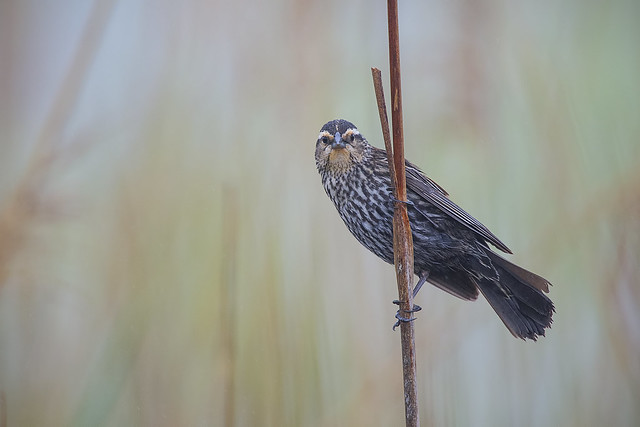
Winning Photo: Female Red-Winged Blackbird by Santosh Shanmuga
The Maryland Department of Natural Resources (DNR) today announced the winners of its 12th annual photo contest, with Santosh Shanmuga of Gaithersburg, Maryland claiming top honors for his serene Female Red-Winged Blackbird taken at Swan Harbor Farm in Harford County. The winning images will appear in the winter edition of the agency’s seasonal magazine as well as its 2016 calendar.
Bidding Open for Trapping Privileges on Select Eastern Shore Wildlife Management Areas

Muskrat
The Maryland Department of Natural Resources is accepting bids for the 2015-2016 trapping season at Ellis Bay, Fishing Bay, Idylwild, LeCompte, Linkwood, Nanticoke River, Taylor’s Island, and Wetipquin wildlife management areas (WMA). Read more…
Department of Natural Resources Outlines Fee Reductions
Cuts Will Aid Maryland Small Businesses, Property Owners and Seniors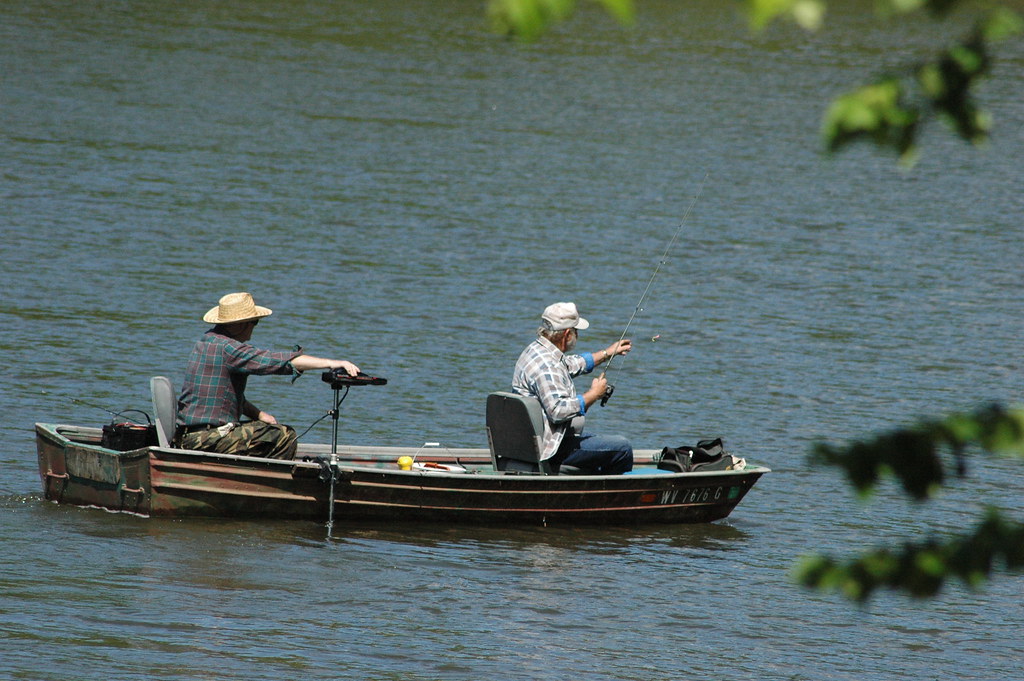
Following Maryland Governor Larry Hogan’s announcement that the state is eliminating or reducing $51 million in state-issued fees, the Department of Natural Resources (DNR) outlined its proposals:
- Golden Age Pass holders will no longer have to pay a fee to use state park boat launches or ramps. The $10 pass entitles Maryland adults, ages 62 and older, to a lifetime of free day-use entry into all state parks, as well as half price camping Sunday through Thursday.
DNR Certifies 156th Maryland Clean Marina
Island View Marina on Kent Island joins the ranks

Island View Marine
Island View Marina, serving boaters of the Eastern Bay, has been certified as the latest Maryland Clean Marina.
Already recycling materials and providing a pumpout station, Owner George Ritter took it a step further, meeting Clean Marina criteria by educating customers on pollution prevention, as well as capturing all bottom wash water and improving stormwater management. Read more…