
Secretary’s Message: Conserving and Protecting Natural Resources is a Team Sport
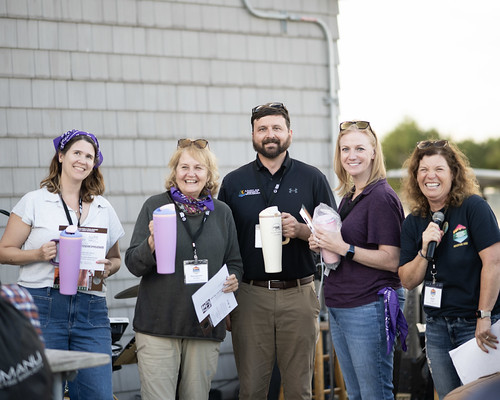
Sec. Kurtz with attendees, partners, and staff at the 2026 Maryland Outdoor Recreation Summit “Rec Trek” at Assateague State Park. Photo by Rachael Pacella, Maryland DNR.
In late September, the Maryland Department of Natural Resources held our third annual Maryland Outdoor Recreation Summit. This event brings together outdoor experts and enthusiasts–from government, businesses, universities, and the general public–to help shape the future of this growing and vital industry.
One of the most important takeaways from this annual event, which was held this year in the Ocean City area, is the incalculable value of the partnerships the Department of Natural Resources relies upon to conduct our mission. Engaging more than 150 attendees and a dozen partner organizations, the summit included sessions about how to connect communities through gravel cycling routes, how to build public support for new trails, innovative ways to promote outdoor recreation opportunities, and even a nighttime session on astrophotography where attendees learned how to set up a camera to photograph the stars and the moon against the backdrop of the ocean.
It was an incredible event that highlighted the breadth of experiences and economic importance of hiking, biking, fishing, hunting, birding, photography, boating, and more in Maryland.
DNR is entrusted to manage our wild resources and about 600,000 acres of public lands, which includes state parks and forests, wildlife management areas, and natural environment areas throughout our geographically diverse state. We have an incredibly talented and dedicated team of professionals such as rangers, foresters, biologists, engineers and many others to manage it all.
But one thing we know is we can’t do it alone. Our ability to pursue major initiatives is possible because of the partners we work with day in and day out to help us manage public lands.
To cite just a few examples:
Maryland’s land trusts and similar conservation nonprofits helped us meet the Maryland the Beautiful Act’s goal of conserving 30 percent of the state’s land area by 2030 in 2024. Groups such as the Partners for Open Space, The Nature Conservancy, and the Lower Shore Land Trust help us maximize the use of Program Open Space dollars to secure easements or buy greenspace to preserve for sustainable public use. Today, more than 1.85 million acres across Maryland are permanently protected. Now we’re working together to conserve 40 percent of the state’s land by 2040.
Throughout the state we work closely with university partners who are helping conduct research in wildlife and fisheries management and provide essential data on the environmental, societal, historic, and economic issues that impact what we do. In September, we announced a new $520,000 grant from the Appalachian Regional Commission that enables DNR to partner with Frostburg University’s Frostburg Outdoor Recreation Economy Institute to complete planning activities and help guide new public access at Wills Mountain State Park in Cumberland.
Several of our state parks enjoy a relationship with a “Friends of” group, which are volunteers who raise funds for the parks and often volunteer to staff facilities and programs. These groups work closely with our park staff and help fundraise for new trails and building improvements in state parks. One great example is the statewide Friends of Maryland State Parks, which each year helps support small but important projects through its “Small Grants, Big Impacts” program. Friends of Patapsco Valley State Park has also worked closely with DNR and the General Assembly in recent years to fund new trails and other improvements in the park, including a new adaptive trail that opened in 2025.
Meanwhile, as DNR has acquired and expanded the historic and cultural sites with our park system, we rely heavily on partnerships to enhance our own resources for their proper preservation. In particular, Preservation Maryland is helping shape land conservation strategies, passive recreation opportunities, and meaningful historic interpretation across more than 1,000 acres of the new Freedman’s State Park. The organization is also working with us to repurpose and reopen the historic South Mountain House to provide opportunities for the adaptive reuse and long-term stewardship of the facility.
Partnerships like these leverage the passion of volunteerism with professional level work, often yielding results at less cost to the taxpayers of Maryland.
We thank all who help contribute to DNR’s mission to preserve and protect the natural and cultural resources of Maryland as we continue to build new connections to move us into the future.