
Maryland Fishing Report – September 30
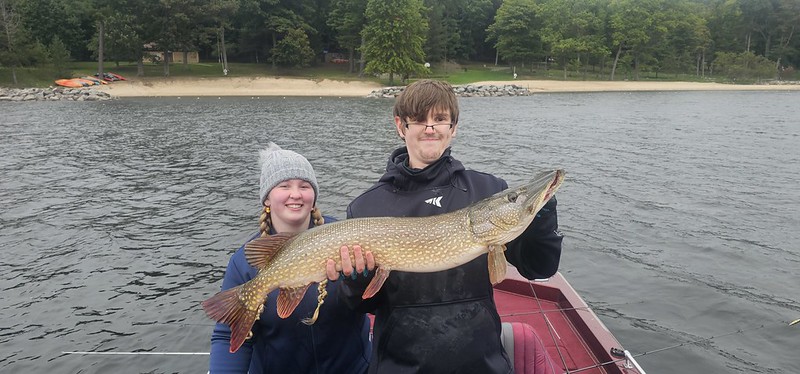
Harry Swauger enjoyed an exciting day of fishing on Deep Creek Lake when he caught this large northern pike. Photo courtesy of Harry Swauger
Maryland is slowly transitioning to fall, and cooler weather certainly makes it more inviting to enjoy the outdoors. Cooler water temperatures have fish becoming more active through the daytime hours.
Forecast Summary: September 30 – October 6
Main Bay surface and river mouth water temperatures have dropped to 70 degrees. Temperatures in smaller rivers and streams have dropped to the mid 60s and will likely continue falling all week. Currently there is adequate oxygen in most Bay bottom waters. Due to the continued dry conditions, Bay salinities are running higher than normal throughout Maryland waters.
Expect average flows for most Maryland rivers and streams. Expect average clarity for most Maryland portions of the Bay and rivers. To see the latest water clarity conditions on NOAA satellite maps, check Eyes on the Bay Satellite Maps. There will be above average tidal currents on Wednesday and Thursday because of the September 26 full moon.
As always, the best fishing areas could be further refined by intersecting them with underwater points, hard bottom, drop-offs, and large schools of baitfish.
For more detailed and up-to-date fishing conditions in your area of the Bay, be sure to check out Eyes on the Bay’s Click Before You Cast.
Following last week’s storm there were above normal discharges from the Conowingo Dam, but discharge rates have now returned to normal power generation releases. Water clarity has been an issue, but the lower Susquehanna River clarity is improving. A mix of blue, flathead, and channel catfish are being found in the dam pool and lower river. Striped bass are being caught in the dam pool, the lower river, and along the edges of the Susquehanna Flats during the morning and evening hours.
Anglers in the upper Bay are exploring their favorite fishing locations this week after the recent storm event. Water temperatures in the upper Bay have declined significantly in the past week and are now holding at approximately 70 degrees. Due to the high tides that were experienced over the weekend, boaters are urged to keep watch for floating debris.
The cooler water temperatures will make shallower waters more comfortable for striped bass and anglers should not miss the opportunity to fish along the shores of the Bay and tidal rivers. Poppers, paddletails, and crankbaits are popular choices for fishing the shallower areas.
Jigging along channel edges with soft plastic and metal jigs will gradually become more popular as striped bass begin to station near the mouths of the major tidal rivers waiting for schools of baitfish to exit the rivers. The exodus from the tidal rivers by baitfish will increase as water temperatures approach 60 degrees.
Despite chilly water temperatures, fishing for Chesapeake Channa (northern snakehead) should remain good this week as long as the grass beds remain intact. As they recede next month, white paddletails will become a good choice as will large minnows under a popping cork or bobber.
Blue catfish are on the move due to cooler water temperatures, and this is one of the best times of the year to target them. Anglers can find blue catfish and channel catfish near channel edges and shelves next to the channels. A moving tidal current is important whether one is fishing from a boat or shoreline.
Locating white perch remains an enigma for many anglers but there are places to find them near structure and where current flows are good. This is a good time to target them along shorelines with small spinnerbaits and spin-jigs. Small minnows and grass shrimp under a bobber is another good tactic. A simple one hook bottom rig that holds your bait about six inches off the bottom works well when baited with grass shrimp. Structure remains key, wherever one fishes.

Mike Shearer shows off a nice striped bass he caught while casting near the Bay Bridge abutments. Photo by Richard Hoenes
Now that the Bay waters have calmed down and the sun is coming out, anglers will pick up where they left off. Bay water temperatures dropped more than 10 degrees in a week and are now holding around 68 degrees. Water temperatures in the lower Choptank are about 65 degrees as of Wednesday; we are getting close to temperatures that will trigger the exodus of baitfish from the tidal rivers into the waiting gauntlet of striped bass at the mouths of the tidal rivers.
It is time to check the braid on your fast taper fishing rod and make sure you have a supply of fluorocarbon leaders, snaps, soft plastic and metal jigs in weights from 3/8-ounce to as much as 3/4-ounce. For most jigging situations 3/8- and 5/8-ounce jigheads will work well. Hopefully you have a good depth finder aboard and make sure to bring binoculars to watch for distant flocks of diving sea gulls. Following the fleet also works.
Anglers are working up current of the Bay Bridge piers on the east side near the 30-foot drop off and drifting live spot, eels, or cut bait back to the pier bases with good results this week. It is a dangerous place to anchor due to snags, the bottom there seems to have an appetite for anchors. Other anglers continue to catch striped bass by casting soft plastic jigs near the pier bases during the morning and evening hours.
Good reports are coming from anglers working the shallower waters of the Bay shores and lower sections of the tidal rivers this week. Casting poppers using spinning or baitcaster gear is always a fun way to fish for striped bass. Few things match the excitement of an explosive surface strike. Paddletails also work extremely well. Fly casters will be enjoying casting skipping bugs with floating lines or large Clousers or Deceivers with a sinking tip. Speckled trout are part of the mix this week; most are small, but a few are measuring over the 14-inch minimum.
Spot are still available this week in the middle Bay, but not for too much longer. Live lining spot along the 30-foot edges of the major channels will be a good way to fish the deeper waters this week. The edges of the main bay channels off Kent Island, Buoy 83 south to the False Channel area, and Thomas Point are just a few locations where anglers may find suspended striped bass.
Anglers who like to troll can deploy tandem rigged swim shads – bucktails dressed with chartreuse twister tails or sassy shads behind inline weights. Umbrella rigs will become popular soon if not already for some. Heavy inline weights and stout tackle will be needed to troll umbrella rigs. A few bluefish may still be in the region so placing a surge tube lure in a trolling spread may be a good idea.
White perch can still be found in their typical summer habitat locations this week, but as water temperatures cool further, the perch will begin to head for deeper waters at the mouth of the various tidal rivers. They will often stage over oyster reef humps until the water temperature plummets to the low 50s. Dropper rigs with small flies or jigs tipped with pieces of bloodworm or a grass shrimp help entice the perch to strike.
Fishing for blue catfish in the Choptank River is good this week. The catfish can be found from the Dover Bridge area of the river to Denton. Cooler water temperatures have the blue catfish on the move and actively feeding.

Eric Packard holds up a beautiful, speckled trout he caught while fishing from his kayak. Photo by Eric Packard
Anglers were out after the storm and reported that fishing for a variety of species was good. Once the winds calmed down, boaters were able to get out on the water and enjoy fishing for a mix of spot, croaker, and speckled trout. Anglers reported some large spot were caught and quite a few speckled trout that measured over the 14-inch minimum, all while bottom fishing in the mouth of the Patuxent River, the lower Potomac River and Tangier Sound. The daily creel limit for speckled trout is four per day.
Casting a mix of topwater lures and paddletails along the swallower waters of the lower bay and tidal rivers is a good way to target striped bass along with a mix of speckled trout, and a few smaller sized bluefish. Some of the best areas to target include the creeks and tidal rivers that feed into the lower Potomac, the lower Patuxent, Hoopers Island, and the Tangier Sound area.

Jeffery Dukes sent in this picture of a whopper-sized blue crab he caught recently. Photo by Jeffery Dukes
Large red drum are being caught and released this week. Most anglers are catching them by jigging with large soft plastics. They can be spotted on depth finders, and sometimes their presence is given away by slicks from feeding on schools of baitfish, or if one is lucky enough the red drum have pushed the bait to the surface. Shore-based anglers are also getting into the action by fishing cut bait from Point Lookout and the shores of Tangier Sound.
Fishing for white perch is often a challenge in the tidal rivers and creeks of the lower Bay. They can be found where there is a good current flow, structure and a readily available food source. Casting spin-jigs and small spinnerbaits during the morning and evening hours is a fun and successful way to fish for them. A flood tide is advantageous. Fishing grass shrimp or small minnows along shorelines with a couple of feet of water depth with a bobber is another good way to target them. Fishing those same baits near deep structure in the form of piers or oyster beds is another good tactic.
Blue Crabs
The 2026 recreational crabbing season is not over by a long shot. Crabbers are reporting large and extra-large crabs being found in 9-14 feet of water in most tidal rivers. They also report a lot of smaller crabs in waters 6-10 feet deep. The water temperature in most tidal rivers is registering from 55 degrees in the Wye River to 66 degrees in the lower Choptank. Some rivers are exhibiting stained water conditions while others are clear.

Micah Youn let us know that the sunfish are biting at Centennial Lake. Photo by Hannah Youn
October will be an exciting one for put-and-take trout anglers throughout Maryland. The trout stocking will begin the first week of October, and anglers are urged to check the trout stocking website to see the latest locations. Visitors to the website will also view a link for trout stocking maps. Anglers are encouraged to sign up for the free email subscription service for notifications of recent stockings.
Cooling water temperatures are causing many species of freshwater fish to become more active and often to feel the urge to build up body stores for the upcoming colder months. Largemouth bass and smallmouth bass are feeding more through the daytime hours now, presenting anglers with plenty of fishing time.
Grass beds will begin a steady decline as daylight hours diminish, so structure in many forms will be key. As grass beds diminish next month, baitfish and crayfish will begin their move to deeper structure. Largemouth and smallmouth bass will be waiting in transition areas. Spinnerbaits, tubes, small crankbaits, paddletails, and craw jigs will be good choices for anglers fishing in the transition waters.
October offers a window of opportunity for anglers to target landlocked striped bass in Triadelphia, Liberty, and Piney Run reservoirs. The cooler waters will have the striped bass active in water depths accessible to anglers. Slow-trolling jerkbaits and crankbaits is a good way to target them.
Fall also offers some of the best fishing opportunities for crappie in tidal and fresh waters. They can be found holding near various types of structure. Marina docks, bridge piers, submerged rocks, fallen treetops, and shoreline submerged brush all are inviting to crappie. Using small minnows under a slip bobber is one of the most popular ways to fish for them, but small marabou jigs and small lures will entice a bite also.

Lily Eberhard recently caught and released this beautiful red drum in the surf. Photo courtesy of Lily Eberhard
Calm seas, sunny skies, and calm winds have greeted everyone that made it through the recent Nor’easter. These types of storms are not uncommon this time of year and tend to set in motion a shift from a summer pattern to a fall pattern in regards to fishing and ocean conditions.
Anglers along the beaches of Assateague are enjoying the much-anticipated run of large red drum. Anglers are urged to make time to enjoy this exciting fishery before it passes us by. Anglers using small baits continue to catch kingfish and a few spot.
At the inlet and Route 50 Bridge area, large sheepshead are being caught on live sand fleas near jetty rocks, bridge piers and bulkheads. Cooler water temperatures have tautog biting as well and anglers are catching some nice ones over the 16-inch minimum.
Bay waters were impacted by the storm, and it will take several days for good water clarity to return. The incoming tide in the channels close to the inlet are a good place to fish. The East Channel has been very popular for drifting for flounder.
Outside the inlet, flounder fishing on the inshore wreck and reef sites as well as shoals and lumps has been very good. Anglers are catching some large flounder, and limit catches are not uncommon. The good flounder fishing continues at the wreck and reef sites farther offshore, and the black sea bass bite has improved. Anglers are now catching some large black sea bass.
Anglers at the canyons are finding good catch-and-release fishing for white marlin. Deep drop fishing is providing fish to bring back to the dock in the form of blueline and golden tilefish.
“Fishing is a quest for knowledge and wonder as much as a pursuit of fish; it is as much an acquaintance with beavers, dippers, and other fishermen as it is the challenge of catching trout.” – Paul Schullery
Maryland Fishing Report is written and compiled by Keith Lockwood, fisheries biologist with the Maryland Department of Natural Resources.
The Forecast Summary is written by Tidewater Ecosystem Assessment Director Tom Parham.
A reminder to all Maryland anglers, please participate in DNR’s Volunteer Angler Surveys. This allows citizen scientists to contribute valuable data to the monitoring and management of se