
Public Asked to Report Marine Mammal and Turtle Sightings and Strandings to DNR this Summer
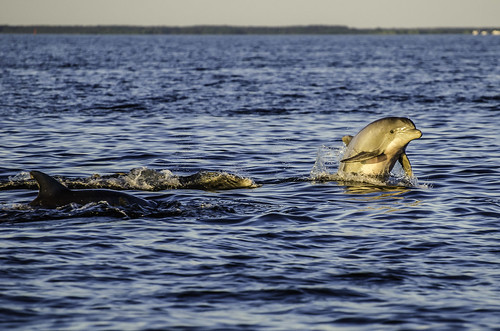
Dolphins are regular summer visitors to the Chesapeake Bay – such as these enjoying the waters off Tilghman Island – but unfortunately some can get stranded in shallow water. Photo by Dennis Raulin, submitted to the 2018 Photo Contest
The Maryland Department of Natural Resources asks residents and visitors enjoying coastal and tidal waterways to remain alert for marine mammals and sea turtles throughout the summer and into early fall.
Dolphins, manatees, sea turtles, whales, and other marine wildlife are regular seasonal visitors to the Chesapeake Bay and its tidal tributaries, the Atlantic Ocean, and coastal bays.
Anyone who sees a distressed or injured marine mammal or sea turtle in Maryland waters is encouraged to report it via the Maryland Natural Resources Police Hotline at 800-628-9944 or by using a simple online form to report deceased marine mammals or sea turtles. Anglers, boaters, and beachgoers should especially be on the lookout for stranded, dead, sick, injured, or entangled animals.
“Maryland has 3,190 miles of tidal coastline, and without reports from the public, it would be impossible to monitor every waterway,” said Stranding Response Program Director Amanda Weschler. “Each stranded animal- and the select necropsies we perform- provides valuable information that contributes to the scientific understanding of marine mammals and sea turtles in Maryland.”
Since 1990, Maryland’s Marine Mammal and Sea Turtle Stranding Response Program has collected reports of more than 1,630 strandings. During the summer months through early fall, marine mammal and sea turtle sightings are reported more frequently, including occasional sightings of West Indian manatees (Trichechus manatus). While rare, sightings of West Indian manatees in Maryland are possible, as the species is considered out-of-habitat in the state. The most recent stranded manatee in Maryland was reported in April 2025.
The Standing Response Program supports federal regulations, such as the Marine Mammal Protection Act and the Endangered Species Act, which safeguard these marine species. By conducting necropsies (similar to human autopsies) on deceased animals, the program gathers essential data about the health of individual animals, the status of coastal populations, and the overall condition of Maryland’s marine environment.
Marine animals strand for a variety of reasons, including old age, disease, blunt force trauma (vessel strike), predation, entanglement in fishing gear, and parasitism.
Not all reported animals are viable for necropsy due to factors such as decomposition, resource availability, and the accessibility and safety of the stranding site. In cases where necropsy is not feasible, Program staff collect preliminary data, stranding location information, and take photographs. The deceased animal may be left at the stranding site to decompose naturally, benefiting the ecosystem. Alternate disposal methods include burial on-site or removal to designated disposal facilities, depending on the circumstances and local regulations. A list of relevant contacts for individuals seeking assistance with disposal is listed on the DNR website.
The department urges anyone who encounters a stranded marine animal, alive or dead, to maintain a safe and respectful distance and document details- including photographs, location information, and the animal’s condition- to provide when making a report.