Cyber Warfare Directorate and Maryland National Guard join forces to host the second State of Maryland Energy Critical Infrastructure Cyber Resilience Workshop
by Maj. Benjamin Hughes

COLUMBIA, Md. – More than 200 cybersecurity and critical infrastructure experts gathered at the Technology Advancement Center in Howard County for the second state-led critical infrastructure cyber workshop focused on the energy sector, March 18–20, 2026.
The workshop brought together representatives from the Department of War, state and federal agencies, international partners from Estonia, energy providers, critical infrastructure operators and private-sector partners. The first two days featured collaborative discussions on cybersecurity challenges and solutions, while the final day included a cyber tabletop exercise led by the Maryland National Guard simulating a cyber incident affecting critical energy infrastructure.
In preparation for the workshop, the Maryland National Guard held the Maryland Defense Critical Infrastructure Interagency Breakfast on March 9. Governor Wes Moore delivered opening remarks, emphasizing the significance of the workshop and highlighting the strength of partnerships between federal and state agencies.
The Maryland Energy Critical Infrastructure Cyber Resilience Workshop highlighted that, in a joint mission to defend the nation, federal and state governments are converging efforts to protect electrical power, oil and natural gas infrastructure. The stability of the economy and the foundation of national security rest upon this grid, which sustains communities and supports warfighters. Collaboration across jurisdictions creates a unified front against cyber threats. The goal is to forge a resilient power system, one that can adapt and endure, ensuring that hospitals stay operational and homes remain powered, even in the face of adversity. This shared commitment builds a legacy of safety, service continuity and lasting American prosperity.
“President Trump’s recently released Cyber Strategy for America outlines six pillars. Pillar Four, ‘Secure Critical Infrastructure,’ commits to identifying, prioritizing and hardening America’s critical infrastructure and securing its supply chains, including defense critical infrastructure and adjacent vendors, private companies, networks and services,” said John Garstka, director of Cyber Warfare for the Office of the Under Secretary of War for Acquisition and Sustainment. “In alignment with this, the National Defense Strategy directs the Department of War to deter and defend against cyber threats and to prioritize bolstering cyber defense for U.S. military and certain civilian targets. This cybersecurity workshop represents a tangible step toward putting those strategies into action. In partnership with the Maryland National Guard, this workshop is exploring practical actions that federal, state, local and energy-sector stakeholders can take to strengthen the cybersecurity of Maryland’s component of the energy grid. Our goal is to identify actions that enhance the cybersecurity posture of the energy grid, so that even in a crisis, homes and hospitals remain powered and military installations receive the energy they require to be fully operational.”
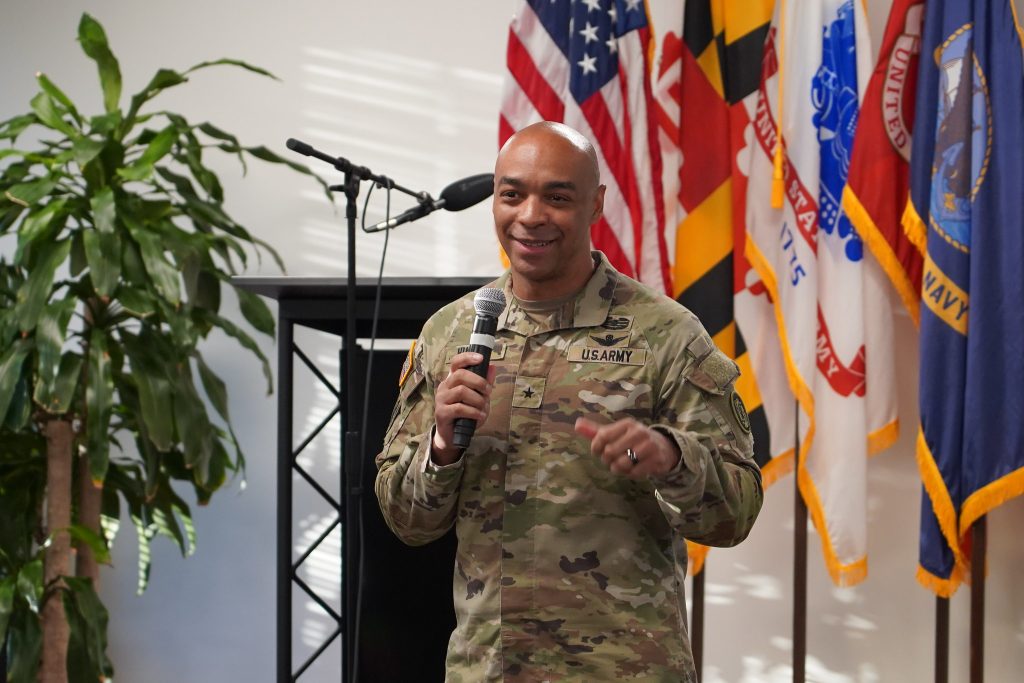
The workshop allowed participants from government, military, academia and industry across Maryland to collaborate on improving, synchronizing and aligning critical infrastructure cybersecurity activities and challenges between federal, state and commercial partners through information exchanges. It also enabled a better understanding of cybersecurity resource constraints and current investments supporting the Maryland energy sector.
The event marked only the second time the Department of War directly collaborated with a state National Guard to conduct a workshop of this kind. The effort aims to strengthen partnerships between government and industry, share lessons learned and determine a path forward to support a unified state-federal approach to cybersecurity.
“Protecting our citizens begins with defending the homeland, and every state is a critical link in that chain,” said Brig. Gen. Craig Hunter, director of the Joint Staff, Maryland National Guard. “By securing each state, we strengthen the security of the entire nation. All critical infrastructure sectors depend on energy. Without it, we risk losing water, communications, transportation, health care and other essential services. The Maryland National Guard is helping lead this effort by uniting partners to strengthen the energy sector’s cyber resilience. Through collaboration and decisive action, we can better protect our state and nation.”
Participants explored ways to improve cyber risk awareness across sectors by examining how organizations observe, measure and mitigate cyber threats affecting operational technology and networked systems supporting the energy sector. The focus was on improving cyber risk management and sharing practical strategies, such as cyber hardening, that utilities can implement to strengthen security and reduce vulnerabilities.
The Department of War has a strong presence in Maryland and relies heavily on commercial infrastructure to support installations and missions. Strengthening the cybersecurity posture of energy providers and other critical infrastructure partners directly contributes to national security objectives and military readiness. The National Guard has a unique dual role in supporting both national defense missions and communities within their states and territories.
The culminating tabletop exercise, organized by Maryland Army National Guard’s Cyber Protection Team 169, allowed participants to test existing cyber incident response plans, identify gaps in processes and capabilities, and strengthen coordination among all partners during a simulated cyber incident affecting energy infrastructure.
“Southern Maryland Electric Cooperative was proud to participate in the Maryland Critical Infrastructure Cyber Resilience Workshop tabletop exercise,” said Dave Viar, vice president of enterprise risk management at Southern Maryland Electric Cooperative. “The session brought together diverse stakeholders in a highly interactive environment that tested response strategies, strengthened coordination among government, regulatory and industry partners, and enhanced our shared resilience against cyber threats to Maryland’s energy sector. Exercises like this are invaluable in improving preparedness and reinforcing the collaboration needed to protect critical infrastructure.”
The three-day Critical Infrastructure Cyber Resilience Workshop Part Two was co-organized by the Office of the Under Secretary of War for Acquisition and Sustainment Cyber Warfare Directorate and the Maryland National Guard.