Maryland soldier strengthens partnerships during War College program in Lithuania
By Maj. Benjamin Hughes
VILNIUS, Lithuania — The commander of the Maryland Army National Guard’s 58th Troop Command joined senior military leaders from across Europe and the United States this spring to examine regional security challenges in the Baltic region.
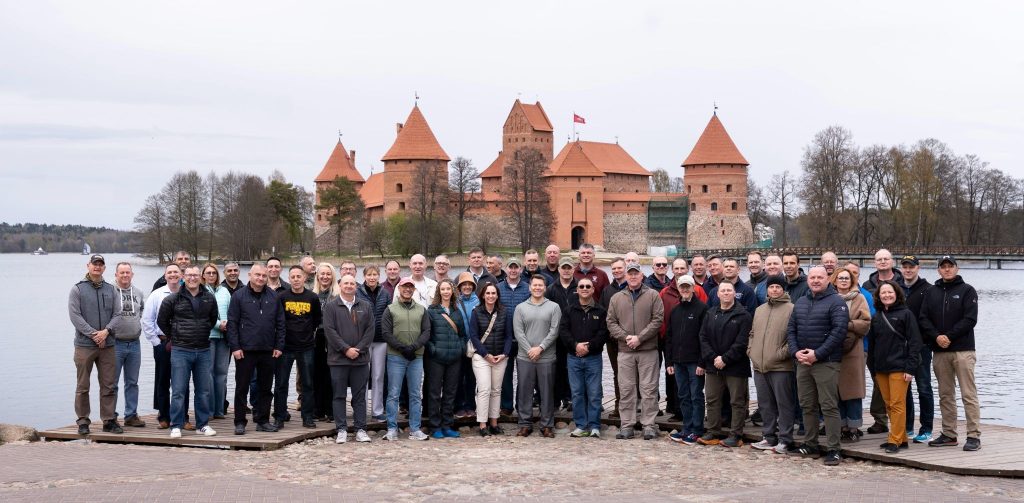
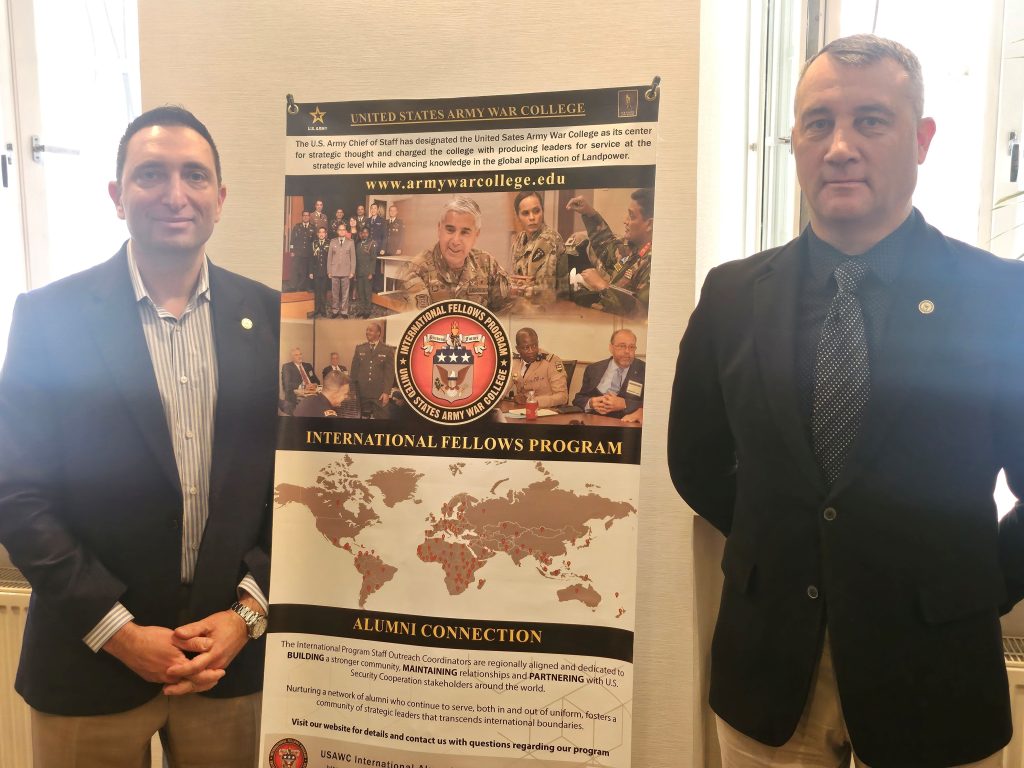
Col. Adam Tiffen represented the Maryland National Guard during the U.S. Army War College International Fellows Continuing Education Program in Vilnius, Lithuania, April 27 to May 2. The seventh iteration of the program brought together 47 Army War College alumni from 20 nations and representatives from 17 National Guard State Partnership Program states to discuss NATO deterrence, interoperability, and the evolving security environment in Europe.
“The biggest takeaway was just how real and immediate the threat feels over there,” Tiffen said. “You have to remember, we were sitting in Vilnius, and the Belarusian border is only about 30 kilometers away. One of the participants pointed out that there are Russian troops right across that line. It really crystallized the threat for everyone in the room.”
The program highlighted the importance of the National Guard State Partnership Program, which has connected Maryland and Estonia for more than 30 years. Throughout the week, Tiffen worked alongside his Estonian counterpart, Col. Antti Vijasti, sharing examples of the two nations’ collaboration in cyber defense, leader development and multinational exercises. He said Maryland and Estonia continue to learn from one another through regular exchanges and cyber exercises, strengthening the readiness of both organizations.
“We spent a lot of time talking about burden sharing,” Tiffen said. “There was a mutual recognition from both the U.S. and our NATO partners that Europe can and should do more, and that we need a true rebalancing of the effort to deter Russia. For the Maryland National Guard, this exemplifies the mission of our State Partnership Program. Our role is to develop shared capacity so we can deter threats together.”
The program featured engagements with senior Baltic military leaders, including the Lithuanian chief of defense, as well as seminars and wargames focused on regional security. Participants also visited historical sites in Vilnius that illustrated the Baltic nations’ history of Soviet occupation and their continued commitment to national defense.
“In today’s environment, you can’t wait until a crisis kicks off to start exchanging business cards,” Tiffen said. “When you build these connections over decades, you develop a shared understanding that is absolutely critical when tensions rise and you have to operate as a coalition.”