
MDEM Newsroom - Page 17 MDEM Newsroom
Hogan Administration Announces Statewide Response Efforts to Florence
September 11th, 2018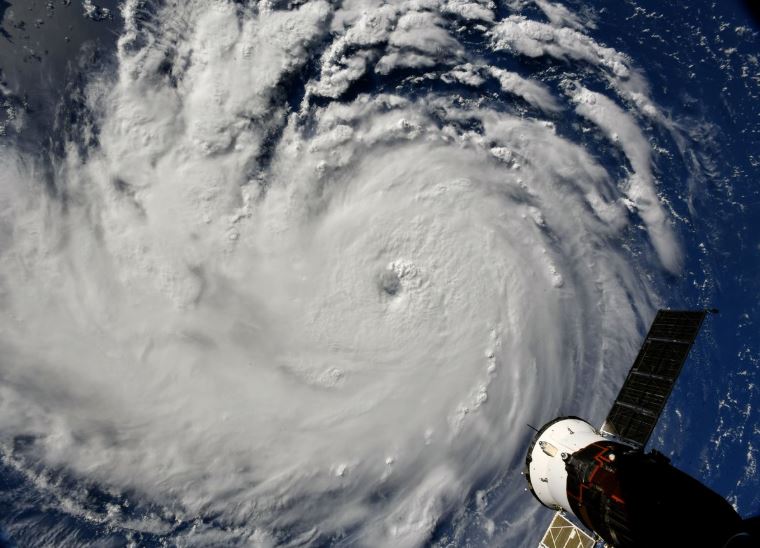
Governor Urges Marylanders to Plan Now, Heed Local Authorities’ Instructions
ANNAPOLIS, Md. (September 11, 2018) — Governor Larry Hogan has directed state agencies to work together to keep Marylanders safe and informed as Hurricane Florence continues to head towards the U.S. eastern seaboard. Large areas of Maryland have already experienced significant rainfall in the past few days, making the ground saturated with water and thus making this storm a serious threat to life and property.
“I have signed Executive Order 01.01.2018.22 declaring a state of emergency beginning Monday, September 10, 2018 ahead of the landfall of Hurricane Florence,” said Governor Larry Hogan. “There is an elevated potential for historic and catastrophic rainfall, life-threatening flooding, and high winds. I urge Marylanders to stay tuned to your local news stations for the latest updates, listen to state and local authorities, use common sense, and most importantly, plan and be prepared ahead of this storm. Do not wait until Wednesday,” he added.
Governor Hogan has directed Maryland state agencies to provide any support needed to local jurisdictions and Maryland residents who may be potentially affected by Florence. “Our administration is committed to doing all that we can to ensure Marylanders remain safe and impacted communities are able to recover from this severe weather once it passes,” he concluded.
State agencies are supporting the local response as this event unfolds. MEMA advises the public, especially those living in or around coastal areas or areas prone to flooding to be “extremely vigilant” during this event.
The following actions have been taken by state agencies to respond to the ongoing event:
Maryland Emergency Management Agency
- MEMA has increased the state’s response level in order to efficiently coordinate activities and has increased staffing levels at the State Emergency Operations Center.
- MEMA is currently supporting all local jurisdictions requests, while coordinating among state agencies to fulfill any requests from local jurisdictions.
- MEMA has been facilitating weather calls with the National Weather Service and has been in frequent contact with local emergency managers, state agencies, and local partners to maintain situational awareness and coordination.
Maryland National Guard
- The Guard is ready to support the Governor, MEMA, and other partner agencies as we prepare for, respond to, and recover from the effects of Hurricane Florence.
- Our Joint Operations Center is manned around the clock, and we are in constant contact with MEMA, ready to respond as needed.
Maryland Department of Human Services
- Providing multi-agency coordination for mass care services through State Coordinating Function Human Services.
- Preparing a state shelter strategy to assist with disaster sheltering for our local jurisdictions.
Maryland Energy Administration
- Maryland Energy Administration and the Maryland Public Service Commission continue to monitor, support, and coordinate with the Maryland electric and gas utilities on their storm preparedness, mobilization, and restoration efforts.
Maryland Department of Health
- The Department of Health has reached out to local health departments, state facilities, and state partners to establish unmet needs and provide updates.
Maryland Insurance Administration
- Maryland Insurance Administration’s response team is prepared to respond to consumer related insurance issues related to the pending storm.
- Insurance preparedness information can be found here: http://bit.ly/2QkaqKi
Maryland Department of Disabilities
- The Department of Disabilities has posted emergency preparedness links and tips on our social media platforms.
- We are preparing to deploy a large inventory of accessibility devices, including communication technologies to mass care shelters.
Maryland Institute for Emergency Medical Services Systems (MIEMSS)
- MIEMSS will be maintaining situational awareness and coordinating with other agencies.
- MIEMSS is prepared to assist with coordination of EMS resources to impacted jurisdictions–or to impacted states if Maryland is not significantly impacted.
- MIEMSS will be sending regular updates to EMS operation programs and hospitals and will be monitoring hospital physical plant status (power, water, etc.).
Maryland Department of Transportation State Highway Administration (MDOT SHA)
- The Maryland Department of Transportation State Highway Administration (MDOT SHA) is deploying maintenance forces throughout the state to begin preparations for the storm and its impacts. MDOT SHA crews will inspect, clean and clear stormwater ditches, drains, and inlets to ensure adequate drainage.
- Crews from MDOT SHA maintenance facilities are also evaluating all emergency response equipment such as high water signs, chainsaws, chippers, loaders, and grading trucks. Additionally, crews are ensuring that all generators are fully topped off and functional in case of power outages.
Maryland Department of Transportation Maryland Transit Administration (MDOT MTA)
- As weather conditions develop, MTA patrols service areas of roads that are particularly challenging (steep hills, curves and the like) to monitor road conditions and advise of any bus diversions needed, speed restrictions or service stoppage due to high or rising water or blocked roadways.
- For Light RailLink and Metro SubwayLink, MDOT MTA will increase visual monitoring of catenary lines to prevent limbs and trees strikes to the power lines.
Maryland Department of Transportation Maryland Aviation Administration (MDOT MAA)
- A number of airlines have announced travel advisories and relaxed ticketing policies ahead of Hurricane Florence. Travelers this week are recommended to check with their airline for up-to-date flight status information.
- This week, Baltimore Washington International Thurgood Marshall Airport employees will conduct inspections of the airfield and terminal to ensure a safe operating environment for travelers and employees.
- Employees will work to secure equipment on the airfield and at construction sites to prevent material from becoming airborne during high winds.
- Emergency generators will be checked and fueled.
Maryland Transportation Authority (MDTA)
- The Maryland Transportation Authority (MDTA) reminds motorists to be prepared for wind warnings, restrictions, and the potential for temporary traffic holds. Any decision to hold traffic at Maryland toll facilities is based upon current weather at the facility.
- The MDTA will make every effort to keep all of its facilities open as long as conditions are deemed safe to do so.
- Rain and high winds may prevent two-way operations (when one lane of eastbound traffic travels on the westbound span) at the Bay Bridge. Officials will continue to monitor weather conditions and will implement two-way operations, if possible.
Maryland Department of Transportation Maryland Port Administration (MDOT MPA)
- The MDOT MPA is coordinating with the U.S. Coast Guard.
- MDOT MPA is also checking storm drains for debris and reminding tenants about potential flooding areas.
Maryland Department of Transportation Motor Vehicle Administration (MDOT MVA)
- MDOT MVA is prepared to work with law enforcement and local authorities to identify vehicles impacted by Hurricane Florence and ensure they are processed appropriately.
- The status of MDOT MVA branch offices/VEIP stations that are impacted by the inclement weather will be posted to the website and social media. Remember, many MDOT MVA services are offered online and can be accessed at your convenience. Please check www.mva.maryland.gov for further updates.
Maryland Department of State Police
- State Police Special Operations Division personnel are coordinating with MEMA as predictions are made about the storm’s greatest impact in Maryland in order to make pre-deployment assignments of troopers and equipment.
- Commanders of specialized divisions not normally assigned to road patrol are scheduling the redeployment of troopers to road patrol assignments and other support functions where the areas of predicted need during the storm are the greatest.
Department of Labor, Licensing, and Regulation
- The Division of Unemployment Insurance is preparing for any increase in unemployment Insurance applications after the storm.
- Preparing the Maryland Home Improvement Commission staff and the Maryland Occupational Safety and Health staff to assist with public inquiries after the storm.
State Department of Assessment and Taxation
- SDAT’s local assessment offices are reviewing procedures and will be prepared to work with MEMA and inspect areas impacted by the impending severe weather to assess property damage.
Maryland Department of Budget and Management
- The Department of Budget and Management encourages all State employees and interested parties to monitor our website and Twitter account for the latest updates regarding special closings of State buildings, liberal leave announcements, and other emergency information.
Maryland Department of Planning
- Staff of the Maryland Historical Trust (MHT) is available to assist State Historic Preservation Offices in the affected region by carrying out damage assessments and analysis of historic and cultural resources in communities affected by Hurricane Florence to determine the extent of damage and prioritize recovery operations.
- MHT is also available to provide guidance on repair, rehabilitation, and protection of historic and cultural resources as requested.
Maryland Dept of Information Technology
- The Department will be ready to update the Maryland.gov portal and the State of Maryland social media channels with news and information about the storm from MEMA and the Governor’s Office.
- We will be prepared to issue statewide alerts on all Maryland state government websites if action is required.
Maryland Department of Commerce
- Maryland Commerce will communicate any emergency information or information as it relates to the business community through its social media channels as information becomes available.
Maryland Department of Veterans Affairs
- Charlotte Hall Veterans Home (CHVH) and Cemetery Program emergency generators and vehicles fuel topped off (pick-up trucks, tractors, buses, vans, golf carts).
- We will hold daily CHVH staff meetings as storm approaches.
- CHVH emergency trailer supplies checked, i.e. plywood, tape, flashlights, tools as well as supplies checked for par levels plus four days, i.e. medications, food, water, linen, Cemetery Program supplies checked, bottled water purchased, chainsaws fueled and ready to remove down limbs and trees, drains and areas prone to flooding cleared and dug out.
Maryland Department of Agriculture
- The Department’s Animal Health staff will be on call to respond to any animal-related emergencies. They can be reached at 410-841-5971.
- Animal Health staff is prepared to respond to requests for assistance with livestock and companion animals in the affected area(s).
Maryland Department of Natural Resources
- Anglers, boaters and watermen are encouraged to heed all advice and alerts from federal and state officials and law enforcement, and urged to remove, secure, store or tie-up all equipment, gear, and vessels in preparation for the storm(s). Commercial crabbers can remove their fishing equipment and gear immediately so it does not get damaged or dislodged.
- The department recommends that boaters secure vessels with extra lines and bumpers. Remove or secure all loose items on board. Shut off fuel tanks and remove portable fuel and oil containers. Make sure batteries are fully-charged and working, and turn on auto bilge pumps.
- Several state parks, including Assateague State Park in Worcester County and Point Lookout State Park in St. Mary’s County will likely limit or restrict public access and recreation, like camping and swimming, due to public safety concerns. Other state parks, including Patapsco Valley State Park in Baltimore/Howard County, have already experienced localized flooding.
- The department is working with partners to drawdown state-managed dams and lakes in an orderly and safe fashion to reduce the likelihood a breach or leak. The public should remain cautious in and around local waterways, like creeks, rivers and streams. Many shorelines are already well-saturated downstream with dangerous and swift currents.
- The department’s Hydrographic Operations crew stands ready to clean and clear marine debris that pose a hazard or threat to navigation. It will coordinate activities with the Maryland Natural Resources Police, U.S. Coast Guard and other partners. Report hazards to 410-260-8888.
- Active department-managed projects, including boat ramp construction, dam removal and stream restoration will likely be delayed so teams can properly secure and store construction equipment and gear. Crews are on standby to deal with fallen tree limbs and trunks on department property.
- The department will continue monitoring the health of Chesapeake Bay following the expected storms, running a cruise next week. Staff will also collect river and stream storm samples after the rains subside. We will also monitor flows from the Susquehanna River and Conowingo Dam.
Maryland Department of General Services
- DGS is readying all state office buildings for adverse weather and has prepared them to be back in operation as soon as the storm clears.
- DGS maintains an emergency resource list of 100+ vendors, ready to serve during a State of emergency.
- DGS can coordinate with our fellow state agencies to provide access to any vehicles in the DGS fleet or in other state agency fleets, including any trucks or four-wheel drive vehicles, for usage by local or state agencies whose fleet may have been negatively affected by the storm.
- DGS, as the agency of record for the Federal Surplus Property Program, can work with our federal partners, including FEMA and GSA, to secure a variety of surplus items.
- DGS has communicated with Mansfield Oil to top off all priority refueling sites around the state including sites for MSP, MDTA, MTA and SHA.
- DGS has a designated MEMA resource team procurement officer ready and willing to report on site to assist in utilizing the emergency resource list, which consists of the following resources; generators, sandbags (pre-filled & empty), ice, dry ice, food, and MREs.
Maryland Stadium Authority
- The FEMA flood map for Baltimore City indicates the southern portion of the Camden Yards Sports Complex is vulnerable to storm surge. The Baltimore Orioles begin a 9-game home stand beginning tomorrow evening, Tuesday, September 11th and concluding Wednesday, September 19th.
- The Maryland Stadium Authority (MSA) has been monitoring the storm’s path and has informed the Ballpark Crisis Management Team (MSA, Baltimore Orioles, SP+ Parking and Baltimore City Police Department) about the possibility of convening a meeting. MSA has asked the Ballpark Crisis Management Team members to review ‘Hurricane Preparedness and Response Planning Annex from the Oriole Park Emergency Response Plan’ to be best prepared.
- The MSA encourages all guests and tenants of the Camden Yards Sports Complex to monitor the MSA and Orioles websites’ (www.MDStad.com / www.Orioles.com ) and Twitter accounts’ (@MDStadiumAuth / @Orioles) for updates.
Governor’s Office of the Deaf and Hard of Hearing
- The office provided ASL interpreters for the emergency broadcast to ensure accessibility and effective communication.
Governor’s Office of Community Initiatives/Office on Service & Volunteerism
- These offices will contact all volunteer centers across the state, and other service organizations, to alert them to be on the ready for requests for volunteer support during and after the storm.
Maryland Department of the Environment
- MDE’s Water and Science Administration (WSA) will notify high and significant hazard dam owners and operators to monitor the weather and reduce pool levels if possible, check all emergency equipment (including backup power systems), review emergency action plans and update emergency contacts. WSA will also contact wastewater treatment plants and drinking water facilities to take precautions. WSA will monitor storm impacts to determine if emergency closures are needed to shellfish harvesting areas.
- The MDE hazmat team is prepared to respond statewide to chemical or oil spills as necessary during the event.
- MDE’s Land and Materials Administration advised landfill and other solid waste facility operators to take steps to prepare for the possible storm and associated precipitation by ensuring good coverage of waste, pumping down leachate storage facilities and securing the site for possible high winds and heavy precipitation.
Our social media specialists will be monitoring the situation and will also be posting updated information as it becomes available. You can follow MEMA on Twitter @MDMEMA or on Facebook at facebook.com/MDMEMA.
Governor Larry Hogan Declares State of Emergency for Hurricane Florence
September 10th, 2018Executive Order Issued Ahead of Storm Making Projected Landfall on the U.S. East Coast
ANNAPOLIS, Md. (September 10, 2018)–Governor Larry Hogan today signed Executive Order 01.01.2018.22 declaring a state of emergency beginning Monday, September 10, 2018 ahead of the landfall of Hurricane Florence. The executive order will allow the state to more efficiently coordinate support and provide assistance to local jurisdictions within Maryland and neighboring states.
“At this time, there is still some uncertainty about the track of this storm and its potential impact, but we are preparing for any possible outcome, including the potential for historic and catastrophic rainfall, life-threatening flooding, and high winds,” said Governor Hogan. “Our state is taking every precaution, and I urge Marylanders to do the same. Stay tuned to your local news stations for the latest updates, listen to state and local authorities, and most importantly, use common sense.”
Weather forecasters have indicated that there is the potential for life-threatening conditions, including catastrophic flooding as well as high winds and dangerous conditions in our waterways. Current forecasts indicate that torrential rains, tropical storm force winds, and and tidal flooding/storm surge could impact the state beginning as early as Thursday.
The state’s Emergency Operations Center Response Level has been elevated and center is fully staffed with emergency management personnel and state agency coordinating function representatives.
The state of emergency allows the governor to access critical resources in order to increase the state’s response, like the Maryland National Guard. It also allows Maryland to receive assistance from other states as part of the Emergency Management Assistance Compact. This compact serves as the cornerstone of the nation’s mutual aid system and offers assistance and aid during states of emergency through member states.
“A state of emergency is a good indicator that residents should remain alert and follow officials’ orders, news stations, and weather forecasts in order to be informed of the situation,” said MEMA’s Executive Director, Russell Strickland. “We encourage all residents and visitors to our State to visit www.KnowYourZoneMD.com to see if they are inside, or, if they are traveling to, a hurricane evacuation zone,” he added.
Governor Hogan has directed state agencies to stand ready to respond to the effects of this storm, including the Maryland Emergency Management Agency (MEMA). For more information, residents can also go to MEMA’s website at mema.maryland.gov, follow MEMA’s Twitter feed at @MDMEMA, or follow MEMA’s Facebook page at www.facebook.com/MDMEMA.
What does a “State of Emergency” mean?
September 10th, 2018What does a “State of Emergency” mean?
In preparation for Hurricane Florence, Governor Larry Hogan has asked State agencies to launch a coordinated effort to keep Marylanders safe and informed in the upcoming days. Governor Hogan signed an Executive Order declaring a state of emergency in Maryland on Monday, September 10, 2018 at 3:30 p.m. EST. Here is information on what a state of emergency means.
Not all states of emergency are the same. Each state of emergency is different and can change depending on the severity of the event or emergency. Be sure to check with your local news and with MEMA for updated information related to states of emergency.
A state of emergency has been declared in order to allow Maryland to coordinate and request emergency resources and support. A state of emergency allows the Governor to access certain resources, like the National Guard, in order to increase the State’s response.
A state of emergency is a good indicator that residents should remain alert and follow officials’ orders, news stations, and weather forecasts in order to be informed of the situation.
Here is additional information about this state of emergency:
Will schools be closed?
States of Emergencies typically do not mandate school closures. It usually is the local school district’s decision to stay open or to close. Check with your school for up-to-date closure information.
Will stores and businesses be open?
This state of emergency does not require employers to close. We ask that all employers consider employee safety at all times.
Can I drive on the roads?
Most of the time, motorists are not prohibited from driving. However, this depends on the situation and the limitations set in each particular State of Emergency. Each State of Emergency is different. If you are a motorist and must drive and cannot change your plans, you should drive carefully and use common sense. You should also:
- Allow extra time to get to your destinations.
- Let family or/and friends know what roads you plan to take and expected arrival times.
- Contact family/friends after you arrive to your destination.
What you need to know about Hurricane Florence:
- Preparing for this weather event now is key.
- We are tracking this storm moment-by-moment, and we won’t know the exact direction it will take until it makes landfall, but we must ensure we are prepared for all possible impacts to our state.
- As of 11:00 a.m.Monday, September 10, 2018, we are anticipating that the biggest threat to lives and property from this storm will be life-threatening flooding due to torrential rains, and tidal flooding/storm surge.
- The earliest we can expect tropical storm force winds is Thursday evening, particularly in southern and southwestern Maryland.
- Weather forecasters have alerted us that there is the potential for life-threatening conditions, including catastrophic flooding as well as high winds and dangerous conditions in our waterways.
MEMA Reminds Marylanders: September is National and Maryland Preparedness Month
September 4th, 2018

Disasters Happen. Prepare Now. Learn How.
REISTERSTOWN, Md. (September 1, 2018)— As a summer full of rain-induced emergencies around the state comes to a close, the Maryland Emergency Management Agency (MEMA) reminds Marylanders that this is time to review their preparedness plans.
“The flooding in Ellicott City and other parts of Maryland earlier this year reminds us that emergencies can happen anytime and anywhere,” said MEMA’s Executive Director, Russell Strickland. “It is imperative that we all have a plan in place and a disaster supply kit. Now is the time to make sure you are ready for emergencies,” he added.
Preparedness Month, which begins today, September 1, reminds us to prepare throughout the year. The theme this year is Disasters Happen. Prepare Now. Learn How. MEMA has a clear message for all Marylanders:
1. Prepare for an emergency before it happens.
2. Have a plan in place. This means a communications plan, an evacuation & reconvening plan, and a plan for your pets.
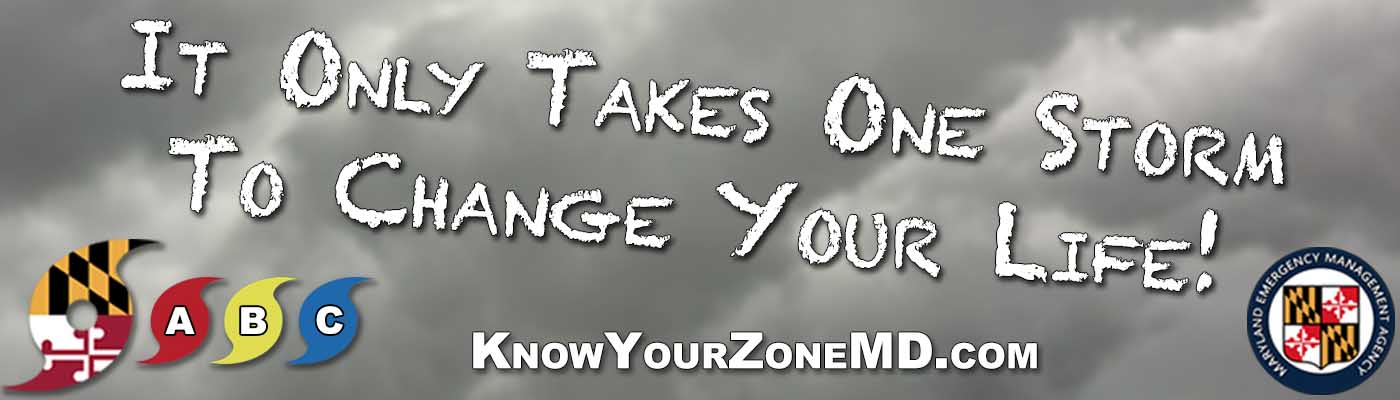
3. Know your Zone and be a good neighbor (It only takes one storm to change your life).
Making preparations when threats are not imminent can make communities more resilient. In addition to flooding, some hazards common to Maryland include high wind, severe thunderstorms, and winter storms. Residents should also be aware of other issues such as cybersecurity, extended power outages, and active assailant events.
To find important emergency preparedness information for these and additional threats, visit:
- MEMA: mema.maryland.gov
- Federal Emergency Management Agency: www.ready.gov
- National Weather Service: www.weather.gov/safety
While this year’s hurricane season has been quieter than last year thus far, September and October mark the height of the mid-Atlantic hurricane season. Conditions in the Atlantic Ocean do not appear favorable for storm development, but it only takes one storm hitting our area to threaten lives and destroy property, “and it does not need to be a Hurricane,” added Strickland.
“I want to remind those who live, work or visit Maryland to also learn about our new Know Your Zone storm preparedness and evacuation campaign. We are simplifying evacuation plans if they are needed in parts of Maryland that could be affected by storm surge or tidal flooding for hurricanes or other large storms.”
The new system features three evacuation zones–A, B and C–along the Chesapeake Bay and its tidal tributaries, the Atlantic Ocean, and the coastal bays. A is the most flood-prone area, with Band C following respectively. If local officials call for an evacuation, they can do so by zones, which have been determined by state of the art technology not available a few years ago.
To find out if you live in one of the zones, please go to www.KnowYourZoneMD.com, click on the “Find Your Zone” button, and type your address into the search area in the upper left corner. That will tell you what, if any, evacuation zone you are in. The website also contains useful information about hurricanes and preparedness tips.
MEMA will be involved in preparedness events around the state throughout September. For updated information on these events, follow us on Twitter, @MDMEMA, and our Facebook page, https://www.facebook.com/MDMEMA
SBA Offers Disaster Assistance to Businesses and Residents of Maryland Affected by May Flooding
July 27th, 2018
WASHINGTON (July 27, 2018)– Maryland businesses and residents affected by severe flooding in Baltimore City and Howard County on May 27, 2018, can apply for low-interest disaster loans from the U.S. Small Business Administration, Administrator Linda McMahon announced today.
Administrator McMahon made the loans available in response to a letter from Gov. Larry Hogan on
July 23, requesting a disaster declaration by the SBA. The declaration covers Baltimore City and Howard County, and the adjacent counties of Anne Arundel, Baltimore, Carroll, Frederick, Montgomery and Prince George’s in Maryland.
“The SBA is strongly committed to providing the people of Maryland with the most effective and customer-focused response possible to assist businesses of all sizes, homeowners and renters with federal disaster loans,” said McMahon. “Getting businesses and communities up and running after a disaster is our highest priority at SBA.”
SBA’s Customer Service Representatives will be available at the Disaster Loan Outreach Centers to answer questions about the disaster loan program and help individuals complete their applications.
The three Centers are located in the following communities and are open as indicated:
Baltimore City
Stillmeadow Evangelical Free Church
5110 Frederick Ave.
Baltimore, MD 21229
Opening: Tuesday, July 31 at 11 a.m.
Hours: 9 a.m. – 6 p.m., weekdays
Saturday, Aug. 4 from 10 a.m. to 2 p.m.
Closed: Sunday, Aug. 5
Closes: Tuesday, Aug. 7 at 4 p.m.
Howard County
Baltimore & Ohio Ellicott City Station Museum
3711 Maryland Ave.
Ellicott City, MD 21043
Opening: Tuesday, July 31 at 11 a.m.
Hours: 9 a.m. – 6 p.m., weekdays
Saturday, Aug. 4 from 10 a.m. to 2 p.m.
Closed: Sunday, Aug. 5
Closes: Tuesday, Aug. 7 at 4 p.m.
Baltimore County
Catonsville Senior Center
501 North Rolling Road
Catonsville, MD 21228
Opening: Tuesday, July 31 at 11 a.m.
Hours: 9 a.m. – 6 p.m., weekdays
Saturday, Aug. 4 from 10 a.m. to 2 p.m.
Closed: Sunday, Aug. 5
Closes: Tuesday, Aug. 7 at 4 p.m.
“Businesses and private nonprofit organizations may borrow up to $2 million to repair or replace disaster damaged or destroyed real estate, machinery and equipment, inventory, and other business assets,” said SBA’s Maryland District Director Stephen Umberger.
For small businesses, small agricultural cooperatives, small businesses engaged in aquaculture and most private nonprofit organizations, the SBA offers Economic Injury Disaster Loans to help meet working capital needs caused by the disaster. Economic Injury Disaster Loan assistance is available regardless of whether the business suffered any physical property damage.
“Loans up to $200,000 are available to homeowners to repair or replace damaged or destroyed real estate. Homeowners and renters are eligible for loans up to $40,000 to repair or replace damaged or destroyed personal property,” said Kem Fleming, center director of SBA’s Field Operations Center East in Atlanta.
Applicants may be eligible for a loan amount increase up to 20 percent of their physical damages, as verified by the SBA for mitigation purposes. Eligible mitigation improvements may include a safe room or storm shelter to help protect property and occupants from future damage caused by a similar disaster.
Interest rates are as low as 3.61 percent for businesses, 2.5 percent for nonprofit organizations, and 1.938 percent for homeowners and renters with terms up to 30 years. Loan amount and terms are set by the SBA and are based on each applicant’s financial condition.
Applicants may apply online using the Electronic Loan Application (ELA) via SBA’s secure website at DisasterLoan.sba.gov.
Businesses and individuals may also obtain information and loan applications by calling the SBA’s Customer Service Center at 1-800-659-2955 (1-800-877-8339 for the deaf and hard-of-hearing), or by emailing [email protected]. Loan applications can also be downloaded at www.sba.gov. Completed applications should be returned to the center or mailed to: U.S. Small Business Administration, Processing and Disbursement Center, 14925 Kingsport Road, Fort Worth, TX 76155.
The filing deadline to return applications for physical property damage is Sept. 24, 2018. The deadline to return economic injury applications is April 25, 2019.
###
Contact:
Michael Lampton
(404) 331-0333
[email protected]
Small Business Administration Approves Governor Hogan’s Request for a Physical Disaster Declaration in Baltimore City, Howard County
July 27th, 2018SBA Low-interest Loans Available to Qualifying Homeowners, Renters, and Businesses Affected by May Flooding
REISTERSTOWN, Md. (July 26 2018) — Governor Larry Hogan announced today that the U.S. Small Business Administration (SBA) has approved his request for a physical disaster declaration for Baltimore City and Howard County following severe storms and flash flooding on May 27. This declaration allows affected businesses, homeowners, and renters whose properties had damages and meet certain criteria to apply for low-interest loans for repairs. People who live in contiguous counties, including Anne Arundel, Baltimore, Carroll, Montgomery, and Prince George’s, are also eligible to apply.
“Many businesses, homeowners, and residents have been profoundly affected by the flooding that occurred in May,” said Governor Hogan. “These loans are a key component of the recovery process and an important part of the rebuilding process. Our administration will continue to support these communities to ensure that recovery and we thank our federal partners for their swift approval of our request.”
Baltimore City and Howard County requested a SBA damage assessment through the Maryland Emergency Management Agency (MEMA). Preliminary damage assessments were recently completed and validated that both jurisdictions were eligible for a SBA physical disaster declaration. The SBA will work with the local jurisdictions and MEMA to establish disaster loan outreach centers and other methods for residents to apply in the coming days.
Earlier this month, the SBA approved Governor Hogan’s request for a physical disasterdeclaration for Frederick County following flooding May 15-20.
The SBA provides low-interest disaster loans to businesses of all sizes, private non-profit organizations, homeowners, and renters. For more information, please visit www.sba.gov.
Hogan Administration Announces Statewide Response Efforts for Potential Conowingo Dam Impacts
July 26th, 2018Governor Urges Marylanders to Avoid Port Deposit

Photo via Jeff Long/WJZ
ANNAPOLIS, Md. (July 26, 2018) — Governor Larry Hogan has directed state agencies to work together to keep Marylanders safe and informed following continued flooding. Due to large amounts of rainfall, the Conowingo Dam has announced the opening of spill gates. Significant amounts of rain and water flow in the Susquehanna River have prompted this response.
Port Deposit Mayor, Wayne L. Tome Sr., has called for a voluntary evacuation in Port Deposit in Cecil County. Port Deposit officials had stated that those without transportation should report to the Town Hall for a shuttle. The Bainbridge Elementary School, located at 41 Preston Drive, Port Deposit, MD., will serve as a receiving center for residents without shelter options.
“Maryland state agencies are actively engaged and working around the clock to provide any support needed to Port Deposit and the areas surrounding the Conowingo Dam,” said Governor Hogan. “I urge all local residents to put safety first and heed all warnings from local officials. Our administration is committed to doing all that we can to ensure Marylanders remain safe and impacted communities are able to recover from this severe weather.”
State agencies are supporting the local response as this event unfolds. MEMA advises the public, especially those living in and around Port Deposit to be vigilant during this event, and to:
- Put your safety first, avoid Port Deposit and any flooded areas
- Heed all warnings from your local officials and if told to evacuate, do so immediately. Call 9-1-1 in the event of an emergency.
- Never drive on a road if there is flood water. Turn Around. Don’t Drown!
- Never drive around barricades. Local responders use them to safely direct traffic out of flooded areas.
- Don’t forget about your pets and be sure to lock your home.
- Discuss what to do in an evacuation with everyone in your family and
know where you will go if an evacuation is called. - Assemble everything your family will need in advance if you must evacuate your home and select a safe meeting point.
- Create a first aid kit that includes your family’s prescription medications, baby formula, special needs supplies, and documents, like passports, driver’s license and birth certificates (pack sanitation supplies and special items for babies, senior citizens or disabled family members).
- Pack one change of clothes and shoes per person as well as one blanket or sleeping bag per person.
- Write down the name of your insurance company, policy number and telephone number and keep it in a safe place.
- Include an extra set of car keys, your credit cards, cash and/or traveler’s checks. Don’t forget your important emergency contact numbers.
- Only return when officials say it is safe to do so. You may be gone for some time but it’s for your safety.
The following actions have been taken by state agencies to respond to the ongoing event:
Maryland Emergency Management Agency
- MEMA has increased the state’s response level in order to efficiently coordinate activities and has increased staffing levels at the State Emergency Operations Center.
- MEMA is currently supporting Cecil and Harford Counties, while coordinating among state agencies to fulfill any requests from local jurisdictions.
- MEMA has been facilitating weather calls with the National Weather Service and has been in frequent contact with local emergency managers, state agencies, and local partners to maintain situational awareness and coordination.
Maryland Department of Natural Resources
- Areas of Susquehanna State Park will be impacted by rising swells, including the park’s historic area and Lapidum Landing boat launch, which are particularly susceptible to flooding. Additionally, trails may be closed due to muddy conditions and woody debris.
- The Maryland Department of Natural Resources will be conducting water sampling cruises today and through the weekend to monitor the Chesapeake Bay for nutrients, sediment and turbidity. Excess nutrients and sediments can degrade water quality, cause algal blooms, increase hypoxia levels and inhibit submerged aquatic vegetation growth.
- The Maryland Natural Resources Police strongly recommends that commercial and recreational anglers, boaters and watermen avoid the Upper Chesapeake Bay due to elevated water flows and the danger of marine debris throughout the waterway. If you must navigate the Upper Bay, keep speeds to a minimum and remain vigilant for floating and submerged debris. Remove vessels from affected waterways if possible to do so safely and closely monitor docked or moored vessels, especially those on floating piers.
- The Maryland Natural Resources Police is coordinating emergency response with Exelon Generation, Maryland Emergency Management Agency and Cecil and Harford counties. It has staged all-terrain vehicles, marine vessels and officers to assist in any needed emergency situation, including localized flooding.
- The Maryland Department of Natural Resources has provided additional flexibility for commercial crabbers in the Upper Chesapeake Bay in response to recent severe flooding. Crabbers can remove their gear from waters north of the Chesapeake Bay Bridge so it doesn’t get damaged by anticipated levels of marine debris. (The impact of elevated amounts of freshwater and associated runoff on marine life and submerged aquatic vegetation in the Chesapeake Bay remains unknown at this point).
- The Maryland Department of Natural Resources Hydrographic Division stands ready to assist Exelon Generation in removing any hazardous marine debris that may pose a hazard to navigation downstream of Conowingo Dam.
- The Huk Bassmaster Elite at Upper Chesapeake Bay fishing tournament, scheduled for this weekend in Harford County, has been canceled and postponed due to dangerous high flows. It will likely be rescheduled for later in the season.
Maryland Department of Environment
- MDE’s Conowingo Clean Water Certification (issued April 27, 2018) requires the dam owner to finally start reducing the sediment and debris problem behind the dam to prevent risks to public safety and environmental health in situations exactly like this and to keep Bay cleanup progress on track. The MDE certification is part of the Hogan Administration’s comprehensive and holistic strategy to reduce nutrient and sediment pollution, including trash and debris, behind the dam and up the river into Pennsylvania and New York, to protect Maryland waters, including the Chesapeake Bay.”
- Department of Environment’s dam safety and emergency response divisions have been in communication with local jurisdictions to offer any technical assistance that might be needed.
- The dam safety division has also been in contact with dam operators across the state to monitor their dams and notify the department of any deficiencies and to encourage them to activate their emergency action plans as needed.
- Maryland Department of Environment’s water supply program contacted public water systems throughout the state to provide steps that the systems may take to better prepare for severe storms that may interfere with the operations of water systems.
Maryland Department of Transportation and State Highway Administration
- District 4 (D4) is responsible for the west side of the Susquehanna down to Havre de Grace (Harford County side) plus the maintenance of US-1 across the dam.
- The most viable evacuation routes for Havre De Grace would be from east to west, MD-763 to MD-155, Lewis Lane to US-40 and finally MD-7A to US-40.
- Exelon has not contacted SHA to shut down US-1 at this point, but SHA is on standby should this change.
- MD 222 is closed between US-1 and MD-276 just north of the Port Deposit Town Hall.
- SHA is in communication with Cecil Emergency Management Service.
- The detours in place now are MD 222 north of Port Deposit all the way to the dam is closed. Any additional closures on state roads not deemed necessary at this time. The detour in place is Route 1 to MD-276 to MD-275 to MD-222.
- The districts have rotating shifts that consist of six people (total staff is about 35-40 people). The shop has dump trucks, signs, blockades and a plow truck to assist with debris pick up.
- The local plan for the shop is to go to shift work after 4 pm today. They have a 30-40 people crew including administrative staff and maintenance.
Maryland State Police
- A Maryland State Trooper has been assigned to the Cecil County Emergency Operations Center to monitor issues and be ready to provide any immediate assistance.
- Coordinating efforts with the Maryland Emergency Management Agency as part of the state’s combined response to Cecil County.
Follow Cecil County Department of Emergency Services on Twitter: @CecilCountyDES or on Facebook: facebook.com/CecilCountyDES/
Our social media specialists will be monitoring the situation and will also be posting updated information as it becomes available. You can follow MEMA on Twitter
@MDMEMA or on Facebook at facebook.com/MDMEMA.
MEMA Reminds Marylanders to Prepare for Continued Rain, Flooding from Ongoing Storms
July 24th, 2018REISTERSTOWN, Md. (July 24, 2018) — Rain continues to fall throughout much of Maryland and the Maryland Emergency Management Agency (MEMA) is reminding residents to be ready for additional storms and flooding today through Wednesday, with heavy bands of rain forecast tonight.
MEMA has been coordinating with weather forecast offices and local emergency managers statewide. The National Weather Service has indicated a risk for excessive rainfall and a flooding risk for the entire state. This could include water over roads, stream and river flooding, and the potential for damage to buildings in areas that receive localized, extreme rainfall.
“We have been seeing severe weather across the state over the past few days, including flash flooding and strong storms, with the potential of more to come,” said Governor Larry Hogan. “Please take extreme care if you must travel, be sure to follow all local weather warnings.”
Residents can be weather prepared by ensuring that they know how to receive warnings, follow safety tips, and take the following actions:
- Never enter an area where water is flowing over a road and you cannot see the pavement. During flooding, turn around, don’t drown!
- Continue to closely monitor weather forecasts and follow all advice from local officials and emergency managers.
- Keep communications devices charged during storms so that you will have a way to follow weather forecasts and communicate with your family, friends, and neighbors.
- If a severe thunderstorm or flash flood warning is issued or you are experiencing strong winds, get to a sturdy shelter and stay indoors and away from windows.
- If you hear thunder, you are close enough to be struck by a fringe lightning strike. More than 98 percent of lightning casualties are from people outdoors—get indoors or inside your vehicle if possible.
- Know who to contact in case of a power outage and report power outages to your utilities provider.
- Document any damages to your home, property, and business and provide this information to your insurance company.
Residents can find additional preparedness information on MEMA’s website at mema.maryland.gov. The agency will also be posting updated information throughout the week on social media. You can follow MEMA on Twitter @MDMEMA or on Facebook at www.facebook.com/MDMEMA.
Governor Larry Hogan Requests Presidential Disaster Declaration for Baltimore and Howard Counties, City of Baltimore Following Flooding
June 25th, 2018Federal Disaster Declaration Granted for Frederick and Washington Counties Impacted by Earlier Flooding
ANNAPOLIS, Md. (June 25, 2018)—Governor Larry Hogan has requested a Presidential Disaster Declaration for the State of Maryland as a result of the severe storm and flooding that affected Baltimore County, Howard County, and Baltimore City on the evening of May 27. This follows the governor’s request last week for a disaster declaration for Frederick and Washington Counties due to flooding in mid-May. That request has been granted, and a major disaster was declared today for Frederick and Washington Counties.
“It was heartbreaking to witness a second flood in less than two years devastate Ellicott City. This time, areas of Baltimore County and Baltimore City had significant damage as well,” said Governor Hogan. “Our administration is committed to providing all available assistance to these communities, and the federal disaster declaration that I am requesting will bring additional resources to help impacted Marylanders.”
This request comes after the Maryland Emergency Management Agency (MEMA) conducted damage assessments with the Federal Emergency Management Agency (FEMA) and local officials.
“MEMA and FEMA worked closely with our local partners in Baltimore City, Baltimore County, and Howard County to jointly assess damages and costs incurred,” said MEMA Executive Director Russ Strickland. “This storm had a significant impact on the entire area and our estimates confirm this.”
If the federal government issues a Major Disaster Declaration, it will allow for federal assistance to be made available through the Robert T. Stafford Disaster Relief and Emergency Assistance Act.
Governor Larry Hogan Requests Presidential Disaster Declaration for Frederick, Washington Counties Following May Flooding
June 15th, 2018Governor Larry Hogan Requests Presidential Disaster Declaration for Frederick, Washington Counties Following May Flooding
ANNAPOLIS, MD – Governor Larry Hogan has requested a Presidential Disaster Declaration for the State of Maryland as a result of the heavy rainfall and flooding that affected Frederick and Washington counties from May 15-19. This was the first of two major flooding events that occurred in May 2018. Officials continue to collect and validate damages from the second incident, which primarily affected Howard and Baltimore Counties and Baltimore City.
“The flooding in Frederick County and Washington County severely impacted residents, businesses, and infrastructure in the area. I have requested a disaster declaration in order to facilitate federal assistance to the counties that were affected by the storm in mid-May,” said Governor Hogan. “This was not the only recent severe storm—I have also directed MEMA to assess damages and work with the jurisdictions affected by flooding over Memorial Day weekend to seek federal assistance.”
This request comes after MEMA conducted damage assessments with the Federal Emergency Management Agency (FEMA) and officials from Washington and Frederick counties.
“MEMA and FEMA worked closely with our partners in the affected jurisdictions and we jointly assessed the damages and costs incurred,” said MEMA Executive Director Russ Strickland. “Our initial estimates have validated the devastating impact of the heavy rainfall, severe storms, and flooding.”
If the federal government issues a Major Disaster Declaration, it would allow for federal assistance to be made available through the Robert T. Stafford Disaster Relief and Emergency Assistance Act.
Earlier today, Governor Hogan announced that the U.S. Small Business Administration (SBA) approved his request for a physical disaster declaration for Frederick County following flooding that occurred in mid-May. This declaration will allow affected businesses, homeowners, and renters to apply for low-interest loans to repair damages. People who live in adjacent counties, including Carroll, Howard, Montgomery, and Washington counties are also eligible to apply.