
MDEM Newsroom - Page 10 MDEM Newsroom
Maryland Severe Storms Awareness Week Set For April 10-16
April 10th, 2023
“Don’t Get Caught in the Storm – Be MdReady” Is the Theme of This Year’s Campaign as MDEM, NWS Focus on Spring Storm Hazards, Urge Marylanders to Practice Tornado Drill
### CONTACT: |
||
 REISTERSTOWN, MD (April 7, 2023) — Maryland residents and visitors are invited to practice what to do in the event of a tornado as part of Maryland Severe Storms Awareness Week, April 10-16, 2023. The Maryland Department of Emergency Management (MDEM) and the National Weather Service (NWS) are urging residents to be aware of the most common spring weather hazards and how to prepare for and protect against them.
Maryland Department of Emergency Management Makes Up to $25 Million Available to Local Jurisdictions for Disaster Resiliency Projects
January 11th, 2023MDEM-Administered Program to Build on Federal Legislation to Help Mitigate Loss from Floods, Major Storms, Other Hazards
 |
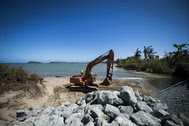
REISTERSTOWN, MD (January 11, 2023) — The Resilient Maryland Revolving Loan Fund Program (RLF Program), which will provide money to local governments to help pay for hazard mitigation projects, is now open. The program is administered by the Maryland Department of Emergency Management (MDEM), and the fund was created by legislation passed by the Maryland General Assembly and signed into law by Governor Larry Hogan. “This program is a prime example of a State, federal and local partnership,” said MDEM Secretary Russ Strickland. “Studies have shown that mitigation projects save an average of $6 in future recovery costs for every $1 spent. This program will help reduce costs to local governments and help them access federal grants to keep their communities safer and more resilient, which gets us closer to our vision of a more resilient Maryland where communities thrive.” The RLF Program provides funding to local governments to support proactive mitigation projects that reduce the negative effects of natural disasters and other crises. One of the key purposes of the program is to help local governments pay the federal cost–share requirements, which can strain local budgets for larger projects. The loans will have an interest rate of no more than one percent. Most importantly, the loan may be used as the non-federal cost share for other hazard mitigation grants. The RLF Program is designed to help local governments seeking loans and encourage partnerships between two or more entities to carry out projects. The program also aims to have at least 40 percent of the overall benefits generated from loan funds to flow to underserved communities. The Safeguarding Tomorrow through Ongoing Risk Mitigation (STORM) Act became law in January 2021 and authorized the Federal Emergency Management Agency (FEMA) to provide capitalization grants to states for the establishment of revolving loan funds that aid hazard mitigation. The Infrastructure Investment and Jobs Act provides funding of $500 million over five years, with $50 million appropriated for Federal Fiscal Year 2023. Local governments may obtain loans to carry out eligible projects that build resilience for homeowners, businesses, nonprofit organizations, and communities. Eligible projects may include mitigation of impacts from severe storms such as hurricanes, tornados, windstorms, and severe winter storms; drought and prolonged intense heat; and flooding, shoreline erosion, high water levels, and storm surges. The funds also can be used for zoning and land use planning and establishing and enforcing resilient building codes. There is no requirement for a presidential disaster declaration or for damages to have occurred. More information on the STORM Act can be found here: fema.gov/grants/mitigation/storm-rlf. Filing of a Notice of Intent (NOI) will be coordinated through the local emergency management office. For all inquiries, please email [email protected]. |
###
CONTACT:
Jorge Castillo, [email protected], 443-381-3518
Ed McDonough, [email protected], 410-446-3333
24/7 line: 877-636-2872
Maryland Travel Safety Week Begins as Holiday Travel Season Gets Underway
November 14th, 2022MDEM Reminds Travelers to “Know Before You Go”
Be Ready for Longer Travel Times
Comply With State’s New Move Over Law
|
REISTERSTOWN, MD (November 14, 2022) — As the busiest travel time of the year approaches, the Maryland Department of Emergency Management (MDEM) wants to make sure all Maryland residents are as safe as possible as they travel during this holiday season. MDEM’s Annual Maryland Travel Safety Week aims to ensure that residents are equipped with the latest travel safety information as we approach this busy time of the year. One important change for drivers is the revision to the State’s “Move Over Law,” which has been expanded to require motorists to make a lane change or slow down when approaching ANY stopped, standing, or parked vehicle displaying warning signals – including hazard warning lights, road flares, or other caution signals including traffic cones, caution signs, or non-vehicular warning signs. MDEM also reminds travelers that, regardless of their mode of transportation, they should remember to “Know Before You Go” and “If You See Something, Say Something.” “During this holiday travel season, we want to remind all Marylanders to be alert, prepared, and aware of their surroundings,” said MDEM Secretary Russ Strickland. “We would like everyone to have a safe holiday season. Taking the extra time to plan before your trip and also letting authorities know if you see something suspicious makes a big difference.” MDEM designated November 14-20 as Maryland Travel Safety Week in preparation of the beginning of holiday travel to encourage safe travel all year on all modes of transportation. MDEM encourages travelers to learn about safe travel practices whether using roads, air, or rail, and as pedestrians and bike riders. You should also be aware of safety at various types of lodgings and at gatherings. MDEM encourages Marylanders to review some of these simple practices recommended by safety specialists covering a variety of transportation methods. Know Before You Go — Do not head out for travel uninformed, unprepared, and hoping to learn about travel conditions and your destination while enroute. Check on road and traffic conditions along your route; check for last minute delays or cancellations before heading to the airport or train station; always check local weather forecasts to make sure you pack appropriate clothing and prepare for potential travel delays. If You See Something, Say Something — If you see a suspicious activity, device or package, or overhear a suspicious conversation, report it immediately to a facility manager, carrier employee, or law enforcement. If you see accidents or hazards along the roadway or hiking/biking trails, make sure to alert local law enforcement, highway officials, or parks employees so they can respond. |
Safety tips when traveling by motor vehicle
- Allow extra time for travel due to increased traffic and congestion.
- Stay alert and give driving your full attention.
- Show courtesy to other drivers, pedestrians, and cyclists.
- Don’t drive aggressively.
- Comply with traffic laws and heed all traffic signs, signals, and markings.
- Make sure all passengers are using seat belts and car seats properly.
- Make sure to have an emergency kit in your car with jumper cables, snacks, bottled water, and seasonally appropriate items like blankets, sand, or cat litter.
- Be especially careful in work zones and remember to always pull over one lane (if safely possible) or reduce speeds for ANY vehicle on the shoulder.
- Motorcycle drivers and passengers must wear U.S. DOT-approved helmets in many states, and must wear eye protection as well. Check regulations where you will be traveling.
Other information for safe travel on the roads is available from the Maryland Department of Transportation State Highway Administration or AAA Mid-Atlantic. For information about safety on Maryland toll roads, bridges, and tunnels, please visit the Maryland Transportation Authority. MDOT SHA also has motorcycle safety tips. For safety tips related to large commercial vehicles and intercity (non-transit) buses, please visit the Federal Motor Carrier Safety Administration.
Safety tips when traveling by taxi or rideshare
- Ask ahead for the typical price and tipping range.
- Call for a taxi instead of hailing one.
- If using a shared ride service like Uber or Lyft, make sure you verify the correct driver before getting into the car.
- Look for a meter, a radio, a badge, and a door handle.
- Sit in the backseat – not in the passenger seat.
- Keep expensive items hidden and keep your belongings close.
Here are taxi safety tips from the Travel Insurance Review and a link to the taxi riders consumer bill of rights from the Maryland Public Service Commission. Safety.com offers these tips for those using rideshare services, which often are not regulated in the same way as taxi services.
Safety tips when traveling by air
- Be on time, allow time to get through the security checkpoint, and build in time for possible schedule changes.
- Always stay alert and watch your bags and belongings.
- Don’t let anyone but uniformed airline personnel handle your bags.
- If you need help navigating the airport, check with the information desks or airport/airline employees.
- Be aware of what can and cannot be carried with your carry-on bags and luggage.
Other information for safe air travel can be found from Baltimore Washington International Thurgood Marshall Airport and the Transportation Security Administration.
Safety tips when traveling by railroad
- Always stay alert and watch your bags and belongings.
- Watch your step when boarding and leaving the train and moving from car to car.
- Never attempt to board or exit a moving train.
- Make sure you familiarize yourself with the safety card found in most seat backs.
- Arrive at least 30 minutes before your train is due to depart. Some stations require additional time.
- Report any suspicious behavior to police, station personnel, Amtrak Police, or by calling 1-800-331-0008.
More information about intercity rail travel safety can be found from Amtrak or the Amtrak Police. The Federal Railroad Administration has information for motorists and pedestrians at railroad crossings.
Safety tips when using public transportation (bus, subway, light rail, commuter rail)
- Check schedules ahead of time and leave sufficient time to make appropriate connections.
- Download apps that allow you to check arrival times and pay fares.
- Always keep jewelry and other valuables out of sight. If your pocket is picked, yell out immediately to warn others; don’t be afraid to shout. Tell the train or bus operator and request the police.
- Pay particular attention to your electronics, such as cell phones, tablets, and laptop computers.
- Use caution when on rail platforms and at bus drop-offs, especially when surfaces are wet or icy.
Here are some safety tips from Washington Metropolitan Area Transit Administration, which operates Metro bus and rail service in the Washington, D.C. area. Here are anti-theft tips from the Maryland Transit Administration, which operates bus, subway, and light rail service in the Baltimore metro area.
Safety tips for lodging facilities (hotels, motels, resorts, short-term, and vacation rentals)
- Stay in facilities that have hard-wired smoke alarms and an automatic fire sprinkler system in each guest room.
- Read the fire evacuation plan carefully.
- Find the two closest exits from your room.
- Count the number of doors between your room and the exits; this will assist you if you need to evacuate in the dark.
- Find the fire alarms on your floor.
- If the rental is a vacation or private home, make sure the facility has dead bolt locks on all doors and locking windows, and has appropriate fire, smoke, and carbon monoxide alarms.
- If a vacation or private home rental has a swimming pool, make sure someone is observing all swimmers and that proper safety equipment is available.
- Know the cancellation policy when making a reservation.
You can find additional safety tips for travelers staying at vacation and private home rentals from iPropertyManagement. You can find more hotel/motel safety tips from SmarterTravel.
Safety tips for pedestrians
- Use sidewalks and marked crosswalks whenever possible.
- Always stop at the curb and look left, right, and left again before crossing a street and watch for cars turning in or leaving driveways.
- Wear light or bright colored clothing or reflective items, especially before sunrise and after sunset.
- Pay attention and take off headphones while walking – no texting or playing games.
The MDOT State Highway Administration has more safety tips for pedestrians, as does the Federal Highway Administration.
Safety tips for those using bicycles
- Stop at all red lights and stop signs.
- Ride defensively – expect the unexpected.
- Ride with traffic, never against it.
- Use hand signals when turning or stopping.
- Stay visible when riding at night and during inclement weather.
- Wear a helmet correctly.
MDOT State Highway Administration has additional bicycle safety tips, as does the Federal Highway Administration.
Safety tips for traveling on the water
Whether piloting your own recreational boats or traveling on a passenger vessel (cruise ship or ferry), here are some important safety tips:
- Check weather forecasts for approaching fronts or storm watches. By the time a storm or gale warning is issued, it might be too late to get to a safe harbor.
- Never allow passengers to ride on the bow, gunwale, transom, seat backs, or other spots where they might fall overboard.
- Wear your engine cut-off switch lanyard and your life jacket at all times. If the lanyard is removed from the switch, the engine will not shut off.
- Children under 13 must wear a United States Coast Guard approved Personal Flotation Device (PFD) while underway on a recreational vessel under 21 feet in length.
- For maximum safety, all persons on recreational boats should wear an approved PFD.
- On passenger vessels, follow all safety directions, read prepared safety material, and participate in all life safety drills.
The Maryland Department of Natural Resources has specific information for recreational boats traveling in Maryland waters, including kayaks and rowboats. The United States Coast Guard also has boater safety information. The Maryland Port Administration has information for people traveling out of the Baltimore cruise ship terminal. The Cruise Critic also has some tips for traveling safely on cruise ships.
###
CONTACT:
Jorge Castillo, [email protected], 443-381-3518
Ed McDonough, [email protected], 410-446-3333
24/7 line: 877-636-2872
Maryland Receives $10.87 Million in Federal Funds from Homeland Security Grant Program to Enhance State, Local Preparedness Funds Assist with Homeland Security Protection
October 28th, 2022|
REISTERSTOWN, MD (October 28, 2022) — The Maryland Department of Emergency Management (MDEM) has distributed more than $10.87 million to prepare State and local governments against terrorist attacks. The State award was issued in May by the U.S. Department of Homeland Security (DHS), and MDEM recently announced its distribution to partners in Maryland. “The safety of Maryland and the protection of our residents is a top priority for MDEM, and federal funding is vital to help our State and its local jurisdictions to remain prepared against terrorist attacks,” said MDEM Secretary Russ Strickland. “This grant will fund capability-building at the state and local government level by enhancing planning, organizing, training, and equipment purchase while improving emergency managers’ response.” The Homeland Security Grant Program (HSGP) includes a group of risk-based grants to assist State, local, tribal and territorial efforts in preventing, protecting against, mitigating, responding to, and recovering from acts of terrorism and other threats. These grants provide recipients with the resources required for implementation of the National Preparedness System and working toward the goal of a secure and resilient nation. The recent distribution by MDEM includes more than $7 million in State Homeland Security Grant Program (SHSP) funds distributed across the State and another $3.8 million in Urban Area Security Initiative (UASI) funds distributed to jurisdictions in the Baltimore metro area. Jurisdictions in the National Capital Region receive money from a different UASI fund that is administered by that region. Distributions are based on population and the location of critical infrastructure, among other factors. UASI allocations are decided by a working group of emergency management professionals and other officials in those areas. This year’s HSGP grants were more than $1.12 billion nationwide. For more information about the program, visit www.fema.gov/grants/preparedness/homeland-security |
Jurisdiction |
UASI |
SHSP |
| Allegany | $166,946.00 | |
| Annapolis | $467,779.23 | $148,541.00 |
| Anne Arundel | $391,751.41 | $347,886.00 |
| Baltimore City | $530,945.42 | $797,328.00 |
| Baltimore | $331,244.42 | $445,596.00 |
| Calvert | $93,380.00 | |
| Caroline | $98,205.00 | |
| Carroll | $353,016.42 | $144,564.00 |
| Cecil | $123,786.00 | |
| Charles | $103,026.00 | |
| Dorchester | $95,864.00 | |
| Frederick | $158,887.00 | |
| Garrett | $87,042.00 | |
| Harford | $358,063.69 | $141,802.00 |
| Howard | $453,199.41 | $248,653.00 |
| Kent | $93,472.00 | |
| Montgomery | $100,000.00 | $528,781.00 |
| Ocean City | $105,876.00 | |
| Prince George’s | $546,304.00 | |
| Queen Anne’s | $161,218.00 | |
| St. Mary’s | $100,582.00 | |
| Somerset | $89,428.00 | |
| Talbot | $91,026.00 | |
| Washington | $190,237.00 | |
| Wicomico | $107,156.00 | |
| Worcester | $87,467.00 | |
| Baltimore Metropolitan Council | $160,000.00 | $0.00 |
SUB TOTAL |
$3,146,000.00 |
$5,303,053.00 |
GRAND TOTAL Including MDEM Admin and Operational Costs |
$3,800,000.00 |
$7,074,841.00 |
NOTE: The difference between the totals at the top and the totals at the bottom are monies used by MDEM to cover administrative and operational costs.
###
CONTACT:
Jorge Castillo, [email protected], 443-381-3518
Ed McDonough, [email protected], 410-446-3333
24/7 line: 877-636-2872
Maryland Department of Emergency Management Receives $693,000 Grant to Help Partners Prevent Targeted Violence and Terrorism
September 16th, 2022DHS Administered Program Helps State and Local Agencies Work with Academic Institutions, Private Sector, Nonprofits
|
REISTERSTOWN, MD (September 16, 2022) — The Maryland Department of Emergency Management (MDEM) has received a Targeted Violence and Terrorism Prevention (TVTP) grant of $693,000 to help community partners build capacity to keep Marylanders safe. The grant will cover activities from Oct. 1, 2022 to Sept. 30, 2024. “The TVTP grant provides the funding that will improve our understanding of targeted violence aimed at public spaces where Marylanders gather every day. It will also fund the risk assessment tools needed to develop strategies that will improve the security and protection of these gathering sites,” said MDEM Secretary Russ Strickland. “This grant will allow us to work with other State and local agencies, academic partners, and the private and nonprofit sectors to give communities the tools to help prevent and protect against these attacks.” The grant funds will be used to help determine best practices and identify locally based strategies to address radicalization and targeted violence and extremism. They will also fund strengthening threat assessment and management capabilities of local jurisdictions by developing a threat assessment framework to enhance existing capabilities or establish them where they don’t exist. The TVTP Grant Program is administered by the U.S. Department of Homeland Security (DHS) and provides funding for State, local, tribal, and territorial governments, nonprofits, and institutions of higher education with funds to establish or enhance capabilities to prevent targeted violence and terrorism. Developing local prevention capabilities is a key element of Goal 3 of the Strategic Framework to Counter Terrorism and Targeted Violence. The TVTP Grant Program provides assistance to implement that goal and develops innovative solutions to prevent targeted violence and terrorism. DHS has more information about the TVTP Grant Program at www.dhs.gov/tvtpgrants. |
###
CONTACT:
Jorge Castillo, [email protected], 443-381-3518
Ed McDonough, [email protected], 410-446-3333
24/7 line: 877-636-2872
MDEM Coordinates Deployment of 11 Local Utility Workers to Provide Mutual Aid to Jackson, MS
September 15th, 2022Washington Suburban Sanitary Commission Water and Anne Arundel County Employees Help Repair Water System Using National Emergency Management Assistance Compact
|
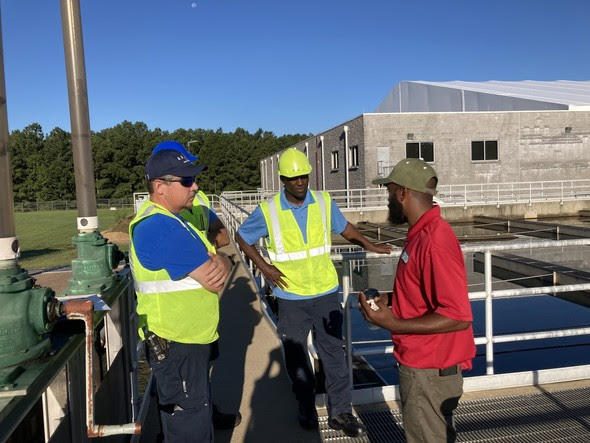
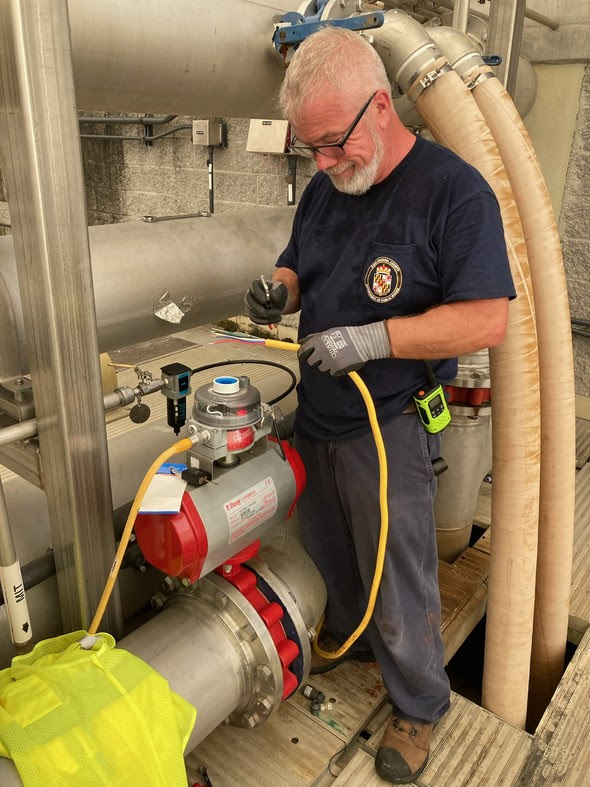
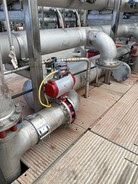 REISTERSTOWN, MD (September 15, 2022) — The Maryland Department of Emergency Management (MDEM) has helped to coordinate the deployment of utility workers from Maryland to assist with mitigating the water plant issues in Jackson, MS. The deployment was coordinated using the Emergency Management Assistance Compact (EMAC), a nationwide system that facilitates the sharing of resources between states during an emergency. REISTERSTOWN, MD (September 15, 2022) — The Maryland Department of Emergency Management (MDEM) has helped to coordinate the deployment of utility workers from Maryland to assist with mitigating the water plant issues in Jackson, MS. The deployment was coordinated using the Emergency Management Assistance Compact (EMAC), a nationwide system that facilitates the sharing of resources between states during an emergency.
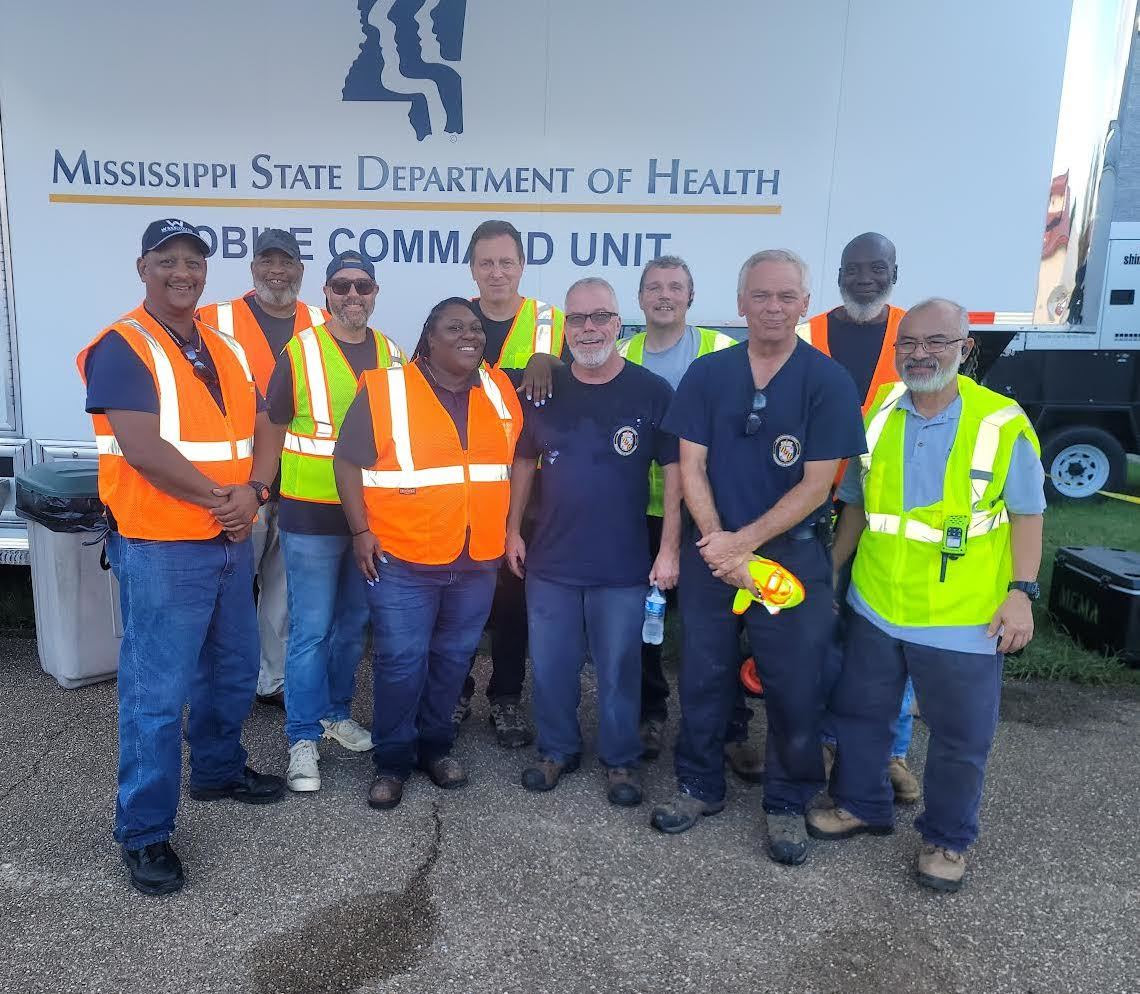
In all, 11 Maryland workers are assisting in Jackson, 7 from the Washington Suburban Sanitary Commission Water (WSSC Water) and 4 from the Anne Arundel County Department of Public Works. The group includes Class A surface water and membrane operators, instrument technicians, licensed electricians, mechanics, general maintenance workers, and an emergency management specialist. “Throughout our nation, states have never hesitated to support their counterparts when they are in times of crisis.” said MDEM Secretary Russ Strickland. “It is important that we continue to help other communities when they need it the most. I want to thank the Washington Suburban Sanitary Commission and Anne Arundel County for stepping up to the plate to help with what has become a humanitarian crisis in Jackson.” Recent heavy rains caused the Pearl River to overflow its banks, causing serious flood damage in Jackson and disrupting the water distribution system in the city of about 150,000 residents. However, the city’s aging water infrastructure was having issues before the recent flood. The team from Maryland joins utility specialists from other states and local workers to help repair the storm damage so the plant can again begin serving its residents. Those currently deployed will remain in Jackson until September 20, and the city, through the Mississippi Emergency Management Agency, may request additional EMAC resources to replace them. The employees from WSSC Water include Brandon Brown, Sade Dunnock, Thomas Lilly, David McDonough, Stanley Pearson, James Price, and Zechary Windsor. The Anne Arundel employees are Philip Daley, Vincent-Dang Nguyen, Robert Swann, and Edwin “Chip” Yuniga. EMAC, considered the all-hazards national mutual aid system, has been ratified by the U.S. Congress and is law in all 50 states, the District of Columbia, Puerto Rico, Guam, the U.S. Virgin Islands, and the Northern Mariana Islands. Through EMAC, states can share resources from all disciplines, protect personnel who deploy, and be reimbursed for mission-related costs. To learn more about EMAC, visit https://www.emacweb.org/
|
###
CONTACT:
Jorge Castillo, [email protected], 443-381-3518
Ed McDonough, [email protected], 410-446-3333
24/7 line: 877-636-2872
State of Maryland Provides Security Grant Funding to Nonprofits
August 30th, 2022Through Relief Fund Act of 2021, Federal Government, Maryland, Continue to “Shape a More Resilient Maryland Where Communities Thrive”
REISTERSTOWN Md. (August 30, 2022) — The Maryland Department of Emergency Management (MDEM) announced awards totaling more than $8.7 Million in federal homeland security grant funds to 68 nonprofit organizations around Maryland. The awards are funded by the United States Department of Homeland Security (DHS) 2022 Nonprofit Security Grant Program (NSGP).
“This funding provides much needed financial support to nonprofit groups, which are part of the fabric of American life,” said MDEM Secretary Russ Strickland. “In a time of increasing threats to members of faith-based communities, houses of worship, and schools across the United States, these grants provide the funding to secure public spaces where Marylanders gather every day and will help prevent or minimize the consequences of any possible attack.”
These grant programs are part of a comprehensive set of measures authorized by Congress and implemented by DHS to help strengthen the nation’s communities against potential terrorist attacks. Funding can be used for contracted security personnel, as well as security-related planning, exercises, training, and the acquisition and installation of security equipment on real property (including buildings and improvements) owned or leased by the nonprofit organization. The grants are being provided to 68 nonprofits around the State out of 115 applicants.
The NSGP provides $250 million nationally in funding support for hardening and other physical security enhancements to nonprofit organizations that are at high risk of terrorist attack. The intent of the competitively awarded grant funding is to assist organizations in obtaining the resources required to support and integrate preparedness activities with broader state and local preparedness efforts. It is also designed to promote coordination and collaboration in emergency preparedness activities among public and private community representatives, as well as state and local government agencies.
The following is a list and breakdown of the Maryland nonprofit organizations that applied for and received NSGP awards. NSGP awards for nonprofits in the National Capital Region (NCR) are not processed by MDEM.
Awardees
NSGP – State Allotment – $2,098,727
| Temple Bat Yam | $98,995 |
| Temple B’nai Israel | $75,000 |
| Sacred Monastery of Saint Nina, Inc. | $130,000 |
| Williamsport Church of God | $150,000 |
| Redeeming Grace Baptist Church | $26,907 |
| Chesapeake Church | $128,099 |
| Beth Sholom Congregation | $150,000 |
| Shoresh, Inc. | $150,000 |
| Calvary Assembly of God, Inc. | $150,000 |
| Islamic Society of Frederick, Incorporated | $150,000 |
| St. John Regional Catholic School | $95,000 |
| TidalHealth Peninsula Regional | $150,000 |
| The Banner School | $150,000 |
| Atlantic General Hospital | $134,843 |
| Pittsburgh Institute of Aeronautics | $30,517 |
| Mother Seton School Inc | $150,000 |
| Bishop Walsh School | $147,366 |
| Covenant Family Chapel | $32,000 |
Baltimore Urban Area Allotment – $6,672,708
| Agudath Israel of Baltimore | $150,000 |
| Bais Yaakov School For Girls (1) | $150,000 |
| Baltimore Hebrew Congregation | $150,000 |
| Beth Am In-town Synagogue | $150,000 |
| Beth Tfiloh | $150,000 |
| Bais Yaakov School for Girls (2) | $150,000 |
| B’Nai Israel Congregation Cemetery | $89,550 |
| B’nai Israel Congregation of Baltimore | $150,000 |
| Bnos Yisroel of Baltimore | $150,000 |
| Bolton Street Synagogue | $74,731 |
| Chabad Israel Center of Baltimore | $150,000 |
| Chabad Lubavitch of Hunt Valley | $150,000 |
| Chabad of Towson | $150,000 |
| Cheder Chabad Inc. | $150,000 |
| Chizuk Amuno Congregation | $150,000 |
| Congregation Beit Yaakov | $150,000 |
| Congregation Shomrei Emunah Inc. | $150,000 |
| Congregation of Kol Shalom | $150,000 |
| Darchei Noam Montessori | $150,000 |
| Edward Myerberg Senior Center | $150,000 |
| Faith Christian Fellowship Church | $19,000 |
| Grace Bible Baptist Church | $107,575 |
| Har Sinai-Oheb Shalom Congregation | $150,000 |
| Institute For Islamic, Christian Jewish Studies | $110,577 |
| Islamic Society of Baltimore | $147,257 |
| Jewish Community Center of Greater Baltimore | $149,985 |
| Jewish Community Center of Greater Baltimore | $149,974 |
| Mesivta Kesser Torah of Baltimore | $150,000 |
| Mt. Olive Methodist Church | $136,000 |
| Ner Israel Rabbinical College | $150,000 |
| Ohr Chadash Congregation | $150,000 |
| Ohr Hatorah Inc. | $61,530 |
| Owings Mills Synagogue Inc. | $150,000 |
| Pikesville Jewish Congregation | $109,200 |
| Resurrection St. Paul School | $139,560 |
| Saint Agnes Catholic Congregation | $68,717 |
| Saint Isaac Jogues Catholic Church | $141,227 |
| St. Agnes Catholic School | $139,971 |
| St. Constantine & Helen Greek Orthodox Church | $147,097 |
| St. Mary’s Roman Catholic Church | $150,000 |
| St. Michael-St. Clement School Willow | $120,886 |
| St. Paul Church | $148,943 |
| Star-K Certification Inc. | $150,000 |
| Suburban Orthodox Congregation Toras Chaim | $75,000 |
| Talmudical Academy of Baltimore | $150,000 |
| Temple Beth Sholom of AA County | $150,000 |
| The Jewels School | $105,000 |
| Trinity Assembly of God | $80,928 |
| Yeshivas Lubavitch of Baltimore | $150,000 |
| Yeshivas Toras Simcha | $150,000 |
Grand Total $8,771,435
MDEM Reminds You September is National and Maryland Preparedness Month
August 29th, 2022This Year’s Theme is The Life You’ve Built is Worth Protecting; Prepare for Disasters to Create a Lasting Legacy for You and Your Family
REISTERSTOWN, Md. (August 29, 2022) — September is National and Maryland Preparedness Month, and the Maryland Department of Emergency Management (MDEM) asks all Marylanders and visitors to the State to be prepared for all emergencies. The Atlantic hurricane season runs from June 1 to November 30, with peak season occurring between mid-August and late October.
“Preparedness Month is our annual reminder to make sure you are prepared for emergencies. It takes just one storm to change your life,” said Russ Strickland, Secretary of the Maryland Department of Emergency Management. “Being prepared for more common emergencies, like power outages and fires, will also help you recover better from floods, tornadoes, hurricanes, and other incidents.”
Preparing in advance of an emergency is one of the best ways to protect your family from the financial and emotional effects of a disaster. Flooding is the most common hazard in Maryland, and tornadoes, severe storms, dangerous heat, and severe winter storms are among some of the other potential hazards. The best financial protection is to be properly insured, whether you own or rent. And remember flood damage is typically not covered by your property insurance.
MDEM will be having different themes each week in September to emphasize various aspects of being prepared:
Week 1 September 1-4: Make A Plan and Sign Up for MdReady or MdListo (en español)
Talk to your friends and family about how you will communicate before, during, and after a disaster. Check out MdReady.Maryland.gov to sign up for alerts. Since September coincides with the height of the hurricane season in Maryland, it’s important to be ready for hurricane-related hazards, such as flooding, high winds, and tornados. All of these hazards can affect the State even without a hurricane. It is important to have a family emergency plan, to have an emergency supply kit, and to be aware of the hazards that may affect you and the ones you care most about.
Week 2 September 5-11: Build A Kit
Gather supplies that will last for several days after a disaster for everyone living in your home. Remember to consider the unique needs each person or pet may have in case you have to evacuate quickly. Update your kits and supplies based on recommendations by the Centers for Disease Control. Also consider kits for your car, office, and dorm room. www.mdem.maryland.gov/Pages/Disaster-Supply-Kit.aspx
Week 3 September 12-18: Prepare to Protect
Limit the impacts that disasters have on you and your family. Know the risks of disasters in your area and check your insurance coverage. Learn how to make your home stronger in the face of storms and other common hazards, and act fast if you receive a local warning or alert. Visit www.ready.gov/videos#npm
Week 4 September 19-25: Personal Disaster Preparedness for People with Disabilities and Functional Access Needs
For people with disabilities and their families, it is important to consider individual circumstances and needs to effectively prepare for emergencies and disasters. Also remember to include older adults, children, and pets in your planning. VIsit www.ready.gov/disability-toolkit
Week 5 September 26-30: Teach Youth About Preparedness
Talk to younger people about preparing for emergencies and what to do in case you are separated. Reassure them by providing information about how they can get involved. Visit www.ready.gov/kids/prepare-your-family
As part of Preparedness Month, MDEM will participate in several activities. On Sept. 1 at 7:00 p.m., MDEM will host a Facebook Live with Chris Strong from the National Weather Service Baltimore-Washington Forecast Office to discuss the outlook for the remainder of the 2022 Atlantic hurricane season. At noon on Sept. 8, MDEM will join the Maryland Insurance Administration for a “Lunch with MIA” Facebook Live to discuss preparedness.
Throughout the month, MDEM staff members will share their own preparedness tips on our social media platforms, and on Throwback Thursdays we will highlight past MDEM Preparedness videos.
If you live near the ocean, the Chesapeake Bay, or its tributaries, it also is important to understand Maryland’s Know Your Zone hurricane evacuation plan. To learn more about the program and hurricane preparedness in Maryland, visit KnowYourZoneMD.com .
You can learn more about being prepared for any hazard from MDEM, the Federal Emergency Management Agency, the National Weather Service or the American Red Cross.
MDEM leadership and communications staff are available for interviews for media outlets and public affairs shows throughout the month. Please contact Jorge Castillo or Ed McDonough (contact below) for arrangements.
Deputy Executive Director from Department of Emergency Management Selected for Inaugural FEMA Exchange Program
July 12th, 2022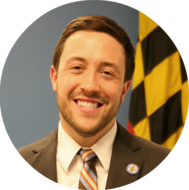
REISTERSTOWN, MD (July 12, 2022) — Maryland Department of Emergency Management (MDEM) Deputy Executive Director Chas Eby has been selected to be one of the first participants in the new Federal Emergency Management Agency (FEMA) Exchange Program. Eby will be working with FEMA leadership in Washington, DC through the end of the year to implement programs to deliver disaster recovery assistance to survivors and communities. “I am honored to represent my home State in this new initiative to strengthen the field of emergency management,“ said Eby. “This is an opportunity to join best practices developed in Maryland with innovative programs FEMA is advancing.” Eby is one of four individuals selected nationwide to the first cohort of this program. According to FEMA, the exchange program will provide an avenue to strengthen FEMA’s partnerships with state, territory, tribal, and local emergency managers to increase community resilience against disasters. “This is a great opportunity for Chas and Maryland,” said Secretary of Emergency Management Russ Strickland. “He will bring excellent knowledge of state emergency management operations along with his exceptional collaboration skills to the program. Our department is proud of his selection and proud to be a national leader in our field .” Eby has worked at the Department of Emergency Management for eight years, overseeing all programs, administration, and emergency operations in his current role. He holds a Master of Arts degree in Security Studies from the Naval Postgraduate School. Eby has completed the FEMA National Emergency Management Executive Academy and a fellowship with the Johns Hopkins University Center for Health Security. He is from and resides in the City of Baltimore. You can find more information about FEMA’s Emergency Manager Exchange at fema.gov/partnerships/emergency-manager-exchange. |
###
CONTACT:
Jorge Castillo, [email protected], 443-381-3518
Ed McDonough, [email protected], 410-446-3333
24/7 line: 877-636-2872
Looking Back: The 50th Anniversary of Hurricane Agnes
June 22nd, 2022| Lessons Learned Help Prepare Maryland for Future Storms
REISTERSTOWN, Md. (June 22, 2022) — This June marks the 50th anniversary of Hurricane Agnes striking Maryland and cutting a devastating path across much of the East Coast. According to the National Weather Service, Agnes was one of the most destructive hurricanes in United States history, claiming 117 lives and causing damage estimated at $3.1 billion in 12 states. Damage was particularly high in New York, Pennsylvania, Maryland, and Virginia. In Maryland, 21 lives were lost to flooding spawned by the remnants of Agnes, and it remains the deadliest named storm in state history. Agnes highlights the inland flooding threats from tropical storms, which often claims more lives and causes more damage than the high winds and storm surge where the storms make landfall. “Agnes highlighted the dangers of inland flooding in Maryland from tropical storms,” said Maryland Department of Emergency Management Secretary Russ Strickland. “The aftermath of Agnes also has shown the importance of mitigating future flood events. In downtown Frederick, for example, the Carroll Creek flood mitigation project has reduced flooding in the area and has created a walkable greenspace that enhances the business district.” The storm made landfall on the Florida panhandle as a weak hurricane and quickly dropped to a tropical storm while heading northeast through Georgia, South Carol, and North Carolina. The storm headed out to sea at the North Carolina-Virginia border as it began to affect the mid-Atlantic. For the next two days, the center of the storm traveled along the Maryland, Delaware, and New Jersey coast line, dumping heavy rains in areas west of the storm track. Agnes made landfall again over Long Island and eventually into southeast New York state on the night of June 22, and then was joined by a low-pressure system. This created two storm centers, one of which moved into south central New York, and another that formed in northeastern Pennsylvania before looping southwest into central Pennsylvania. Not only did the storm drop heavy rain on Maryland as it moved up the coast, but the heavy rains in central New York and Pennsylvania caused heavy flooding in northeast Maryland from the Susquehanna River watershed several days later. Want to learn more about the history of Agnes and some of the ways it changes flood mitigation and emergency management? A website focusing on the history of the storm and flood mitigation effort has been created by several Silver Jackets teams in the mid-Atlantic region. Silver Jackets are state-based teams of State, local and federal partners who work together to reduce risks from floods and other weather-related events. The National Weather Service also has a page dedicated to historical events related to Hurricane Agnes. Hurricane Agnes was a costly but valuable lesson in emergency preparedness. This hurricane season, keep yourself and your family safe by learning about the following preparedness steps. Know Your Zone: It’s as easy as A-B-C. Know Your Zone is a new color-coded interactive map you can use to determine which storm evacuation zone you live in based upon your street address. Knowing your zone will help you avoid unnecessary evacuation travel, thereby reducing highway congestion, easing overcrowding at local storm shelters and boosting public safety. Simply click the ‘Find Your Zone” button. Enter your address on the map and view your color-coded evacuation zone. Emergency managers will work with local media and use social media and other tools to notify residents of impacted zones and what to do to stay safe. You can learn more and find your Zone here: bit.ly/-Know-Your-Zone |
Make a Plan:
- Prepare an emergency kit and create a family communications plan.
- Have multiple ways to receive weather watches and warnings and keep devices charged so they will still be usable for several hours if you lose power.
- Familiarize yourself with hurricane evacuation routes in your area and how to find higher ground. Determine where you would go and how you would get there if you needed to evacuate.
- Trim the trees and shrubs around your home to make them more wind resistant.
- Clear loose and clogged rain gutters and downspouts.
- Bring in all outdoor furniture, decorations, garbage can, and anything else that is not tied down.
- Consider installing a generator for emergency backup power generation.
You can learn more about what to do Before, During, and After a Hurricane here: bit.ly/-Before-During-After
Create a Kit:
Make sure your emergency kit is stocked with the items on the checklist below. Most of the items are inexpensive and easy to find, and any one of them could save your life.
To prepare your kit, gather the following supplies:
- Food
- Water
- First Aid Kit
- Tools and Supplies
- Sanitation
- Clothing & Bedding
- Special Items for children, older adults, those with special needs and pets.
You can learn more about building a Disaster Kit here: bit.ly/-Build-A-Kit
NOTE: Emergency Management staff will be available for media interviews to discuss Hurricane Agnes and its aftermath over the next several days,
###
CONTACT:
Jorge Castillo, [email protected], 443-381-3518
Ed McDonough, [email protected], 410-446-3333
24/7 line: 877-636-2872