
Press Releases
February 7, 2025
PHOTO RELEASE: Governor Moore Inducts Deford Family into Governor’s Agriculture Hall of Fame

Night Also Highlights Agricultural Products During Taste of Maryland Ag
ANNAPOLIS, MD (February 7, 2025) — Governor Wes Moore has inducted the Deford Family of Baltimore County into the Governor’s Agriculture Hall of Fame during the 55th Annual Taste of Maryland Agriculture event, held Thursday, February 6 at Maryland Live! Casino and Hotel.
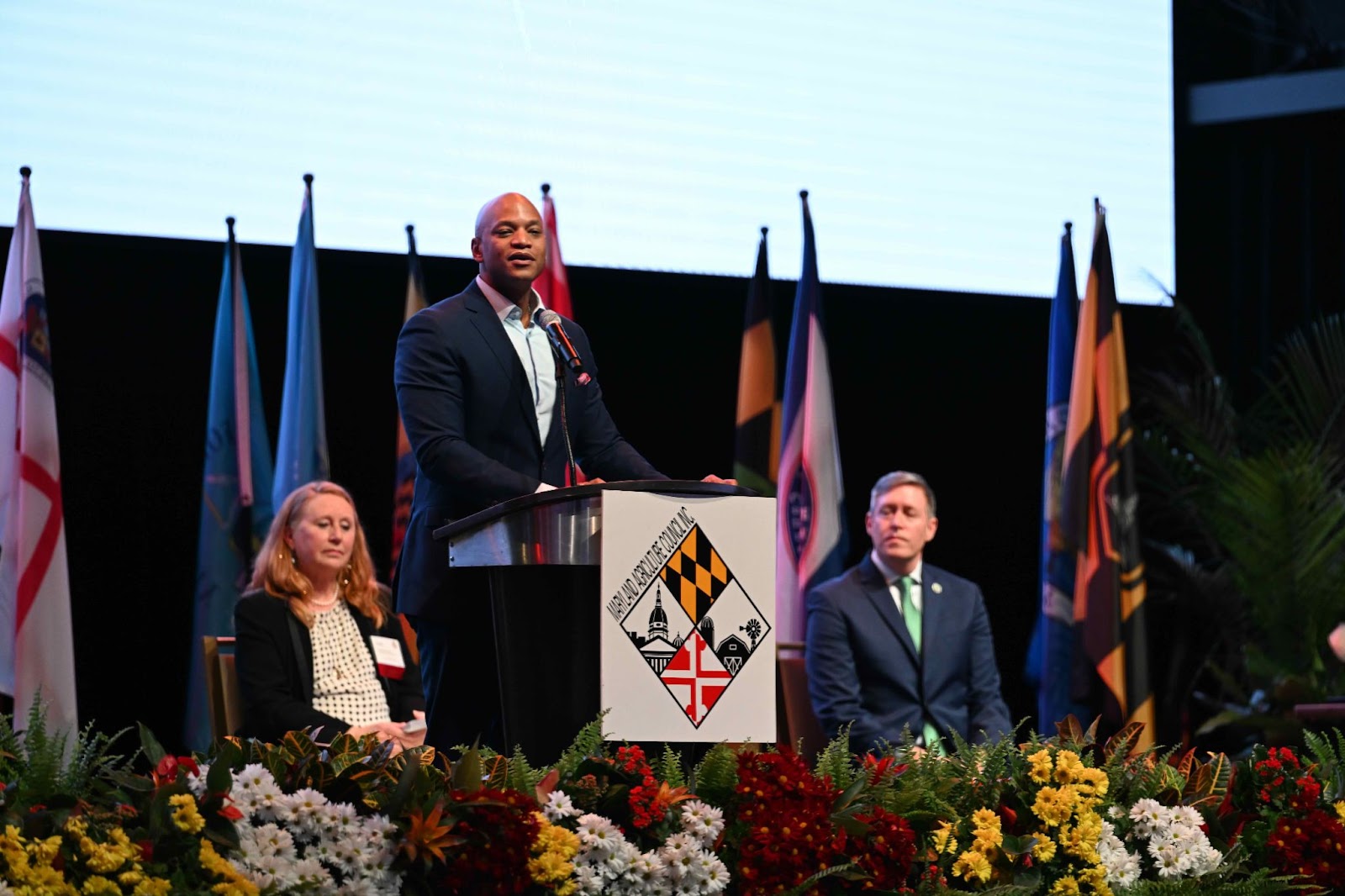
(L to R: Dr. Faith Elliott Rossing, President of the Maryland Agriculture Council; Governor Wes Moore; Maryland Department of Agriculture Secretary Kevin Atticks. Photo credit: Joe Andrucyk)
“There is no Maryland without Maryland agriculture. That’s why my administration is committed to investing in the people who keep us fed, protect the environment, and grow our economy,” said Gov. Moore. “This year, I am excited to welcome the Deford family into the Governor’s Agriculture Hall of Fame. This has been a challenging season for our farmers. The Deford family continues to model what it looks like to confront crisis with courage – and the whole of Maryland is better because of it.”
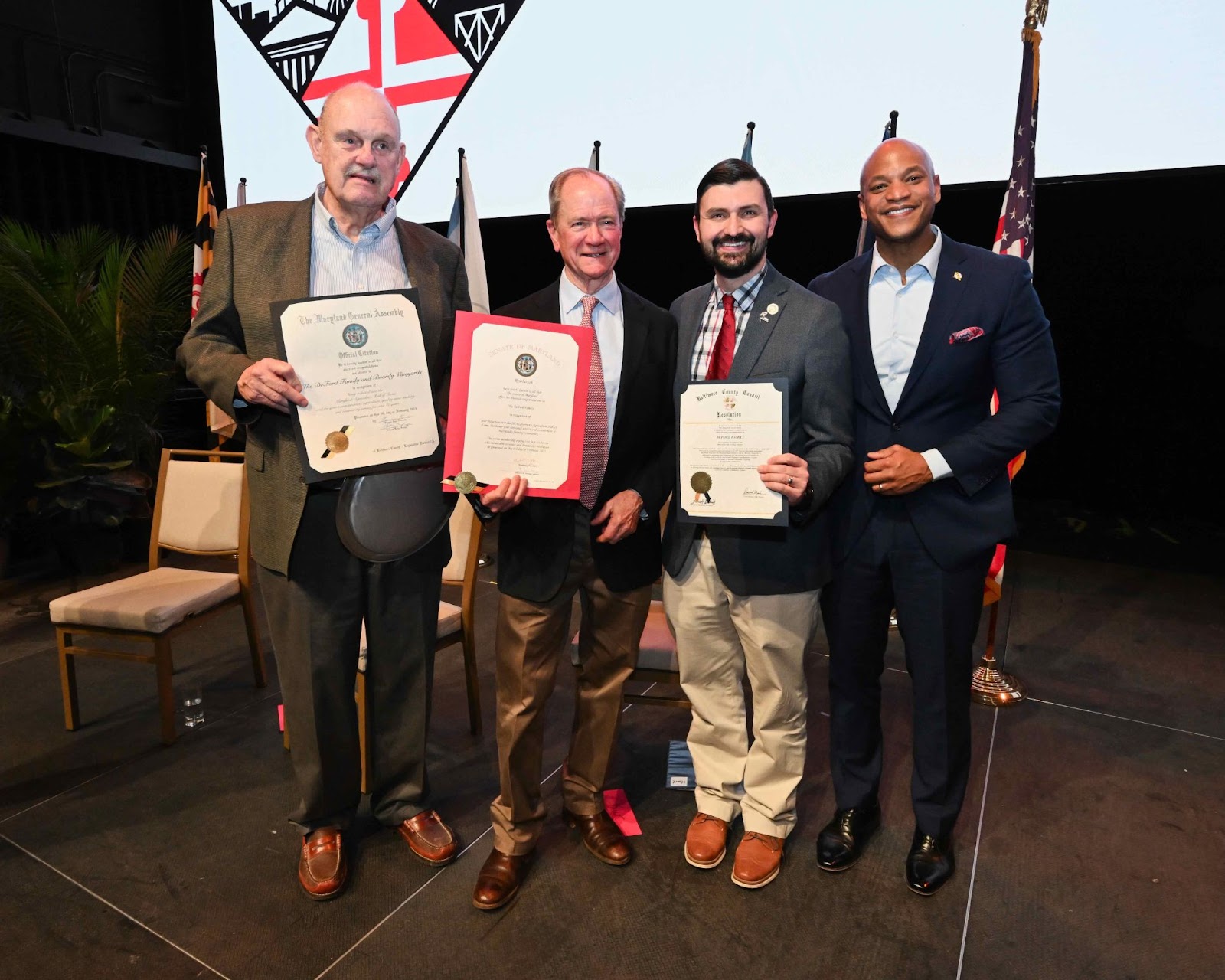
(L to R: Jonathan Deford, Rob Deford, Delegate Ryan Nawrocki (District 7A-Baltimore County), Governor Wes Moore. Photo credit: Joe Andrucyk)
Created by former Governor William Donald Schaefer in 1991, the Governor’s Agriculture Hall of Fame honors agricultural leaders who exemplify high standards of achievement and commitment to the industry and their communities. Nominations are accepted at local University of Maryland Extension offices in the late summer and submitted to the Maryland Department of Agriculture’s Governor’s Agriculture Hall of Fame Program coordinator in the fall.
“The Defords continue to be prime examples of what Maryland agriculture looks like,” said Secretary Kevin Atticks. “From their ingenuity in embracing new technologies in agriculture to remaining exceptional stewards of the land, the Defords have earned this prestigious honor.”
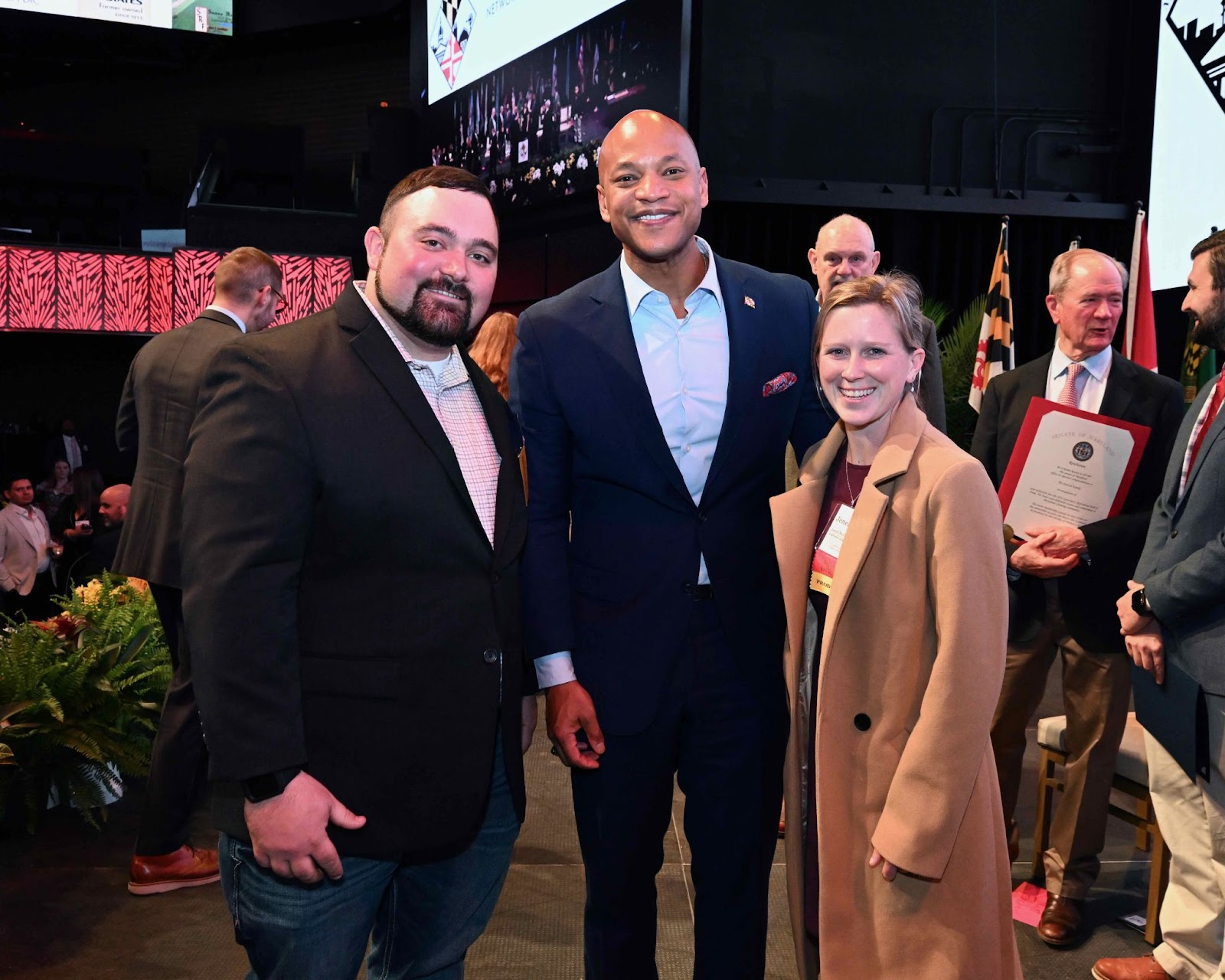
(L to R: Joey McHenry, Governor Wes Moore, and Jenell McHenry attending the 55th Annual Taste of Maryland Ag event on February 6, 2025. Photo credit: Joe Andrucyk)
The Taste of Maryland Agriculture celebration, sponsored by the Maryland Agriculture Council, is the state’s premier agricultural event, bringing industry leaders together with state and national legislators.
The event featured a bounty of Maryland agricultural products served throughout the evening, including food and tastings from the state’s beer, wine and cidery supporters. In addition to the induction of the Governor’s Agriculture Hall of Fame family, 11 outstanding programs received Maryland Agriculture Council Educational Grants during the program.
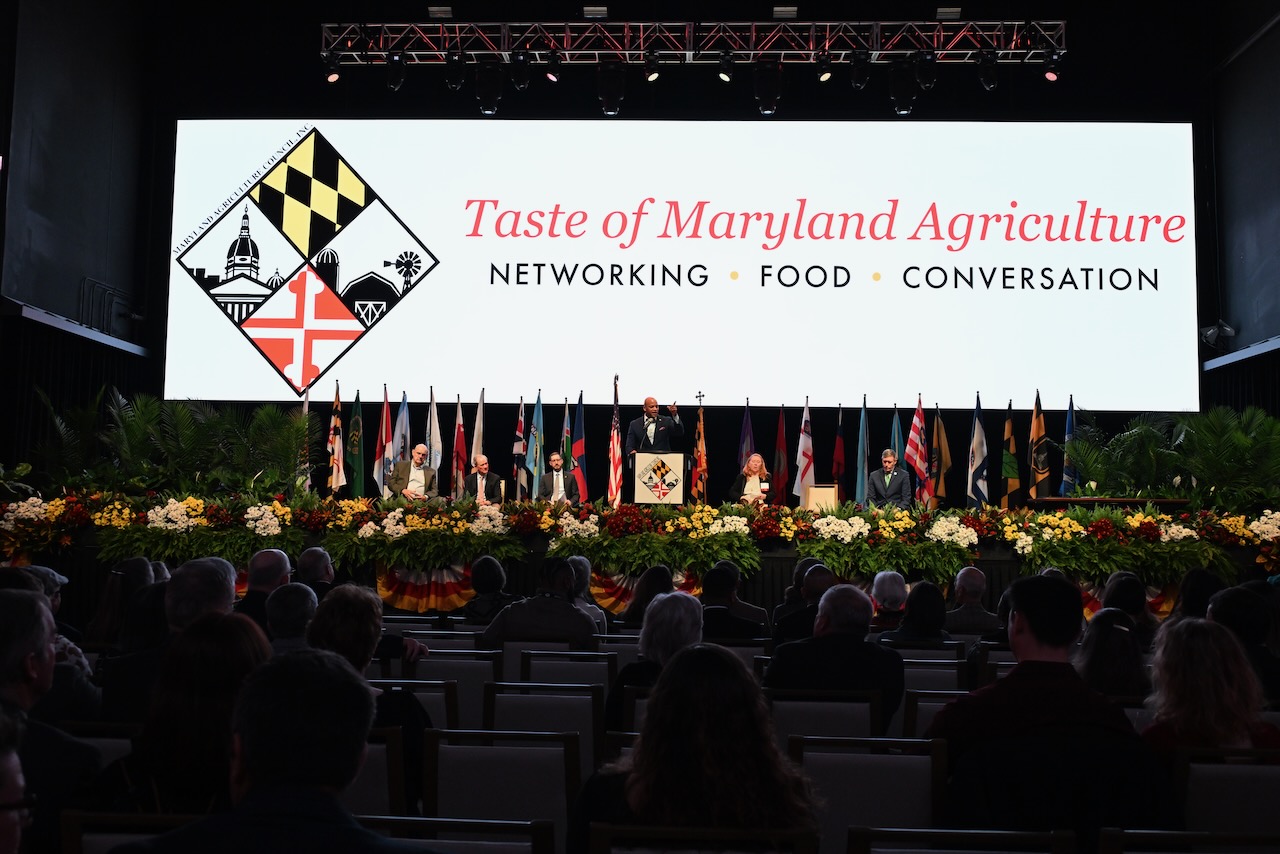
The Deford family is the 56th inductee in the Governor’s Agriculture Hall of Fame. More information on each hall of fame family is available on the department’s website. For more pictures of the event please visit this link.
# # #
Follow Maryland Department of Agriculture on Facebook @MdAgDept
February 6, 2025
150th Episode of Maryland Farm & Harvest Visits Frederick, Howard, and Prince George’s Counties and Baltimore City on February 11

ANNAPOLIS, MD (February 6, 2025)– Maryland Public Television’s (MPT) original series Maryland Farm & Harvest, now in its 12th season, will feature farms and locations in Frederick, Howard, and Prince George’s counties and Baltimore City during an episode premiering on Tuesday, February 11. This marks the popular TV series’ 150th episode since its debut on the statewide public TV network in 2013.
Since then, more than 16 million viewers have watched Maryland Farm & Harvest on-air and via MPT’s streaming platforms. The series has traveled to more than 500 farms, fisheries, and other agriculture-related locations during its 11-plus season run, covering every Maryland county, as well as Baltimore City and Washington, D.C.
Maryland Farm & Harvest airs on Tuesdays at 7 p.m. on MPT-HD and online at mpt.org/livestream. Episodes are also available to view live and on demand using the free PBS app and MPT’s online video player. A preview of the new episode can be found on the series’ webpage at mpt.org/farm.
The popular weekly series takes viewers on a journey across the Free State, telling engaging and enlightening stories about the farms, people, and technology required to sustain and grow agriculture in Maryland, the state’s number one commercial industry.
With introductions filmed at Willowdale Farm in Reisterstown (Baltimore County), the February 11 episode features the following stories:
-
Libertas Estates (Frederick and Howard counties) – After a vineyard became besieged by spotted lanternflies, an unlikely hero waddled to the rescue. Viewers join Michael J. Raupp, Ph.D., professor emeritus, University of Maryland, on a survey of the spotted lanternfly population around Lake Kittamaqundi in Columbia. Then, James Ewing, farm manager at Libertas Estates Winery in Mt. Airy, shows how he’s been able to limit the presence of the invasive species by enlisting the help of an army of Indian runner ducks.
-
OlaLekan Farm (Prince George’s County) – From growing ginger to okra, peppers, and other staples, 26-year-old Tolu Igun is on a mission to make fresh and culturally rich foods accessible to her neighbors while fostering a farming community of her own. Having established Olalekan Farm at the Urban Farm Incubator at Watkins Regional Park in Upper Marlboro, the first-generation farmer and Nigerian immigrant mentors budding farmers hoping to follow in her footsteps.
-
Farm to Skillet: Chef Spike Gjerde (Baltimore City) – James Beard award-winning chef Spike Gjerde of Woodberry Kitchen in Baltimore leads viewers through the 32nd Street Farmers Market in Waverly, where he finds rabbit and bacon from Liberty Delight Farms (Reisterstown), peaches from Black Rock Orchard (Lineboro), and purslane and shallots from One Straw Farm (White Hall). With the fresh, locally produced ingredients in tow, Gjerde returns to Woodberry to create a delicious braised rabbit stew. The recipe will be available to download at mpt.org/farm.
Encore broadcasts of Maryland Farm & Harvest air on MPT-HD on Thursdays at 11 p.m. and on Sundays at 6 a.m. Episodes also air on MPT2/Create® on Fridays at 7:30 p.m. Past episodes can be viewed on the free PBS app and MPT’s online video player, while episode segments are available on the series’ YouTube channel at youtube.com/c/MarylandFarmHarvest/featured.
Audiences are invited to engage with the series on social media @MarylandFarmHarvest on Facebook and @mdfarmtv on Instagram.
The Maryland Department of Agriculture is MPT’s co-production partner for Maryland Farm & Harvest. Major funding is provided by the Maryland Grain Producers Utilization Board.
Additional funding is provided by Maryland’s Best; MARBIDCO; a grant from the Maryland Department of Agriculture, Specialty Crop Block Program; Farm Credit; Maryland Soybean Board; Maryland Nursery, Landscape & Greenhouse Association; Maryland Association of Soil Conservation Districts; Maryland Farm Bureau; The Keith Campbell Foundation for the Environment; Maryland Agricultural Education Foundation; and by the citizens of Baltimore County.
# # #
February 5, 2025
Anne Litz to Serve as Executive Director of Maryland Horse Industry Board

ANNAPOLIS, MD (February 5, 2025) – The Maryland Secretary of Agriculture has announced Anne Litz as the new executive director of the Maryland Horse Industry Board effective February 5, 2025. This announcement comes after the retirement of long time executive director Ross Peddicord.
“I am excited to see Anne selected to serve in this role,” said Maryland Agriculture Secretary Kevin Atticks. “Her prior position as the Maryland Horse Industry Board Public Affairs officers and avid member of the Maryland horse community make her a natural choice as Executive Director.”
Since 2016, Anne has played a vital role in the Board, where her proven track record includes forming strategic partnerships, launching innovative programs, and advocating for the horse industry. Throughout her career, she has established Maryland as a leading equestrian destination. She successfully managed a $250,000 grant from the Maryland Department of Commerce to promote the Maryland Horse Park System and facilitated the 2022 Maryland-Ireland Equine Trade Mission, enhancing international trade connections.
Her leadership in significant events, such as the Maryland 5 Star at Fair Hill and the Washington International Horse Show, underscores her dedication to showcasing Maryland’s equestrian excellence. Additionally, Anne oversees the stable licensing and inspection system for the MHIB, improving efficiency for over 800 stables statewide. She has also worked closely with legislative teams and industry partners to maintain the horse industry’s vital role in Maryland’s economy.
“I am honored to be chosen to serve as the Executive Director of the Maryland Horse Industry Board. Having grown up in Maryland’s equine community, I am dedicated to advancing the state’s horse industry and its vital role in agriculture. My lifelong passion for horses drives my commitment to championing Maryland as a premier equestrian destination and supporting the vibrant, diverse equine sector that thrives here,” said Anne. “I look forward to collaborating with industry leaders and fostering initiatives that promote equine welfare, economic growth, and innovation within the industry. This is an exciting time for Maryland, both locally and on the global stage, and I am eager to build partnerships that highlight why Maryland truly is the Horse State.”
The Maryland Horse Industry Board (MHIB) works to promote equestrian activities and the use of horses for recreation. Our mission includes raising awareness of the equine industry, providing educational resources, and supporting job training and facility planning to foster growth in the local horse economy.
For more information, please visit the department’s website. For questions, contact the Maryland Horse Industry Board at .
# # #
Follow Maryland Department of Agriculture on Facebook @MdAgDept
February 2, 2025
Preliminary Testing Confirms Highly Pathogenic Avian Influenza in Worcester County

*Post updated 2/3/2025 to reflect Worcester County case as ninth on the Delmarva Peninsula.
ANNAPOLIS, MD (February 2, 2025)— The Maryland Department of Agriculture has announced the first presumptive positive case of H5 avian influenza in a commercial broiler farm in Worcester County. This is the fifth case of highly pathogenic H5 avian influenza (HPAI) on a commercial poultry farm on Maryland’s Eastern Shore and sixth in the state following the announcement of a confirmed case in a backyard flock in Montgomery County.
In total, there are now nine commercial operations in the Delmarva region confirmed to have HPAI, including two premises in Kent County, Delaware, and one premises in Accomack County, Virginia.
State officials have quarantined all affected premises, and birds on the properties are being or have been depopulated to prevent the spread of the disease. Birds from affected flocks will not enter the food system.
Confirmation by the U.S. Department of Agriculture’s (USDA) National Veterinary Services Laboratory is pending with final results anticipated in the coming days.
Avian influenza is a highly contagious airborne respiratory virus that spreads easily among birds through nasal and eye secretions, as well as manure. The virus can be spread in various ways from flock to flock, including by wild birds, through contact with infected poultry, by equipment, and on the clothing and shoes of caretakers. This virus affects poultry, including chickens, ducks, and turkeys, along with some wild bird species such as geese, shorebirds, and raptors.
According to the Maryland Department of Health, the risk of transmission between birds and the general public is low. Those who work directly with poultry or dairy farms may be more at risk and should follow key biosecurity practices.
Additionally, the Maryland Department of Natural Resources urges waterfowl hunters to take safety precautions to prevent the spread of the virus by washing hands and clothes after handling game and using dedicated clothing, boots, and tools for cleaning game that are not used around domestic poultry or pet birds. Individuals who encounter a dead wild bird should call USDA’s Animal and Plant Health Inspection Service, which is coordinating collection and disposal efforts with the Department of Natural Resources, at 1-877-463-6497.
The Maryland Department of Agriculture continues to urge growers and backyard flock owners to enhance biosecurity practices and become familiar with what to do if HPAI is suspected in a flock. The U.S. Centers for Disease Control and Prevention share more guidance here.
-
Look for signs of illness. Know the warning signs of infectious bird diseases.
-
Report suspected sick birds:
-
To report a possible case of HPAI in a commercial or backyard flock, call the Maryland Department of Agriculture at 410-841-5810.
-
Commercial chicken growers and backyard flock owners can email questions about the outbreak to [email protected].
-
To report a sick wild bird in Maryland, call the Maryland Department of Natural Resources (DNR) Wildlife Services hotline at (877) 463-6497 between 8 a.m. and 4:30 p.m. Monday through Friday.
Key biosecurity practices:
-
Clean and disinfect transportation. Don’t walk through or drive trucks, tractors, or equipment in areas where waterfowl or other wildlife feces may be. If you can’t avoid this, clean your shoes, vehicle, and equipment thoroughly to prevent bringing disease agents back to your flock. This is especially important when visiting with farmers or those who hunt wildfowl such as when gathering at a local coffee shop, restaurant, or gas station.
-
Remove loose feed. Don’t give wild birds, rodents, and insects a free lunch. Remove spilled or uneaten feed right away, and make sure feed storage units are secure and free of holes. Wild birds can carry HPAI.
-
Keep visitors to a minimum. Only allow those people who take care of your poultry to come in contact with your birds, including family and friends. Make sure everyone who has contact with your flock follows biosecurity principles.
-
Wash your hands before and after coming in contact with live poultry. Wash with soap and water. If using a hand sanitizer, first remove manure, feathers, and other materials from your hands because disinfectants will not penetrate organic matter or caked-on dirt.
-
Provide disposable boot covers (preferred) and/or disinfectant footbaths for anyone having contact with your flock. If using a footbath, be sure to remove all droppings, mud, or debris from boots and shoes using a long-handled scrub brush BEFORE stepping into the disinfectant footbath, and always keep it clean.
-
Change clothes before entering poultry areas and before exiting the property. Visitors should wear protective outer garments or disposable coveralls, boots, and headgear when handling birds, and shower and/or change clothes when leaving the facility.
-
Clean and disinfect tools or equipment before moving them to a new poultry facility. Before allowing vehicles, trucks, tractors, or tools and equipment—including egg flats and cases that have come in contact with birds or their droppings—to exit the property, make sure they are cleaned and disinfected to prevent contaminated equipment from transporting disease. Do not move or reuse items that cannot be cleaned and disinfected—such as cardboard egg flats.
For more information on avian influenza, visit: https://mda.maryland.gov/Pages/AvianFlu.aspx.
Note to media: Due to biosecurity concerns, no on-site interviews, photos, or videos are allowed. For all media requests, email: [email protected].
###
February 1, 2025
Department Launches Farmer Outreach Campaign to Promote Tree Planting and Agroforestry Incentives

ANNAPOLIS, MD (February 1, 2025) – The Maryland Department of Agriculture has launched a new public awareness campaign to educate farmers about the benefits of planting trees on farmland. Spotlighting the department’s full range of incentive programs, highlights include how farmers who plant trees can boost farm income, improve soil and herd health, and protect local streams and natural resources. The campaign will run throughout February and features a 30-second public service announcement airing on local cable and broadcast networks, including Maryland Public Television, as well as social media messaging shared across a range of digital platforms.
“Farmers depend on their land to support their families and their operations,” said Maryland Agriculture Secretary Kevin Atticks. “If you own marginal farmland near a stream, pastureland that could be integrated with trees, or other land that could benefit from a tree crop, I encourage you to explore our tree planting incentive programs. Planting trees can benefit both your farm and the environment.”
The department’s tree-planting incentives support a range of soil health and agroforestry practices that combine farming and forestry to create healthier conditions for people, animals, and crops by allowing farmers to improve natural resources and generate income by planting nut and berry trees. Eligible participants may qualify for up to 100% cost-share for selected practices and a one-time bonus payment of $1,000 per acre for establishing riparian forest buffers. These efforts support Maryland’s goal of planting 5 million trees by 2031 to capture atmospheric carbon and enhance public health.
Eligible tree-planting and agroforestry practices include:
-
Riparian Forest Buffers—Trees and shrubs planted along streams to act as natural filters
-
Alley Cropping—Growing crops in wide alleys between rows of trees to improve soil health
-
Hedgerow Plantings—Living fences of trees and shrubs that attract wildlife and boost biodiversity
-
Windbreaks—Rows of trees planted near farm production areas to filter the air and reduce odors
-
Silvopasture—Integrating trees and grazing livestock to improve herd and soil health
-
Tree and Shrub Establishment—Planting trees and shrubs to provide environmental benefits
Farmers and agricultural landowners who want to learn more about the department’s tree-planting and agroforestry incentives should visit this website. Free technical help and application assistance for most projects is available through local soil conservation districts.
For more information about this outreach campaign, please contact the Resource Conservation Public Affairs Coordinator, Rona Flagle at [email protected].
# # #
Follow Maryland Department of Agriculture on Twitter @MdAgDept
January 31, 2025
Shuck & Stout Celebrates Maryland Oysters & Beer

Fall in Love With This Perfect Pair
ANNAPOLIS, MD (January 30, 2025) –As February, or FeBREWary, kicks off Maryland Beer Month in partnership with the Brewers Association of Maryland, the Maryland Department of Agriculture’s Maryland’s Best program is kicking off Shuck & Stout by inviting consumers to head to local restaurants and tasting rooms for Maryland oyster and beer pairings.
“February is a great time to celebrate local oysters and beer,” said Maryland Department of Agriculture Secretary Kevin Atticks. “Not only are these two great tasting products, you’re also supporting local jobs and the economy. Shuck & Stout is a great initiative to get out to some of Maryland’s best restaurants and event venues to taste two delicious Maryland products.”
Oysters are nutritious, as they are high in micronutrients, low in calories, and contain many vitamins and minerals. Both oyster and beer are a vital piece in Maryland’s economy. In 2023, Maryland Eastern oysters had a commercial landing of about 6.1 million pounds, equating to $31.1 million in dockside value. In 2024, 20,200 bushels of oyster shells were recycled from Maryland restaurants, equaling a total of 10.1 million shells that were recycled and planted back into the Bay to help grow future oyster populations. Additionally, there are 143 breweries in Maryland that produced 269,509 barrels of beer in 2023, according to the Brewers Association. The Comptroller of Maryland reported that Maryland beer contributed over $6.9 million in revenue to the state through taxes in 2024.
Pairings around the State will be available beginning February 1. With more than 30 farm breweries and a variety of oysters, there are endless delicious combinations of oysters and beers to try. To find information about participating locations and promotions for the month, visit marylandsbest.maryland.gov.
For more information about how to participate in the Shuck and Stout promotion, please contact Maryland’s Best Director of Special Programs Kristin Hanna at [email protected].
# # #
Follow Maryland’s Best on @mdsbest on Instagram and Twitter and @mdsbestag on Facebook.
January 30, 2025
Preliminary Testing Confirms Highly Pathogenic Avian Influenza in a Montgomery County Backyard Flock

ANNAPOLIS, MD (January 30, 2025)— State laboratory testing has detected a case of highly pathogenic H5N1 avian influenza (HPAI) in a Montgomery County backyard flock. Maryland Department of Agriculture officials have quarantined all affected premises, and birds on the properties are being or have been depopulated to prevent the spread of the disease. Birds from the affected flock will not enter the food system.
Confirmation by the U.S. Department of Agriculture’s (USDA) National Veterinary Services Laboratory is pending with final results anticipated in the coming days.
Avian influenza is a highly contagious airborne respiratory virus that spreads easily among birds through nasal and eye secretions, as well as manure. The virus can be spread in various ways from flock to flock, including by wild birds, through contact with infected poultry, by equipment, and on the clothing and shoes of caretakers. This virus affects chickens, ducks, and turkeys, along with some wild bird species such as ducks, geese, shorebirds, and raptors.
Backyard flock owners are required to register their flocks with the Maryland Department of Agriculture to assist in protecting Maryland’s poultry industries from diseases such as HPAI.
Why register?
The registration program helps protect Maryland’s poultry industries from disease. The information collected helps animal health officials identify at-risk animals and premises.
How to register?
Complete the Maryland Poultry Premises Registration Form
Email the form to [email protected]
Mail the form to 50 Harry S. Truman Parkway, Annapolis, MD 21401
According to the Maryland Department of Health, the risk of transmission between birds and the general public is low. Those who work directly with poultry or dairy farms may be more at risk and should follow key biosecurity practices. Additional resources can be found cdc.gov/birdflu.
Additionally, the Maryland Department of Natural Resources urges waterfowl hunters to take safety precautions to prevent the spread of the virus by washing hands and clothes after handling game and using dedicated clothing, boots, and tools for cleaning game that are not used around domestic poultry or pet birds. Individuals who encounter a dead wild bird should call USDA’s Animal and Plant Health Inspection Service, which is coordinating collection and disposal efforts with the Department of Natural Resources, at 1-877-463-6497.
The Maryland Department of Agriculture recommends the following biosecurity steps if HPAI is suspected on personal property, wild birds, or in a commercial operation.
-
Look for signs of illness. Know the warning signs of infectious bird diseases.
-
Report suspected sick birds:
-
To report a possible case of HPAI call the Maryland Department of Agriculture at 410-841-5810.
-
Commercial chicken growers and backyard flock owners can email questions about the outbreak to [email protected].
Key biosecurity practices:
-
Clean and disinfect transportation. Don’t walk through or drive trucks, tractors, or equipment in areas where waterfowl or other wildlife feces may be. If you can’t avoid this, clean your shoes, vehicle, and equipment thoroughly to prevent bringing disease agents back to your flock. This is especially important when visiting with farmers or those who hunt wild fowl such as when gathering at a local coffee shop, restaurant, or gas station. For a full list of products from the EPA certified to be effective against HPAI please visit this website.
-
Remove loose feed. Don’t give wild birds, rodents, and insects a free lunch. Remove spilled or uneaten feed right away, and make sure feed storage units are secure and free of holes. Wild birds can carry HPAI.
-
Keep visitors to a minimum. Only allow those people who take care of your poultry to come in contact with your birds, including family and friends. Make sure everyone who has contact with your flock follows biosecurity principles.
-
Wash your hands before and after coming in contact with live poultry. Wash with soap and water. If using a hand sanitizer, first remove manure, feathers, and other materials from your hands because disinfectants will not penetrate organic matter or caked-on dirt.
-
Provide disposable boot covers (preferred) and/or disinfectant footbaths for anyone having contact with your flock. If using a footbath, be sure to remove all droppings, mud or debris from boots and shoes using a long-handled scrub brush BEFORE stepping into the disinfectant footbath, and always keep it clean.
-
Change clothes before entering poultry areas and before exiting the property. Visitors should wear protective outer garments or disposable coveralls, boots, and headgear when handling birds, and shower and/or change clothes when leaving the facility.
-
Clean and disinfect tools or equipment before moving them to a new poultry facility. Before allowing vehicles, trucks, tractors, or tools and equipment—including egg flats and cases that have come in contact with birds or their droppings—to exit the property, make sure they are cleaned and disinfected to prevent contaminated equipment from transporting disease. Do not move or reuse items that cannot be cleaned and disinfected—such as cardboard egg flats.
For more information on avian influenza, visit: https://mda.maryland.gov/Pages/AvianFlu.aspx
###
January 27, 2025
Maryland Horse Industry Board Awards 2025 Grants

ANNAPOLIS, MD (January 27, 2025)—The Maryland Horse Industry Board, a program within the Maryland Department of Agriculture, has awarded $31,200 in grants to 37 organizations and equestrian operations that represent a variety of equine groups and disciplines across the state. The grant review committee selected projects from a pool of 48 applicants.
Funding for these grants and the Maryland Horse Industry Board is provided by the Maryland Feed Fund, which collects $6 on every ton of horse feed sold in the state. Since the fund was established in 2002, the Board has awarded nearly $700,000 in grants to more than 450 projects.
“These grants are vital to the Maryland horse industry and agricultural sector,” said Maryland Department of Agriculture Secretary Kevin Atticks. “Reaching a cross section of many horse organizations representing different disciplines and geographic areas of the state is important to keeping this industry thriving.”
This year’s recipients include funds for several new or recently started equine projects including the Common Ground equine assisted activities program, which helps Veterans, First Responders and others dealing with trauma and stress; the Therapeutic Riding Center of Western Maryland, the first of its kind in Allegany County; and Saddle Up Scholars, serving low income youth who want to experience horsemanship and horseback riding. Additionally, new this year is a registry cataloguing the activities of Maryland-bred sport horses and various other programs offering equine education, leadership, history and equine welfare projects, youth activities and other equestrian disciplines based in 16 of Maryland’s 23 counties.
A full list of recipients including a synopsis of each project is available on the Maryland Horse Industry Board’s website www.mda.maryland.gov/horseboard.
Projects are evaluated based on their value to the industry, degree of industry promotion, size and scope of activity, financial need, potential for matching funds, benefits and overall quality of the written presentation. Grants are capped at $3,000 in order to award funds to as many groups as possible. Eligible projects should have a completion date no later than June 30, 2025 although exceptions can be granted. Grant recipients are required to file a project report with the Board detailing how the money was used.
The Maryland Horse Industry Board was established in 1998 to promote and develop the equine industry in Maryland. For more information about the grants program and the Board, please visit our website or contact Maryland Horse Industry Board at [email protected].
###
January 23, 2025
Maryland Value-Added Producer Matching Grants Now Available From Marbidco
ANNAPOLIS, MD (January 28, 2025) – The Maryland Agricultural and Resource-Based Industry Development Corporation (MARBIDCO) has announced a grant funding opportunity, the Maryland Value-Added Producer Matching Grant (MVAPG) to encourage Maryland’s agricultural producers to engage in value-added activities and pursue financial support from the U.S. Department of Agriculture’s Value-Added Producer Grants Program (USDA-VAPG). The USDA-VAPG is a highly competitive nationwide grant program with approximately $30 million available for distribution in 2025.
These federal grant funds can be used for planning (up to $75,000) or working capital expenses (up to $250,000) in accordance with USDA regulations. Eligible purposes include feasibility studies or business plans, and working capital for producing and marketing value-added agricultural products.
USDA is making the grants available under the Value-Added Producer Grants program. The grants help farmers and ranchers generate new products, create marketing opportunities, and increase their incomes through value-added activities. Electronic applications will be accepted via the VAPG application portal until 11:59 p.m. Eastern Time on April 17, 2025. The VAPG Application Portal User Guide (PDF) can be found here. Additional information is available on Grants.gov or by contacting your local USDA Rural Development office.
Eligible applicants must be independent producers, agricultural producer groups, farmer or ranch cooperatives, or majority-controlled producer-based business ventures (all defined terms under federal regulations). In addition, applicants must be making a product that is “value-added”.
- A product that is Value-Added is described as follows by USDA-VAPG: https://www.govinfo.gov/content/pkg/CFR-2019-title7-vol15/xml/CFR-2019-title7-vol15-sec4284-902.xml
- USDA Value-Added Producer Grant application, fact sheet, and more information: https://www.rd.usda.gov/programs-services/business-programs/value-added-producer-grants
- USDA “What does this program do?”: https://www.rd.usda.gov/sites/default/files/fact-sheet/508_RD_FS_RBS_VAPG.pdf
Applicants seeking to receive MARBIDCO MVAPG funds for the USDA VAPG must submit an application to MARBIDCO at least two weeks prior to the federal deadline. The MVAPG electronic application deadline is 4:00 p.m. on April 1, 2025.
Applications received in the mail with a March 29, 2025, postmark will also be accepted. Applicants must attach a completed copy of their federal application form as part of the application submission including all required attachments.
All MVAPMG applicants meeting the MARBIDCO requirements will receive a commitment letter of matching funds to be included with their federal applications. The MVAPMG commitment amount cannot exceed 15% of the required non-federal match, and it may be for a lesser amount depending on the quantity of MVAPMG applications that are received and the pool of available MARBIDCO funds. MVAPMG monetary awards will only be provided to those applicants who are successful in obtaining USDA VAPG awards.
MVAPG Conditions
- Maximum Amount of Grant: $11,250 for Planning Grants; $25,000 for Working Capital Grants
- The maximum cumulative amount of grant funding a single applicant may receive from all MARBIDCO Core grant incentive programs is $50,000.
- Disbursement of Funds: A commitment letter will be provided to qualified applicants approximately seven days in advance of the federal deadline. Funds will only be disbursed to applicants that are actually awarded 2025 USDA Value-Added Producer Grants
- Send Completed Applications to: MARBIDCO Programs, 1410 Forest Drive, Suite 21, Annapolis, MD 21403. Send electronically to [email protected]
All applicants who meet the MARBIDCO requirements will receive a commitment of matching funds letter to be included with their federal USDA-VAPG application. An MVAPMG monetary award from MARBIDCO will only be provided to an applicant who is selected to receive USDA-VAPG funding.
Once the USDA-VAPG application has been determined to be eligible, the application will be competitively rated in a nationwide competition. Projects or ventures must be determined to be economically viable and sustainable. The applications will then be screened for the technical feasibility of the value-added activity, the overall ability to operate efficiently, improvement to the rural economy, qualifications of personnel performing the proposed task and a demonstrated track record of performing similar activities, and a plan of work that incorporates the appropriate tasks to meet the stated objective. The USDA VAPG applications with the highest ratings will be funded first.
Questions regarding the USDA-VAPG can be addressed to the Maryland/Delaware Office of USDA-Rural Development at 302-857-3629 or visit USDA’s website for more information. Questions regarding the MARBIDCO matching grant may be addressed to Brittany Rawlings at [email protected]
Please visit the MARBIDCO website for more information and download the MVAPMG application form: https://www.marbidco.org/maryland-value-added-producer-matching-grant-usda-option
###
MARBIDCO was established 18 years ago by the Maryland General Assembly to help enhance the sustainability and profitability of the State’s agricultural and resource-based industries in order to help bolster rural economies, support locally produced food and fiber products, and preserve working farm and forest land. MARBIDCO is a nimble, quasi-governmental financial intermediary organization that has a mission to serve exclusively the commercial farming, forestry, and seafood industries of Maryland. Young and beginning farmers are a special focus for MARBIDCO, as is farm operation diversification. In delivering its financing programs, MARBIDCO works cooperatively with commercial banks and farm credit associations, as well as a host of federal, State, regional, and local government agencies, and universities. Since 2007, MARBIDCO has approved some 1,410 financings totaling more than $111 million for food and fiber business projects located in all Maryland’s counties – and in the process has leveraged more than $236.1 million in commercial lender financing. For more information about MARBIDCO’s programs, please visit: www.marbidco.org
Three New Members Named to Maryland Horse Industry Board
Top to Bottom: Dr. Kathleen Anderson, Genevieve Macfarlane, and Carolyn Mackintosh


ANNAPOLIS, MD (January 6, 2025) – The Maryland Department of Agriculture announced the appointment of three new members to the Maryland Horse Industry Board. Each member is appointed by the Governor of Maryland to serve a four-year term.
“The Maryland Horse Industry Board plays a critical role in strengthening the state’s horse industry and honoring the dedication of the thousands involved,” said Maryland Department of Agriculture Secretary Kevin Atticks. “I extend my congratulations to the new members and look forward to your leadership.”
Established by the General Assembly in 1968, the Maryland Horse Industry Board was created to oversee equine welfare and license public riding stables. In 1998, its mission expanded under the Maryland Department of Agriculture to include promoting the equine industry and fostering economic growth. Today, the board licenses, inspects, and regulates over 800 public riding and lesson stables while actively supporting all facets of Maryland’s equine sector. By State law, its 12 members represent diverse segments of the industry, ensuring a well-rounded approach to its oversight and advocacy.
The new members of the board include:
Dr. Kathleen Anderson (Equine Veterinarians) graduated from Western College of Veterinary Medicine in 1986 and has practiced in the Mid-Atlantic region since then, focusing on Thoroughbred racehorses and elite equine athletes. She is the Equine Medical Director for Fair Hill Training Center and served as the 2016 Past President of the American Association of Equine Practitioners (AAEP). Dr. Anderson has held numerous volunteer leadership roles in the equine industry, including with the AAEP On Call program and was recently appointed to the HISA Veterinary Advisory Committee. She brings nearly 40 years of experience and a passion for horses to the Maryland Horse Industry Board, working as a racehorse practitioner from yearling sales through retirement and second careers; eventers and beloved riding horses. Kathleen has a menagerie at home of 5 horses, 2 wild corgis and 2 barn cats that keeps her grounded in reality and sensitive to the challenges facing horse owners and caretakers!
Genevieve Macfarlane (General Public) is a partner at the Law Offices of Stevens Palmer, LLC, located on Maryland’s Eastern Shore. Her legal practice encompasses real estate transactions, land use and zoning, and equine-related legal matters. A lifelong equestrian, Macfarlane grew up riding in Maryland, which fostered a strong and enduring connection to the state’s vibrant equine community. She earned her undergraduate degree from Washington College and her Juris Doctor from the University of Maryland School of Law. Since law school, she has been focused on building a successful practice while combining her work with her passion for the equine industry. Macfarlane serves as the President of the Queen Anne’s County Bar Association and sits on the Land Use Institute Committee for the Maryland State Bar Association. Macfarlane is an avid foxhunter and a member of the Wicomico Hunt Club.
Carolyn Mackintosh (Horse Council) is the owner of Loch Moy Farm and the organizer of the Maryland Horse Trials, Maryland International FEI CCI 1/2/3/4*, USEA Horse Trials, and USDF Dressage shows. She also hosts Bred to Event and unrecognized events, providing opportunities for horses and riders at the grassroots to the FEI level of equestrian sports. Traveling to international events to learn more about competitions and management, while fostering growth in Maryland’s competitive equestrian scene, is a true passion of hers. Carolyn Mackintosh is on the board of the Maryland Horse Council.
Current board members, Sheila Curry – Chair (Organized Shows & Events), Dr. Amy Burk – Vice – Chair (Equine Academic Community), Adrian Ford III (Licensed Stables), Connie Sawyer (Trade & Support Industries), Jennifer Sulin (Trails & Recreational Riding), Jenile Tapscott (Thoroughbred Sector), Lisa Watts (Standardbred Sector), Erin Ochoa (Humane Societies)
Cassie Shirk, assistant secretary for marketing, animal industries and consumer services of the Maryland Department of Agriculture, represents the department on the board.
For further information about the Maryland Horse Industry Board, contact Anne Litz [email protected]
###
January 22, 2025
MARBIDCO Certified Local Farm and Fish Food Aggregation Grant Fund Now Open
***PLEASE SEE THE FOLLOWING RELEASE FROM THE MARYLAND AGRICULTURAL AND RESOURCE-BASED INDUSTRY DEVELOPMENT CORPORATION***
MARBIDCO Certified Local Farm and Fish Food Aggregation Grant Fund Now Open
ANNAPOLIS (January 21, 2025) – The Maryland Agriculture and Resource-Based Industry Development Corporation (MARBIDCO) has announced it is offering the Certified Local Farm and Fish Food Aggregation Grant Program for Certified Local Farm Enterprises and Certified Chesapeake Invasive Species Providers. The aggregation grant program opens on January 21, 2025. The establishment or expansion of local farm food aggregators in Maryland can help provide a link between the small farmer and the large-scale buyer such as a wholesaler or large institution that is looking to purchase locally grown food.
In 2023, the Maryland General Assembly altered the original Certified Local Farm Enterprise Program to become the Certified Local Farm and Fish Program; expanding the purpose of the program to include food from certified Chesapeake Invasive Species Providers in the overall percentage goal of 20% of State institutions total dollar value for certain food procurement contracts; and altering the Certified Local Farm Enterprise Food Aggregation Grant Fund to be the Certified Local Farm and Fish Food Aggregation
Grant Fund.
MARBIDCO’s grant program is designed to stimulate increased market access for small Maryland farmers who wish to sell to wholesale and institutional buyers. Maryland law encourages State agencies (including public four-year universities) to achieve an overall goal of purchasing 20% of food from certified local farm enterprises and certified Chesapeake Bay invasive species providers.
- A grant of between $25,000 and $100,000 is available.
- Applicants for the small-scale farmer-led aggregation grant must include at least four Certified Local Farm Enterprises or consist of one Certified Chesapeake Invasive Species Provider. For projects with a Certified Chesapeake Invasive Species Provider, they should be sourcing invasive species from at least four licensed commercial watermen.
- Applicants must provide at least a 20% match of private funds in the project.
- An example of a small-scale aggregation entity could include an Agricultural Product Aggregation and Distribution Entity, an entity (including a farming operation aggregator)working with at least 4 farms (or 3 if the applicant is a farm) that can expand to meet institutional/wholesale demand. Another example of a small-scale farmer aggregation entity could be a legally organized farm cooperative.
- The applicant must provide evidence that it will be selling a certain quantity of product to a wholesale or institutional buyer. This evidence could be in the form of a contract or letter of commitment specifying that it will purchase a certain amount of product.
Grant funds could be used to purchase cold storage equipment or construct an indoor processing facility in order to better handle products moving to wholesale and institutional buyers.
Public Sector Aggregation Project
- A grant of between $150,000 and $300,000 is available.
- Applicants for the public sector aggregation grant will be a public entity such as a county government, municipality, community college, university, county school system, or rural regional council.
- The grant is for public projects that plan to be primarily aggregation centers for wholesale and institutional distribution.
- If the applicant is the buyer, it would need to provide a commitment to purchase from at least four Certified Local Farm Enterprises or three Certified Local Farm Enterprises and one Certified Chesapeake Invasive Species Provider and include what it plans to purchase and the amount of each product.
- If the applicant is facilitating the aggregation, it would also need to provide evidence that it will aggregate produce from at least four Certified Local Farm Enterprises or three Certified Local Farm Enterprises and one Certified Chesapeake Invasive Species Provider and provide a commitment from a wholesaler or institutional buyer to purchase from the aggregation center.
- The grant requires at least a 20% match of funds in the project. A project of this size might also require a partnership of multiple entities and funding sources.
Grant applications must be submitted to MARBIDCO by February 28, 2025. Applications can be found at https://www.marbidco.org/certified-local-farm-fish-food-aggregation-grant. For more information about the Maryland Department of Agriculture (MDA) Certified Local Farm and Fish Program or to become certified visit https://mda.maryland.gov/maryland_products/Pages/certified-local-farm.aspx.
Send completed grant applications and all attachments to MARBIDCO Local Farm and Fish Food Aggregation Grant Program, 1410 Forest Drive, Suite 21, Annapolis, MD 21403 or email to [email protected] . For more information contact Sierra Criste, Financial Programs Specialist, at [email protected] or call 410-267-6807.
January 20, 2025
Preliminary Testing Confirms Highly Pathogenic Avian Influenza in Dorchester County

ANNAPOLIS, MD (January 20, 2025)— The Maryland Department of Agriculture announced the first presumptive positive case of H5 avian influenza in a commercial broiler farm in Dorchester County. This is the fourth case of highly pathogenic H5 avian influenza (HPAI) on a commercial poultry farm on Maryland’s Eastern Shore. Confirmation by the U.S. Department of Agriculture’s National Veterinary Services Laboratory (NVSL) is pending with final results anticipated in the coming days.
This new case arises just six days after a presumptive positive result was identified at a commercial poultry farm in Caroline County. In total, there are now seven commercial operations in the Delmarva region confirmed to have HPAI, including two premises in Kent County, Delaware, and one premises in Accomack County, Virginia.
State officials have quarantined all affected premises, and birds on the properties are being or have been depopulated to prevent the spread of the disease. Birds from affected flocks will not enter the food system.
Confirmation by the U.S. Department of Agriculture’s (USDA) National Veterinary Services Laboratory is pending with final results anticipated in the coming days.
Avian influenza is a highly contagious airborne respiratory virus that spreads easily among birds through nasal and eye secretions, as well as manure. The virus can be spread in various ways from flock to flock, including by wild birds, through contact with infected poultry, by equipment, and on the clothing and shoes of caretakers. This virus affects poultry, like chickens, ducks, and turkeys, along with some wild bird species such as ducks, geese, shorebirds, and raptors.
According to the Maryland Department of Health, the risk of transmission between birds and the general public is low. Those who work directly with poultry or dairy farms may be more at risk and should follow key biosecurity practices.
The Maryland Department of Agriculture continues to urge growers and backyard flock owners to enhance biosecurity practices and become familiar with what to do if HPAI is suspected in a flock. The U.S. Centers for Disease Control and Prevention share more guidance here.
- Look for signs of illness. Know the warning signs of infectious bird diseases.
- Report suspected sick birds:
- To report a possible case of HPAI in a commercial or backyard flock, call the Maryland Department of Agriculture at 410-841-5810.
- Commercial chicken growers and backyard flock owners can email questions about the outbreak to [email protected].
- To report a sick wild bird in Maryland, call the Maryland Department of Natural Resources (DNR) Wildlife Services hotline at (877) 463-6497 between 8 a.m. and 4:30 p.m. Monday through Friday.
Key biosecurity practices:
- Clean and disinfect transportation. Don’t walk through or drive trucks, tractors, or equipment in areas where waterfowl or other wildlife feces may be. If you can’t avoid this, clean your shoes, vehicle, and equipment thoroughly to prevent bringing disease agents back to your flock. This is especially important when visiting with farmers or those who hunt wildfowl such as when gathering at a local coffee shop, restaurant, or gas station.
- Remove loose feed. Don’t give wild birds, rodents, and insects a free lunch. Remove spilled or uneaten feed right away, and make sure feed storage units are secure and free of holes. Wild birds can carry HPAI.
- Keep visitors to a minimum. Only allow those people who take care of your poultry to come in contact with your birds, including family and friends. Make sure everyone who has contact with your flock follows biosecurity principles.
- Wash your hands before and after coming in contact with live poultry. Wash with soap and water. If using a hand sanitizer, first remove manure, feathers, and other materials from your hands because disinfectants will not penetrate organic matter or caked-on dirt.
- Provide disposable boot covers (preferred) and/or disinfectant footbaths for anyone having contact with your flock. If using a footbath, be sure to remove all droppings, mud, or debris from boots and shoes using a long-handled scrub brush BEFORE stepping into the disinfectant footbath, and always keep it clean.
- Change clothes before entering poultry areas and before exiting the property.
Visitors should wear protective outer garments or disposable coveralls, boots, and headgear when handling birds, and shower and/or change clothes when leaving the facility. - Clean and disinfect tools or equipment before moving them to a new poultry facility. Before allowing vehicles, trucks, tractors, or tools and equipment—including egg flats and cases that have come in contact with birds or their droppings—to exit the property, make sure they are cleaned and disinfected to prevent contaminated equipment from transporting disease. Do not move or reuse items that cannot be cleaned and disinfected—such as cardboard egg flats.
For more information on avian influenza, visit: https://mda.maryland.gov/Pages/AvianFlu.aspx.
Note to media: Due to biosecurity concerns, no on-site interviews, photos, or videos are allowed. For all media requests, email: [email protected].
###
January 16, 2025
2024 Annual Implementation Reports Due March 1

Farmers Encouraged to Take Advantage of Electronic Reporting
ANNAPOLIS, MD (January 15, 2025)– The Maryland Department of Agriculture is reminding farmers that Annual Implementation Reports (AIRs) outlining nutrient applications made in calendar year 2024 must be submitted by March 1, 2025. Electronic reporting is available through Maryland OneStop for those who want to save time and reduce errors. Farmers new to this electronic reporting option will need to register for an account. Returning farmers should log in to their existing accounts to use the e-file option.
Approximately 5,300 Maryland farmers are regulated by the department’s Nutrient Management Program and are required to follow nutrient management plans when fertilizing crops and managing animal manure as well as submit annual reports summarizing nutrient applications for the previous year. Confined Animal Feeding Operations (CAFOs) operating under a permit from the Maryland Department of the Environment submit one combined Reporting Form and a manure analysis to Maryland’s Nutrient Management Program.
Electronic filing is gaining popularity, with 35% of Maryland farmers using Maryland OneStop to file their AIRs last year. Farmers report that it is faster, easier, and more accurate than paper reporting. Users are guided through the application process and receive a delivery confirmation when the report is submitted and status updates as data is verified.
A mail-in option remains available this year for farmers who want to continue to submit paper reports. Paper forms were mailed to all regulated farmers in mid-January and are available for download on the department’s website. For more information, farmers should contact their regional nutrient management office.
###
January 15, 2025
Preliminary Testing Confirms Highly Pathogenic Avian Influenza in Second Caroline County Farm

HPAI SITUATION UPDATE: January 15, 2025
An additional commercial broiler flock in Caroline County, MD within the initial control area of the first Caroline County positive farm announced on January 10, 2025, has tested presumptive positive for H5 avian influenza at the Salisbury Animal Health Laboratory, part of the National Animal Health Laboratory Network. Additional samples have been sent to the U.S. Department of Agriculture’s National Veterinary Services Laboratory (NVSL) for further confirmation.
The Maryland Department of Agriculture has quarantined the affected premises, and the birds on the property are being depopulated to prevent the spread of disease. Birds from the affected flock will not enter the food system.
All announcements and pertinent information regarding the HPAI situation in Maryland will be posted at www.mda.maryland.gov/avianflu. Situation updates will be issued in the event of new cases in Caroline County, MD.
BACKGROUND
Avian influenza is a highly contagious airborne respiratory virus that spreads quickly among birds through nasal and eye secretions and manure. The virus can be spread from flock to flock, including flocks of wild birds, through contact with infected poultry, equipment, and the clothing and shoes of caretakers. This virus affects poultry, like chickens, ducks, and turkeys, and some wild bird species, such as ducks, geese, shorebirds, and raptors.
As Maryland has previously announced presumptive positive H5 test results in snow geese, and along with two additional commercial poultry cases, the Maryland Department of Agriculture continues to urge all poultry owners to increase their vigilance in protecting their flocks.
IF YOU HAVE SICK POULTRY OR EXPERIENCE INCREASED MORTALITY
- Commercial poultry producers should follow the protocol of notifying the company they grow for when they notice signs of disease.
- Maryland backyard flock owners who notice any of the signs of HPAI in their flock should email the email the Maryland Department of Agriculture Animal Health team at [email protected] or [email protected] or by calling 410-841-5810. Please be prepared to provide your contact information, size of flock, location, and concerns. Do not take dead or sick birds to a lab to be tested to move them off-site.
ADDITIONAL INFORMATION
The Centers for Disease Control and Prevention (CDC) continues to assess that the current H5N1 bird flu risk to the general public remains low. People with job- or recreation-related exposures to infected animals are at increased risk, especially when those exposures happen without the use of appropriate personal protective equipment. Additional information for workers exposed to H5N1 bird flu is available here.
MEDIA NOTE
Due to biosecurity concerns, no on-site interviews, photos, or video are allowed. For all media requests, email: [email protected].
###
January 14, 2025
Preliminary Testing Confirms Highly Pathogenic Avian Influenza in Queen Anne’s County

ANNAPOLIS, MD (January 14, 2025)— The Maryland Department of Agriculture has announced a second case in Maryland of highly pathogenic H5N1 avian influenza (HPAI) of a commercial operation in Queen Anne’s County following routine sampling of a broiler farm. This new detection of HPAI comes four days after a presumptive positive was made at a Caroline County commercial poultry farm. There are now four commercial operations in the Delmarva region confirmed to have HPAI, including two Kent County, DE premises.
State officials have quarantined all affected premises, and birds on the properties are being or have been depopulated to prevent the spread of the disease. Birds from affected flocks will not enter the food system.
Confirmation by the U.S. Department of Agriculture’s (USDA) National Veterinary Services Laboratory is pending with final results anticipated in the coming days.
Avian influenza is a highly contagious airborne respiratory virus that spreads easily among birds through nasal and eye secretions, as well as manure. The virus can be spread in various ways from flock to flock, including by wild birds, through contact with infected poultry, by equipment, and on the clothing and shoes of caretakers. This virus affects poultry, like chickens, ducks, and turkeys, along with some wild bird species such as ducks, geese, shorebirds, and raptors.
According to the Maryland Department of Health, the risk of transmission between birds and the general public is low. Those who work directly with poultry or dairy farms may be more at risk and should follow key biosecurity practices.
The Maryland Department of Agriculture continues to urge growers and backyard flock owners to enhance biosecurity practices and become familiar with what to do if HPAI is suspected in a flock. The U.S. Centers for Disease Control and Prevention share more guidance here.
-
Look for signs of illness. Know the warning signs of infectious bird diseases.
-
Report suspected sick birds:
-
To report a possible case of HPAI call the Maryland Department of Agriculture at 410-841-5810.
-
Commercial chicken growers and backyard flock owners can email questions about the outbreak to [email protected].
Key biosecurity practices:
-
Clean and disinfect transportation. Don’t walk through or drive trucks, tractors, or equipment in areas where waterfowl or other wildlife feces may be. If you can’t avoid this, clean your shoes, vehicle, and equipment thoroughly to prevent bringing disease agents back to your flock. This is especially important when visiting with farmers or those who hunt wild fowl such as when gathering at a local coffee shop, restaurant, or gas station.
-
Remove loose feed. Don’t give wild birds, rodents, and insects a free lunch. Remove spilled or uneaten feed right away, and make sure feed storage units are secure and free of holes. Wild birds can carry HPAI.
-
Keep visitors to a minimum. Only allow those people who take care of your poultry to come in contact with your birds, including family and friends. Make sure everyone who has contact with your flock follows biosecurity principles.
-
Wash your hands before and after coming in contact with live poultry. Wash with soap and water. If using a hand sanitizer, first remove manure, feathers, and other materials from your hands because disinfectants will not penetrate organic matter or caked-on dirt.
-
Provide disposable boot covers (preferred) and/or disinfectant footbaths for anyone having contact with your flock. If using a footbath, be sure to remove all droppings, mud or debris from boots and shoes using a long-handled scrub brush BEFORE stepping into the disinfectant footbath, and always keep it clean.
-
Change clothes before entering poultry areas and before exiting the property.
Visitors should wear protective outer garments or disposable coveralls, boots, and headgear when handling birds, and shower and/or change clothes when leaving the facility. -
Clean and disinfect tools or equipment before moving them to a new poultry facility. Before allowing vehicles, trucks, tractors, or tools and equipment—including egg flats and cases that have come in contact with birds or their droppings—to exit the property, make sure they are cleaned and disinfected to prevent contaminated equipment from transporting disease. Do not move or reuse items that cannot be cleaned and disinfected—such as cardboard egg flats.
For more information on avian influenza, visit: https://mda.maryland.gov/Pages/AvianFlu.aspx
Note to media: Due to biosecurity concerns, no on-site interviews, photos, or video are allowed. For all media requests, email: [email protected].
###
 1-888-373-7888
 233733
You must be logged in to post a comment.